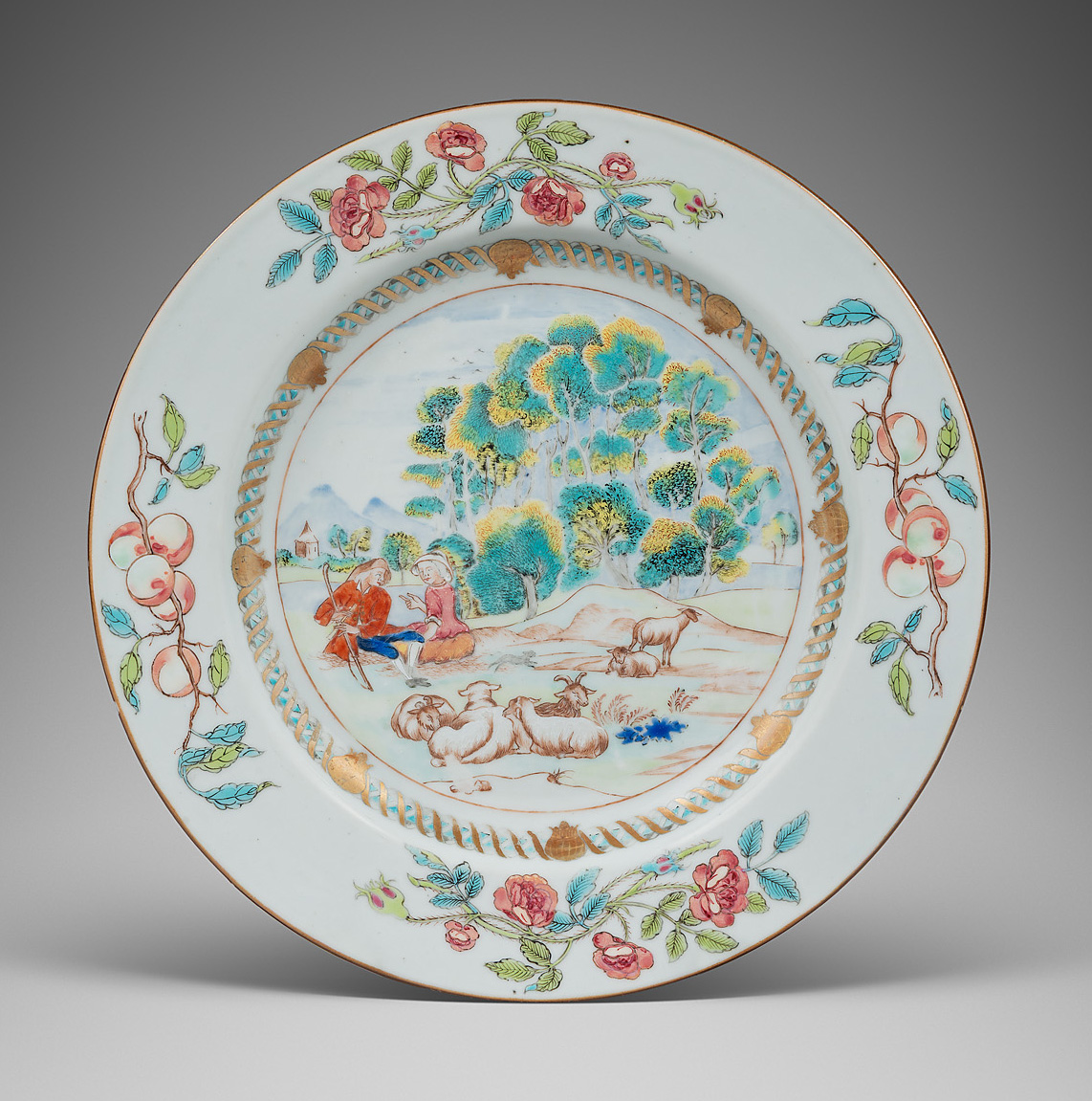
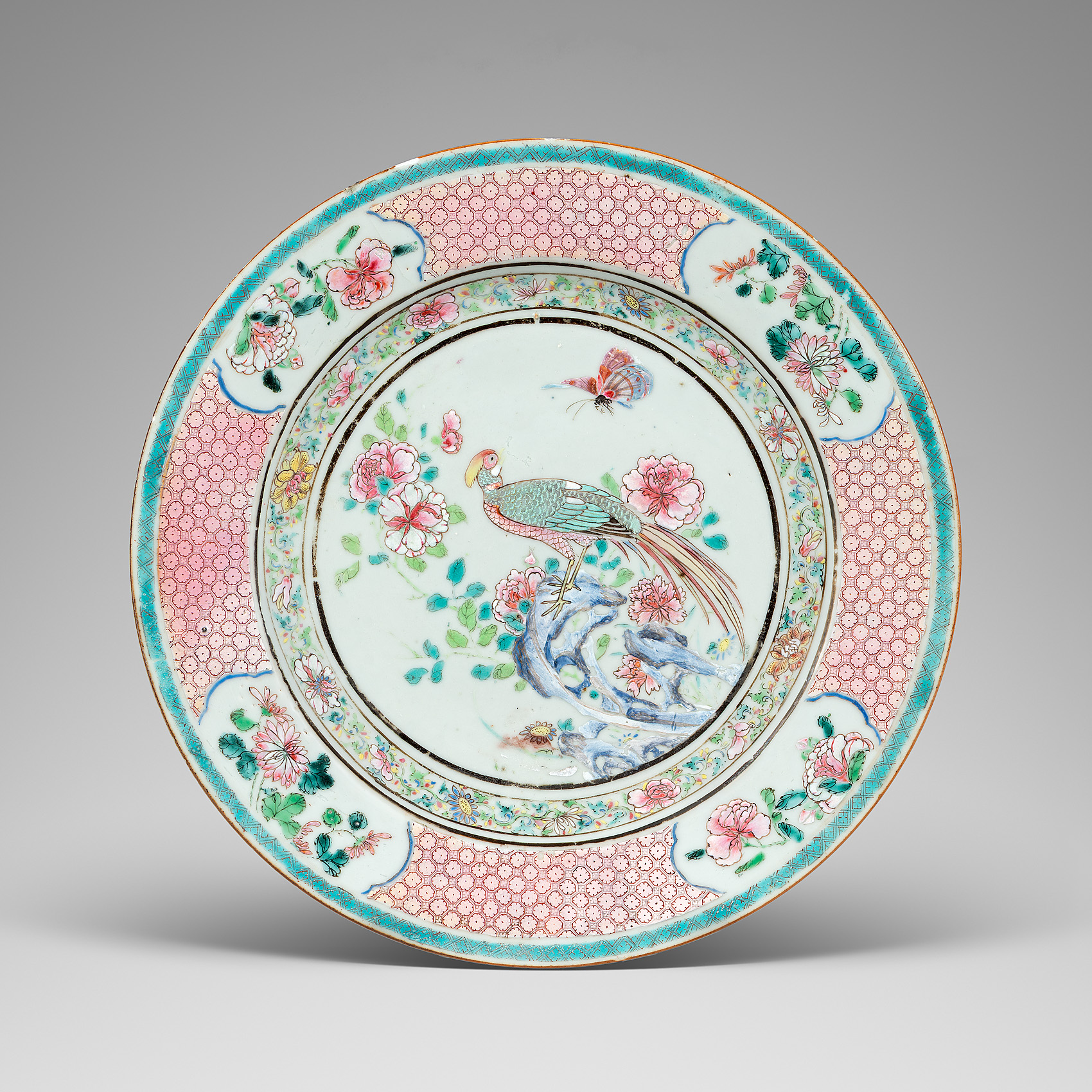
The plate is decorated in the famille rose palette, with a shepherd and shepherdess in the countryside next to beside their flock. The rim is enameled with peach and rose boughs. The print model of this design remains unknown.
COUNTRY : China
TIME: Qianlong (1735-1795), circa 1740
MATERIAL : Porcelain
SIZE : 23 cm
REFERENCE : E873
PROVENANCE : E. Vandekar, London
Collection Hervouët, Nantes
Reproduced in, La Porcelaine des Compagnies des Indes à Décor Occidental, 1986, no. 4.16
Sotheby’s Monaco, Collection Hervouët, 22 juin 1987, no. 1568
From a European collection
The pastoral theme constitutes a significant pictorial theme in 17th and 18th century French art. It permeates the wall decorations and ceilings of grand palaces, such as Versailles, evoking an idealized rural landscape often populated by ancient ruins, nymphs, and deities.
With the influence of the “fête galante” in the early 18th century, a distinctive form of pastoral painting emerged, characterized by the works of François Boucher (1703-1770). His depictions of an idyllic countryside are frequently inhabited by the princes of his time, portrayed with the attributes of shepherds and shepherdesses. This pictorial theme was particularly popularized by Jean-Antoine Watteau (1684-1721).
The same decoration on the rim is known on the design of the “card-players” / David Teniers ‘Fêtes Champêtres” (polychrome version).