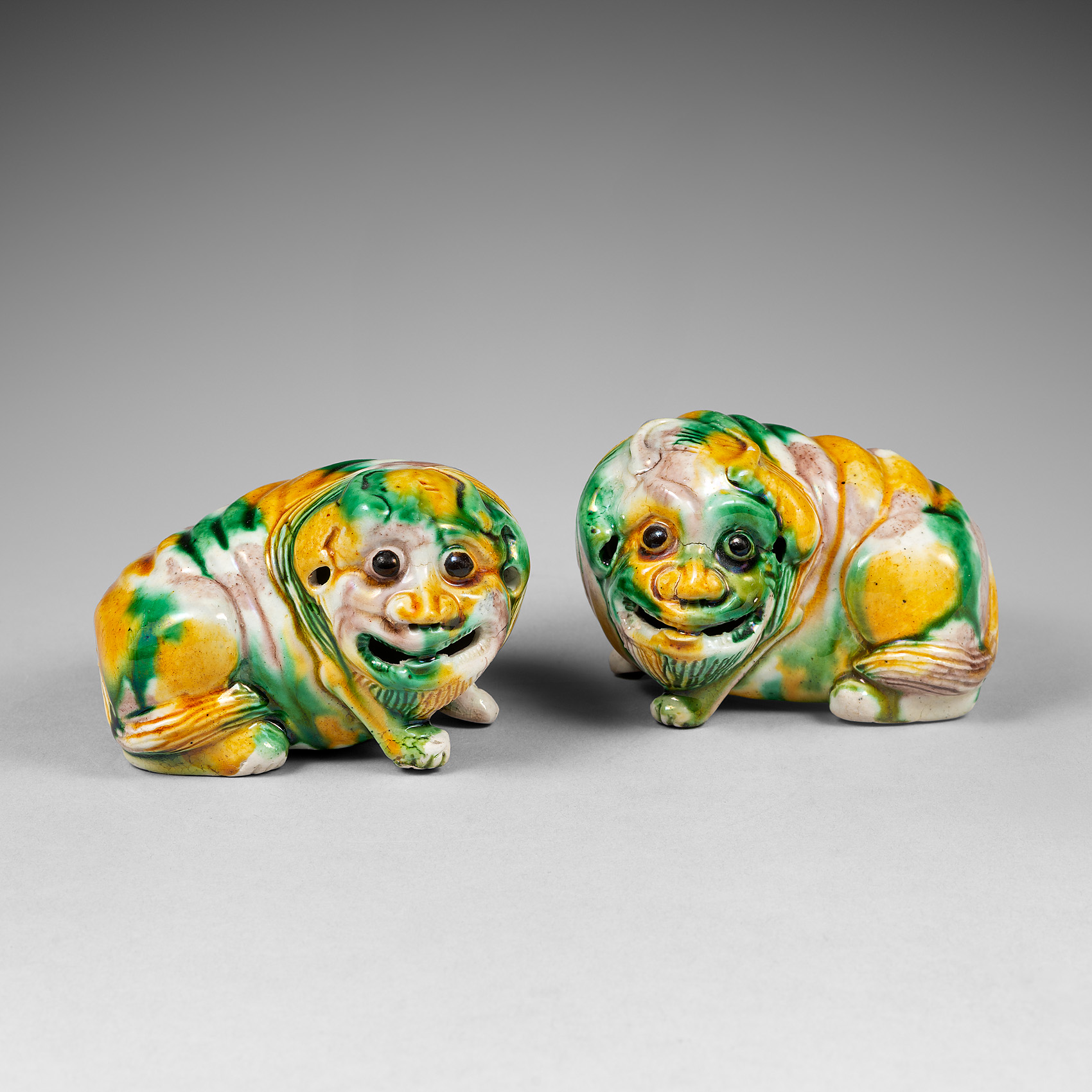
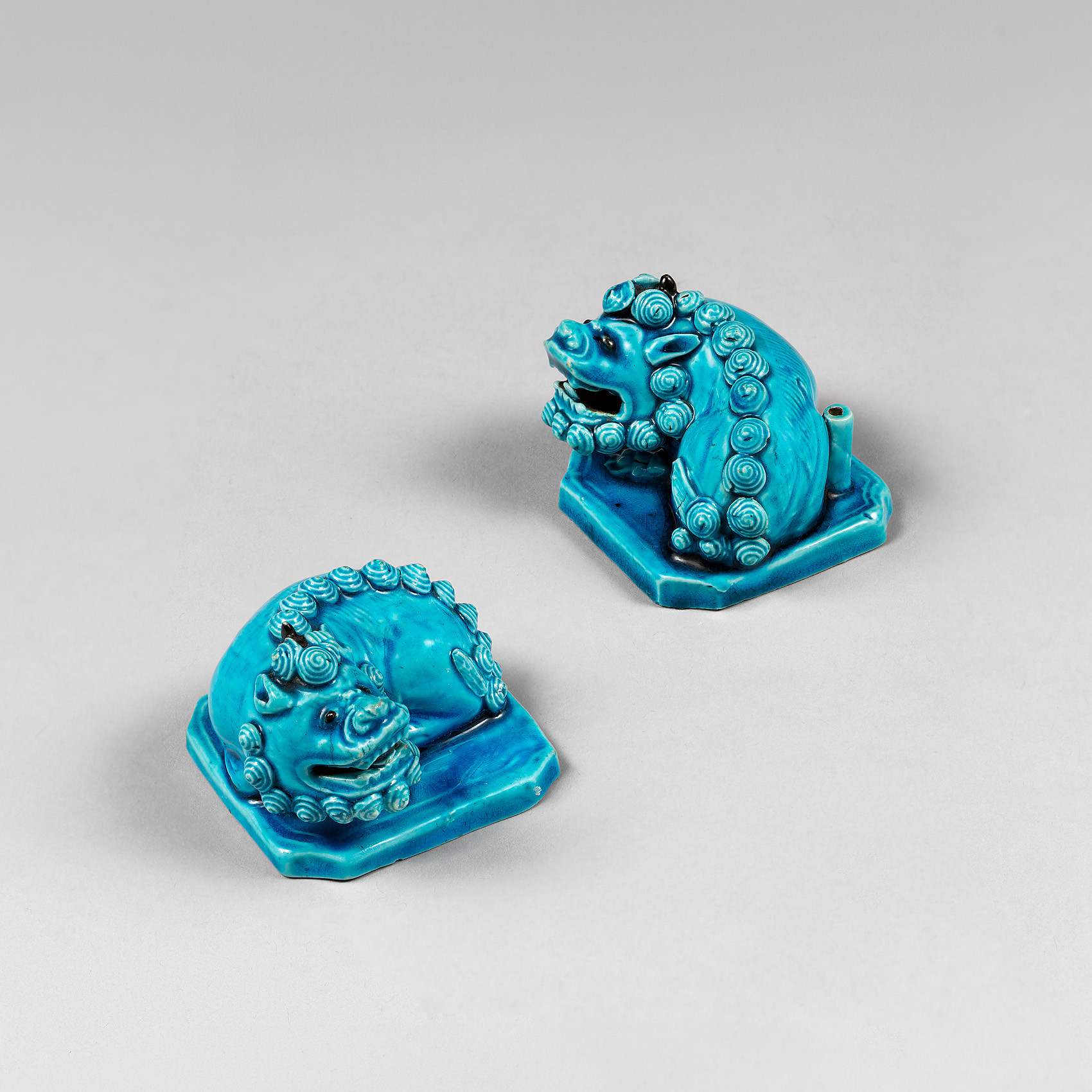
A pair of Chinese dogs decorated with famille verte enamels on the biscuit. Kangxi
The pair of dogs have their half-open mouths showing their teeth. They are covered with yellow, green and aubergine enamels on the biscuit. Their eyes glazed black
A pair of identical pug dogs is in the collection of the Rijkmuseum and published by Christiaan J. A. Jörg in Famille verte – Chinese Porcelain in Green Enamels, 2011, p. 124, no. 112. They were ccquired from A. Staal, art dealer, Amsterdam, 1913 ; Bequest of the widow of H.K. Westendorp, 1968.
See also Jörg & Van Campen, Chinese Ceramics in the Collection of the Rijkmuseum,, Amsterdam. The Ming and Qing Dynasties, London, 1997, no. 217.
Another example is in the collection of Marie Vergotis (Lausanne), see J. Ayers, The Chinese Porcelain Collection of Marie Vergotis, Lausanne, 2004, no. 81/82.
For another example, see Christie’s NYC, Chinese Export Art, 24 january 2005, lot 54.
Additional information.
The dog is regarded as the companion of the god Er-lang who fights devils and represents vigilance and faithfulness. Figures of pug dogs were popular in later 18th-century export assortments, so this rare, early 18th-century pair might be their ancestors. The potter probably intended to make the dogs look fierce to ward off demons, but they actually look rather sad.