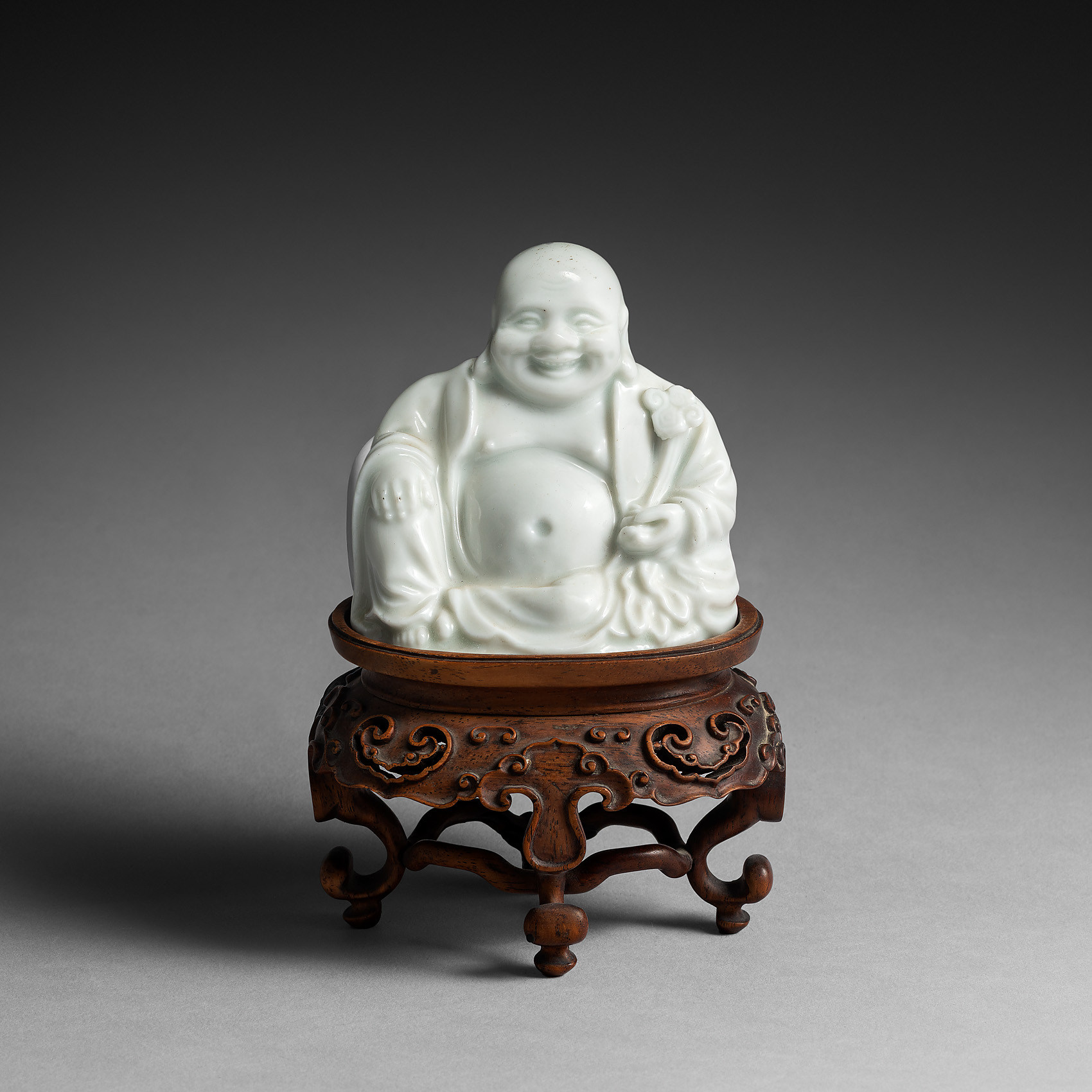
A Chinese Blanc-de-Chine figure of Budai. Kangxi

The figure is modelled with ample and generous volumes: the torso is largely exposed, revealing a prominent belly, a symbol of prosperity, happiness, and abundance. The sloping shoulders and relaxed arms enhance the impression of benevolent calm. The rounded, smooth face is animated by a broad smile, half-closed eyes, and full cheeks, conveying an expression of serene contentment. The monastic robe, rendered with broad, supple folds, partially envelops the body. The figure holds a symbolic attribute (probably a bag), recalling the traditional iconography of Budai as a wandering monk and dispenser of happiness, as well as a ruyi sceptre in his left hand, further reinforcing his role as a bestower of good fortune and auspiciousness. The ensemble is presented on a carved wooden stand.

COUNTRY : China (Dehua)
PERIOD : Kangxi (166-1722)
MATERIAL : Porcelain
SIZE : 14 cm (including stand)
REFERENCE : E881
PROVENANCE : Collection Gaymard (Marseille), Paris, Drouot (Etude Lair Dubreuil), 5/6 march 1928 (very likely lot 100).
STATUT : vendu
Related works :

A very closely related figure of the same size (though lacking the ruyi), formerly in the collections of Auguste Le Fort, is preserved in Dresden, in the collections of the Staatliche Kunstsammlungen Dresden (inventory no. PO 8570).

Additonal informations :

This figure represents Maitreya, the Buddha of the Future, also known as the “Laughing Buddha,” who is invariably depicted with a robust physique and a joyful expression, draped in the robe of a mendicant with his chest and abdomen exposed. The figure of Budai Heshang, whose story is based on a historical monk active at the end of the Tang period, gained popularity as early as the Song dynasty. He is often depicted surrounded by children. His name, Budai, meaning “cloth bag,” derives from the sack that invariably accompanies him. He is frequently shown carrying this hemp bag containing all his possessions, along with a short cord of eighteen beads symbolising the Eighteen Luohan. Perhaps because of his cheerful appearance, he became one of the most sought-after figures on the export market in the eighteenth century. In English-speaking countries, he is also commonly known as the “Fat Buddha.”

Question about condition report

Question about condition report