
A Pair Of Large Chinese Dehua Blanc-de-chine Buddhist Lions joss-stick holders. Kangxi Period.
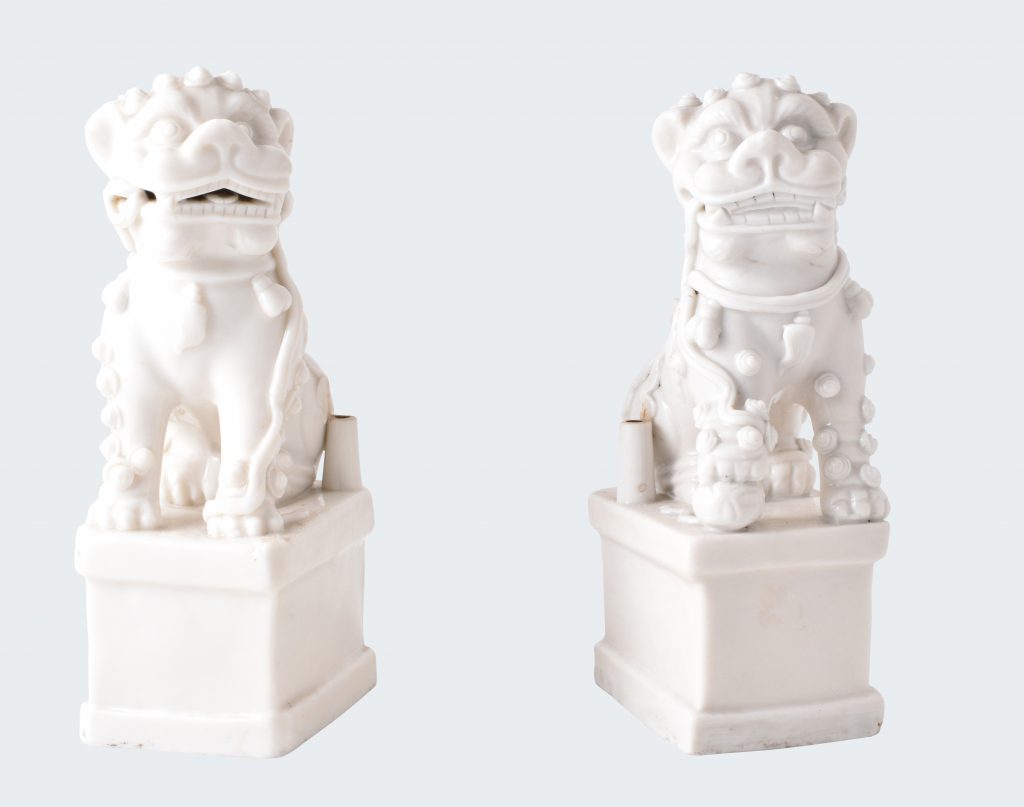
Each lion seated on a tall rectangular plinth.
A Chinese Dehua Blanc-de-Chine model of a cockerel. Kangxi period
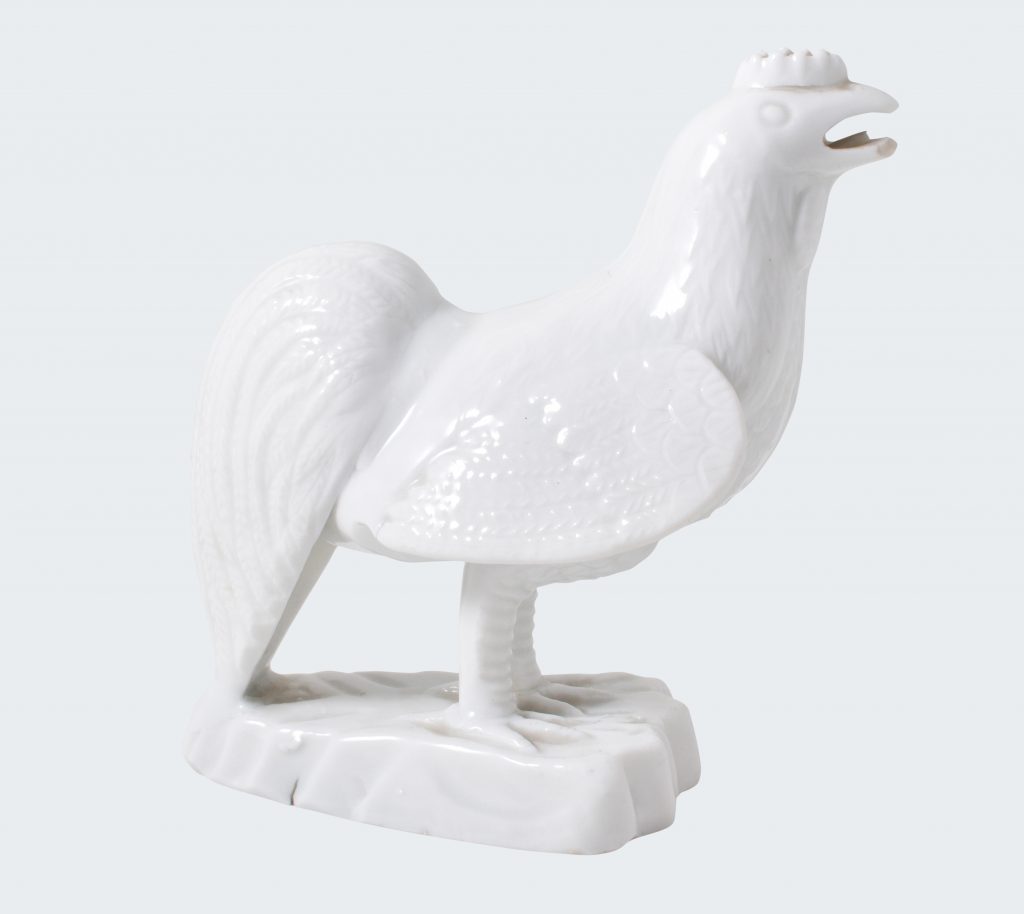
The bird crowing with wings folded, his tongues visible inside his open beak, his plumage picked out in incised detail, supported on triangular rockwork base.
A large Blanc-de-Chine figure of Wenchang, the Daoist god of Literature. Kangxi period
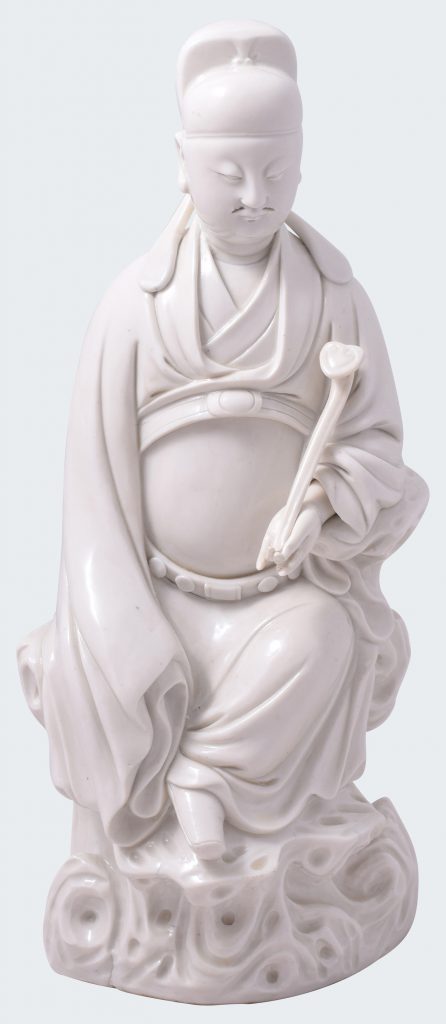
The Daoist god of Literature shown seated on a rockwork throne, holding a ruyi scepter in his left hand, wearing an official’s hat with long tabs, full robes, and two stiff belts that frame his rounded belly, the lower belt with ‘jade’ plaques, his well-modeled face pierced for attachment of a moustache and beard,
A ‘Blanc-de-Chine’ Dehua figure of “Adam”. Kangxi period.
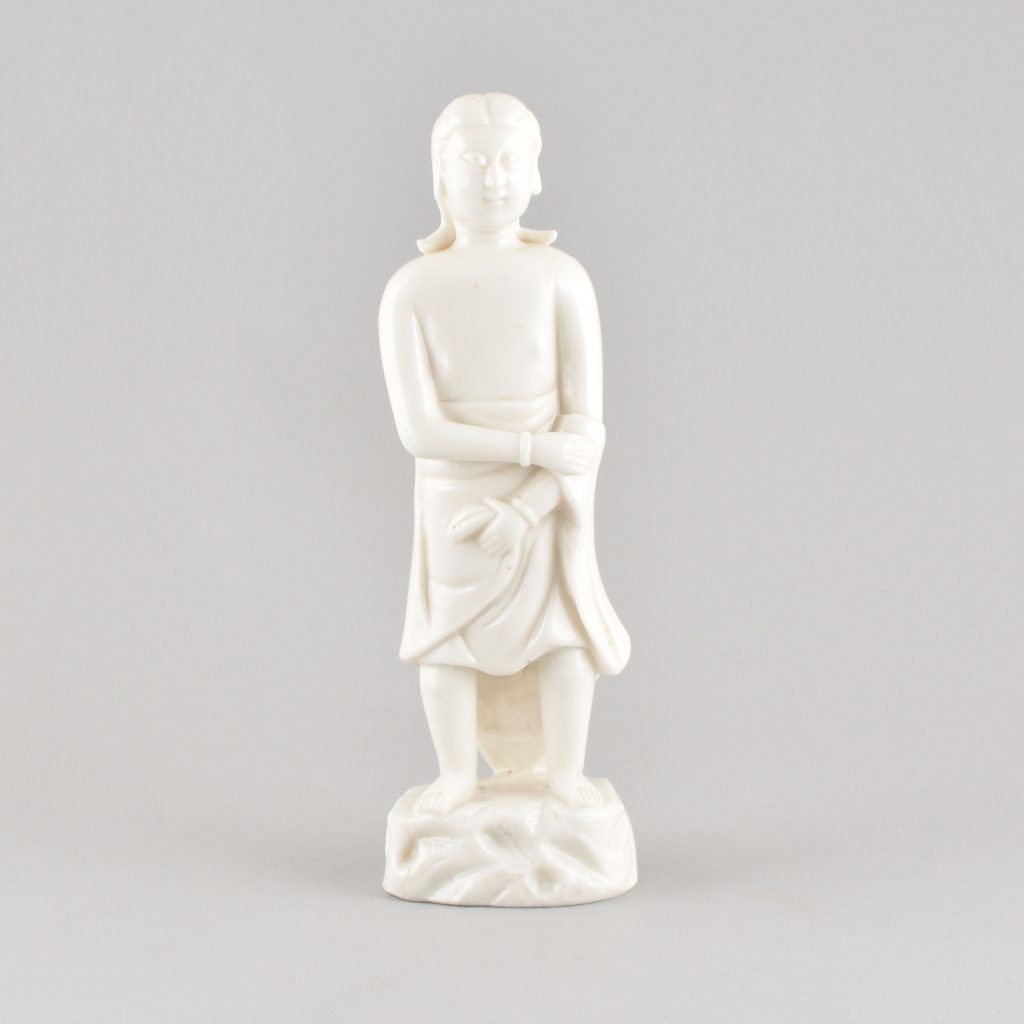
Standing barefoot on a rockwork base, his arms crossed in front, both hands clasping the ends of the short skirt draped around his waist, his upper torso bare, his head facing forward with smiling expression, his hair combed back behind his ears and falling to his shoulders.
An unsual Chinese Blanc-de-Chine relief-decorated beaker. Kangxi period
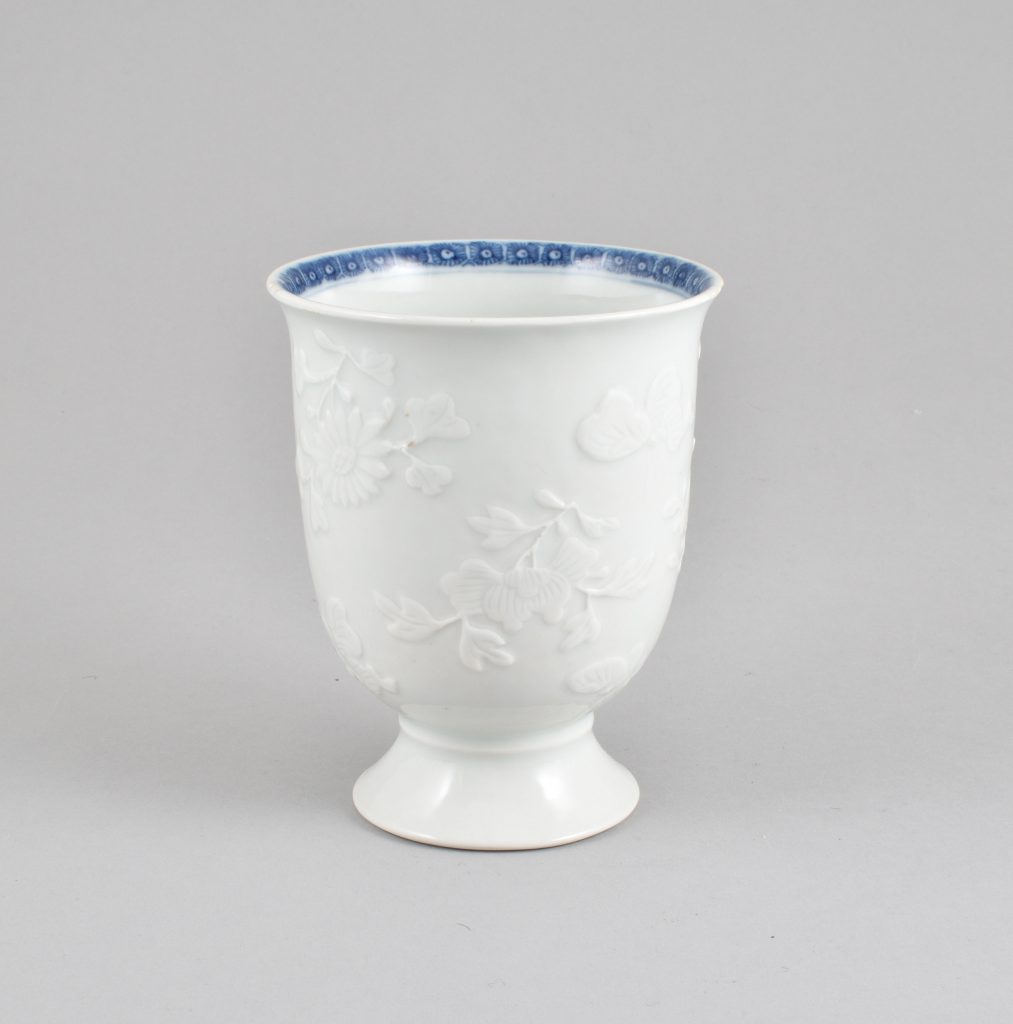
On a stem and with a relief-decoration of butterflies and sprays of flowers.
A Chinese blanc-de-Chine miniature teapot. Kangxi period
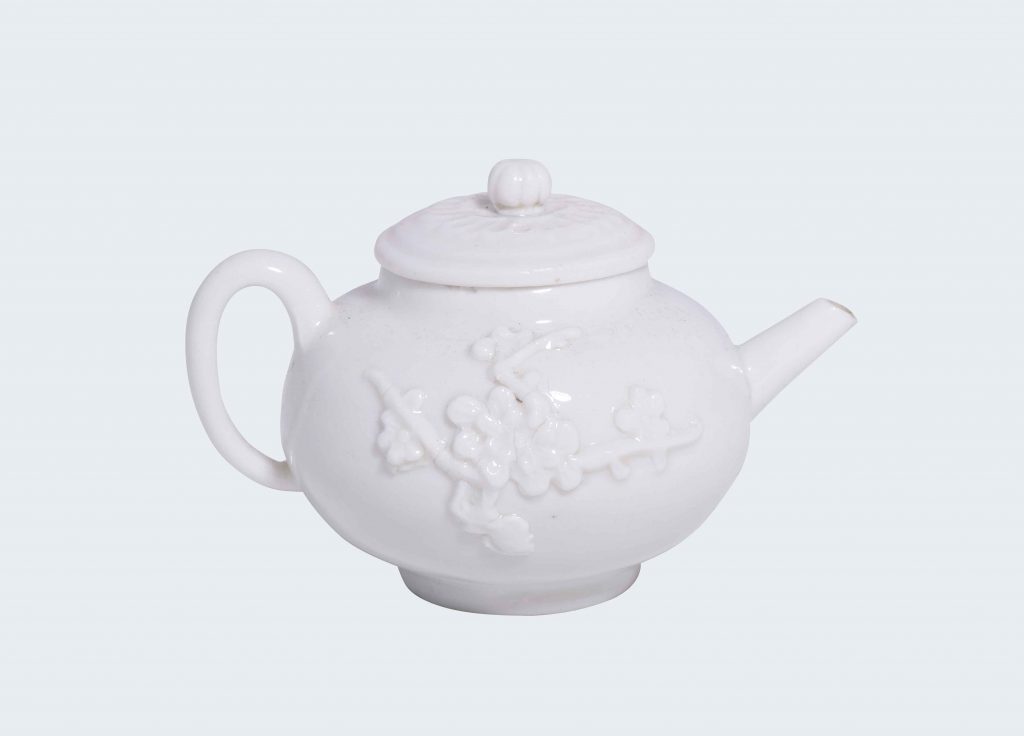
Of globular form decorated in relief with plum blossom branches.
A ‘Blanc-de-Chine’ Dehua figure of “Adam”. Kangxi period
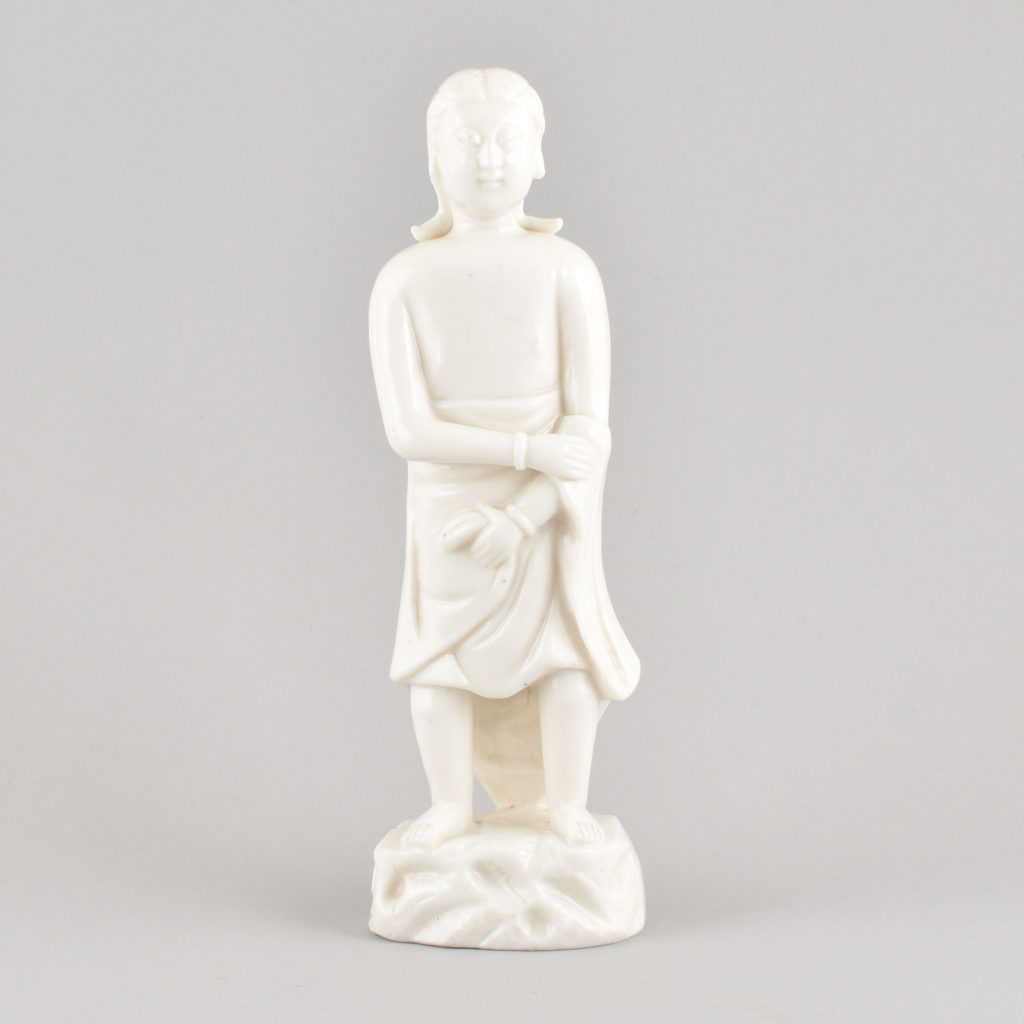
A standing figure of a man draped in a cloth and bare from the waist up, wearing bracelets, on rockwork base, covered in a cream glaze.
A “Blanc-de-Chine” Dehua figure of Guanyin. Kangxi period

The figure standing on a seawave base, wearing long flowing robes and beaded jewellery, her hair tied in high top knots.
A ‘Blanc-de-Chine’ Dehua figure of “Adam”. Kangxi period.
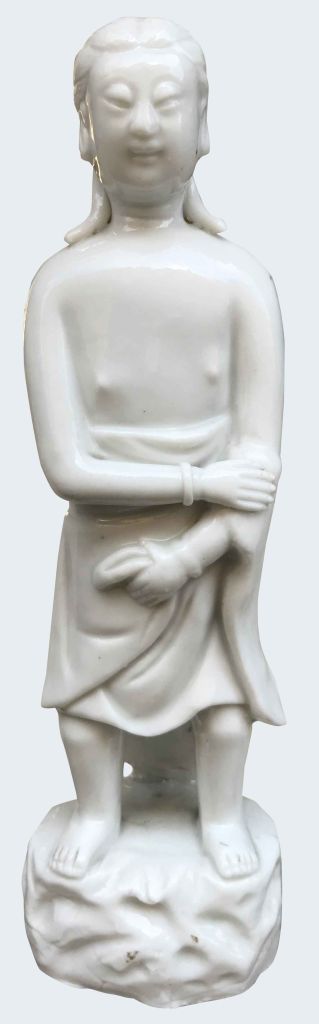
Standing barefoot on a rockwork base, his arms crossed in front, both hands clasping the ends of the short skirt draped around his waist, his upper torso bare, his head facing forward with smiling expression, his hair combed back behind his ears and falling to his shoulders.
A ‘Blanc-de-Chine’ Dehua wine pot. Kangxi period.

A Chinese white porcelain (blanc-de-Chine) hexagonal wine pot and cover with flat base, three corner feet, and six rounded sides. Each side moulded with a recessed relief design within a shaped border, rising to a low, hexagonal mouth. The matching flat cover with infitting unglazed flange has a knob in the form of a seated […]