
A Chinese famille rose plate decorated with peacocks and peonies. Yongzheng period.
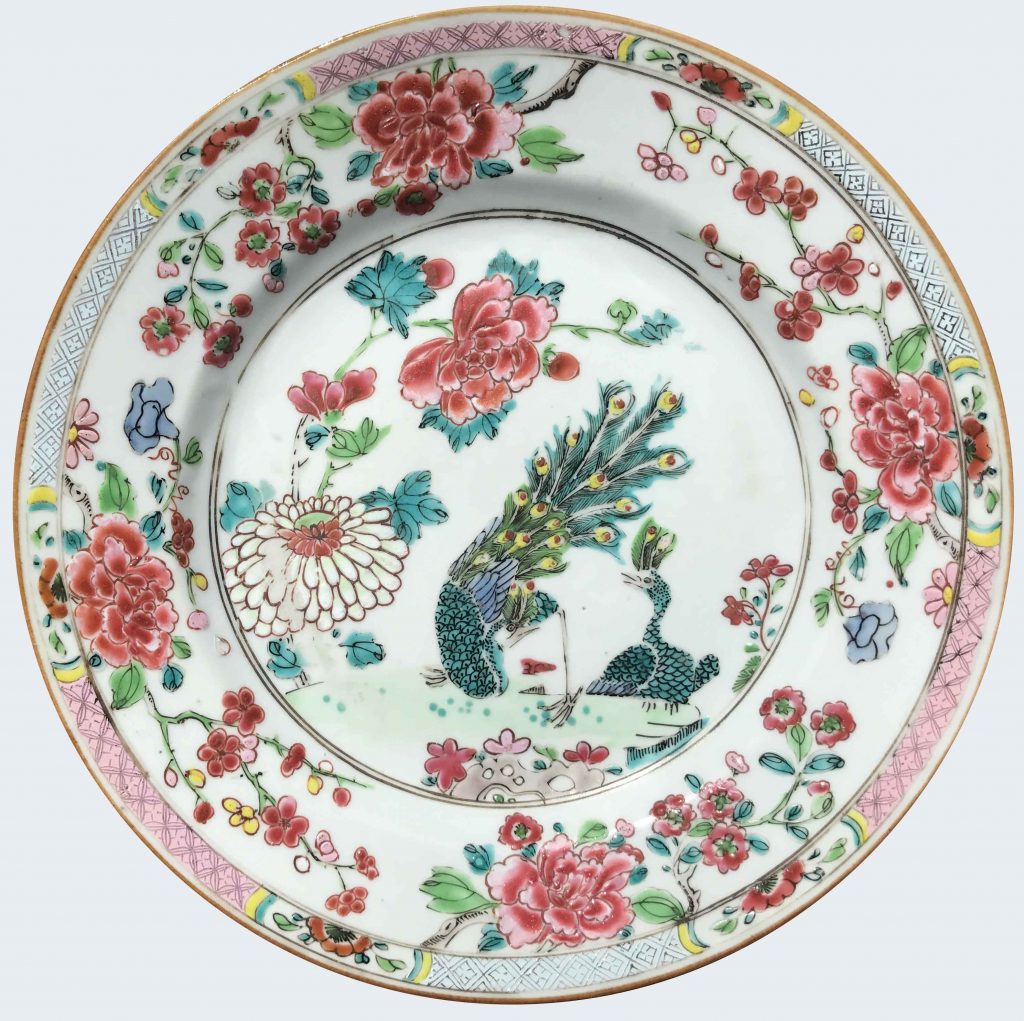
Painted in brilliant famille rose enamels, the central scene illustrating a pair of paons on a peony rock and gazon. The large rim with four peonies.
A pair of Chinese plates decorated with figures. Yongzheng period.
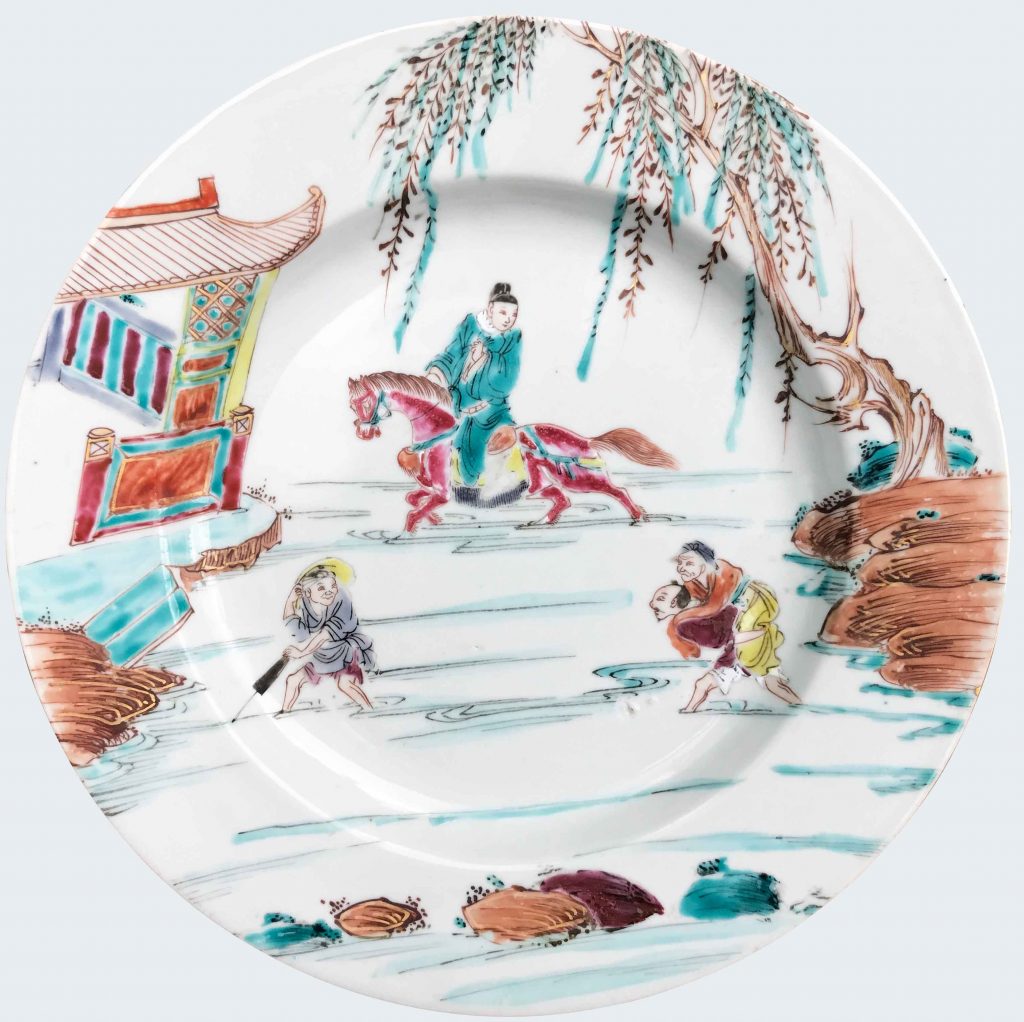
Decorated in famille rose enamels, with figures crossing a river next to a palace.
A large Chinese pseudo-armorial plate decorated with cherubs. Qianlong period.
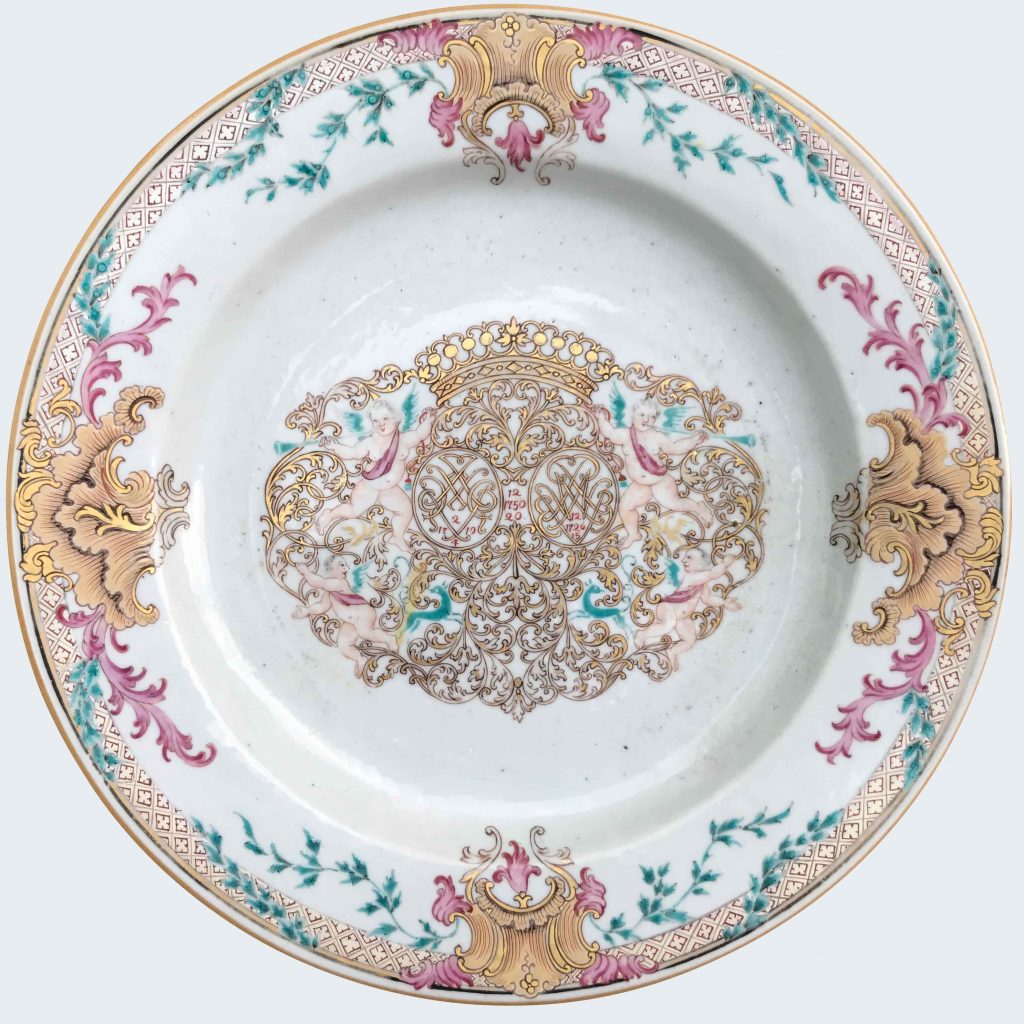
A large Chinese marriage plate – dated 1719-2-4 & 1750-12-20 & 1726-12-15, profusely decorated in famille rose enamels with gilt mantling and scrollwork, flanked by cherubs centering the initials and birthdates of the betrothed couple within a gilt and polychrome foliate decorated border.
A ‘Blanc-de-Chine’ Dehua figure of “Adam”. Kangxi period.
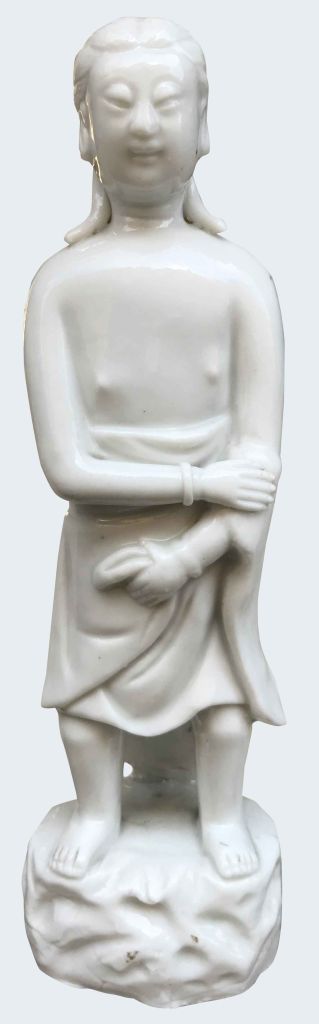
Standing barefoot on a rockwork base, his arms crossed in front, both hands clasping the ends of the short skirt draped around his waist, his upper torso bare, his head facing forward with smiling expression, his hair combed back behind his ears and falling to his shoulders.
A Chinese lacquered blue and white teapot with Dutch gilt-metal mounts. Kangxi period.
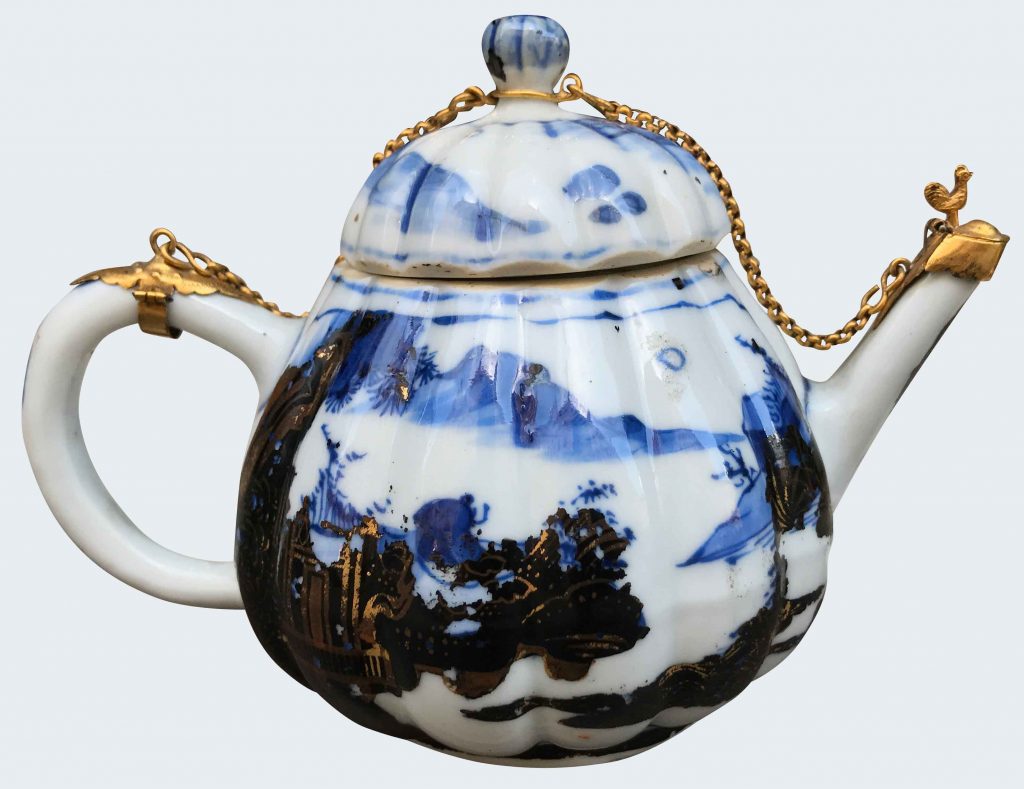
Of pumkin form, decorated in underglaze blue, with a lacquered black and gilt decoration and a Dutch gilt-metal mounts with a cockerel.
A large Chinese bowl decorated with famille verte enamels on the biscuit. Kangxi period.
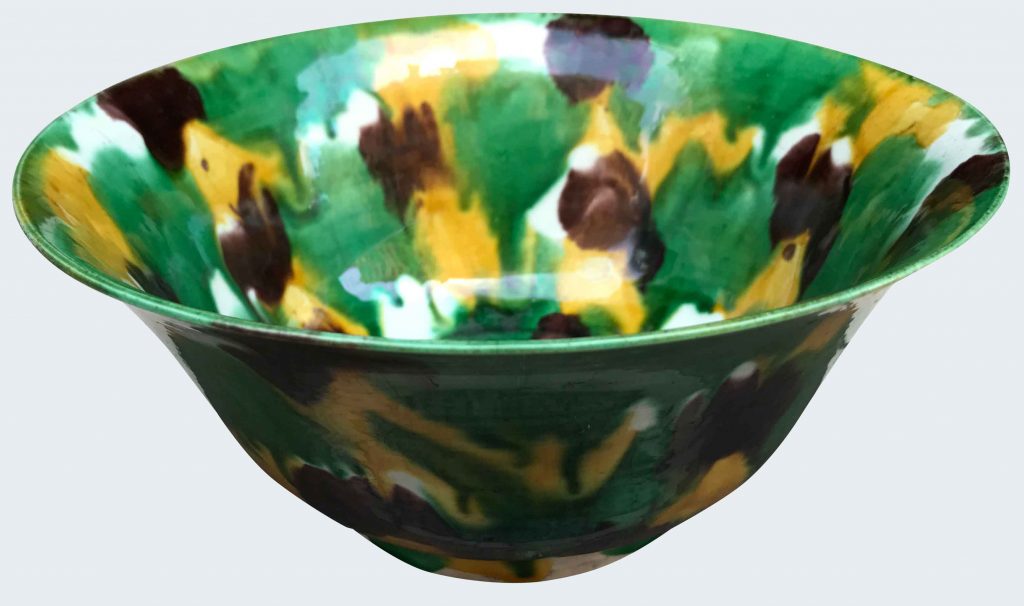
Bowl with rounded sides and a wide flaring rim, standing on a short, straight foot ring. The exterior is decorated on the biscuit with green, yellow and aubergine-purple enamels in a loose “egg-and-spinach” pattern.
A Chinese figure of Bodhisattva Guanyin decorated with famille verte enamels on the biscuit. Kangxi period.
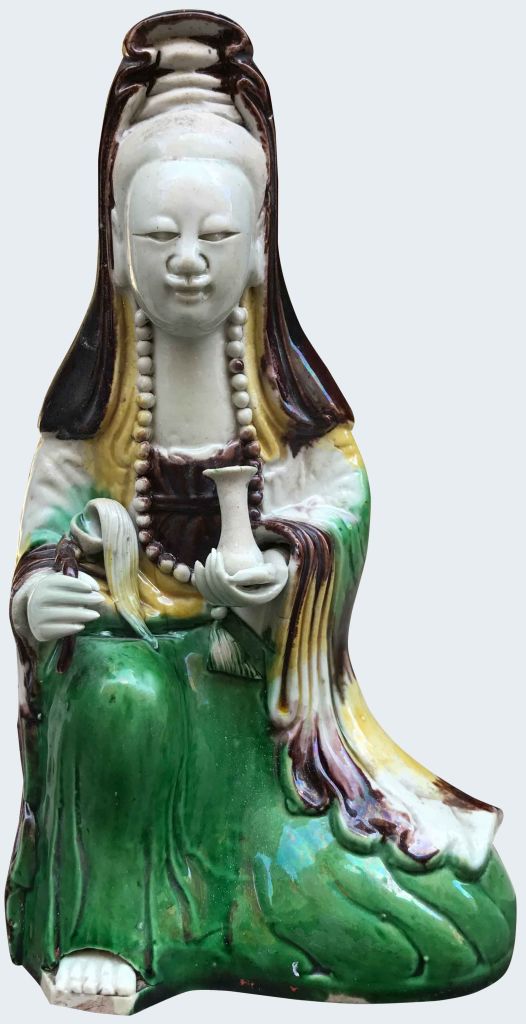
A figure of the Bodhisattva Guanyin seated upon a thin base with one leg touching the ground and the other bent upwards. She wears a long robe and cloak over head, and is modeled with a serene expression on her face. She is holding a fly-whisk in one hand and a small vase. Her robes […]
A Chinese armorial plate for the Spanish market. Qianlong period.
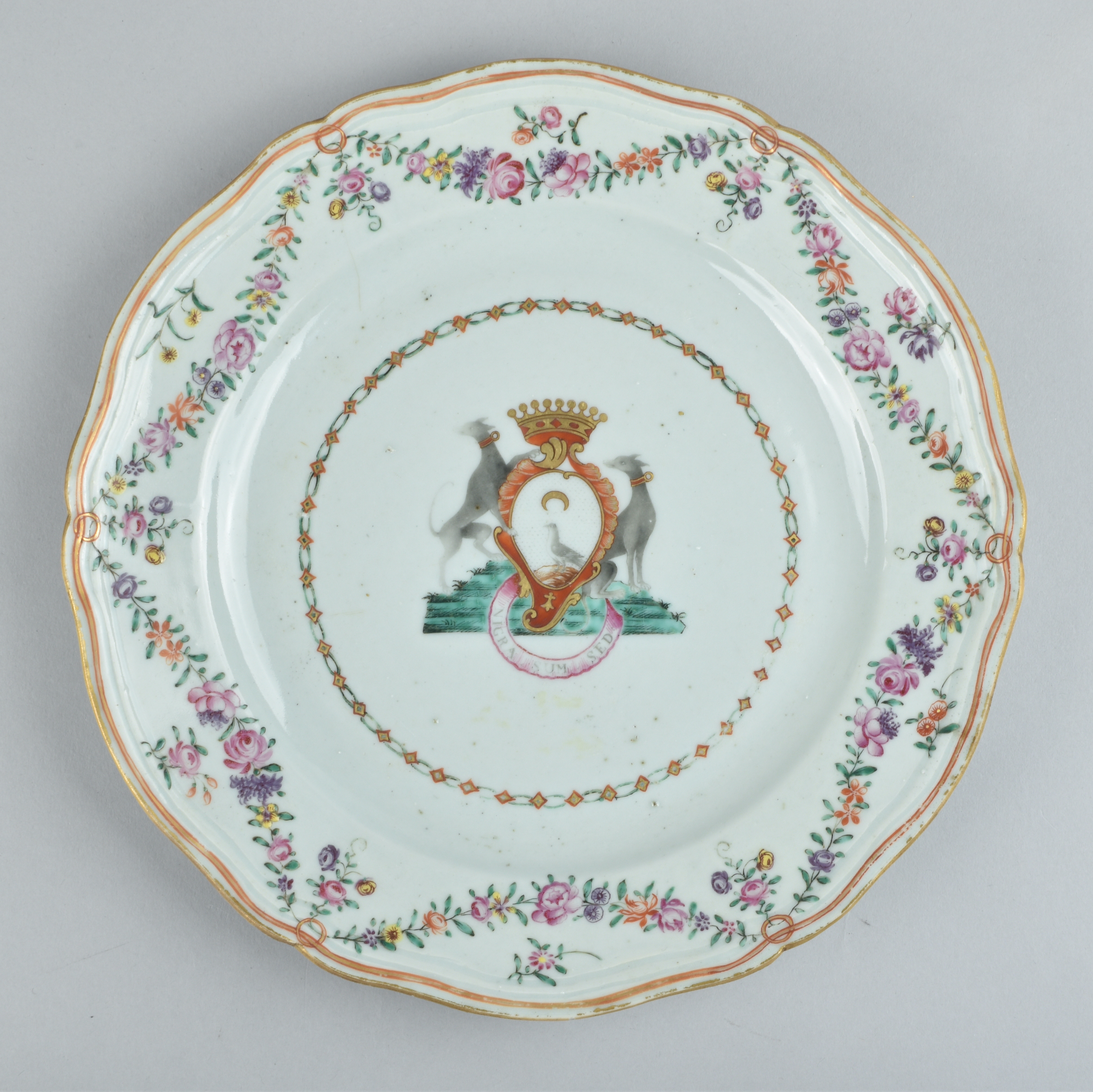
Enamelled with a Spanish coat of arms (previously thought to be Ganon of France and now possibly Aguado de Las Marismas) with a floral swag border and with the motto Nigra sum sed.
A Chinese famille rose plate decorated with two cockerels. Yongzheng period.
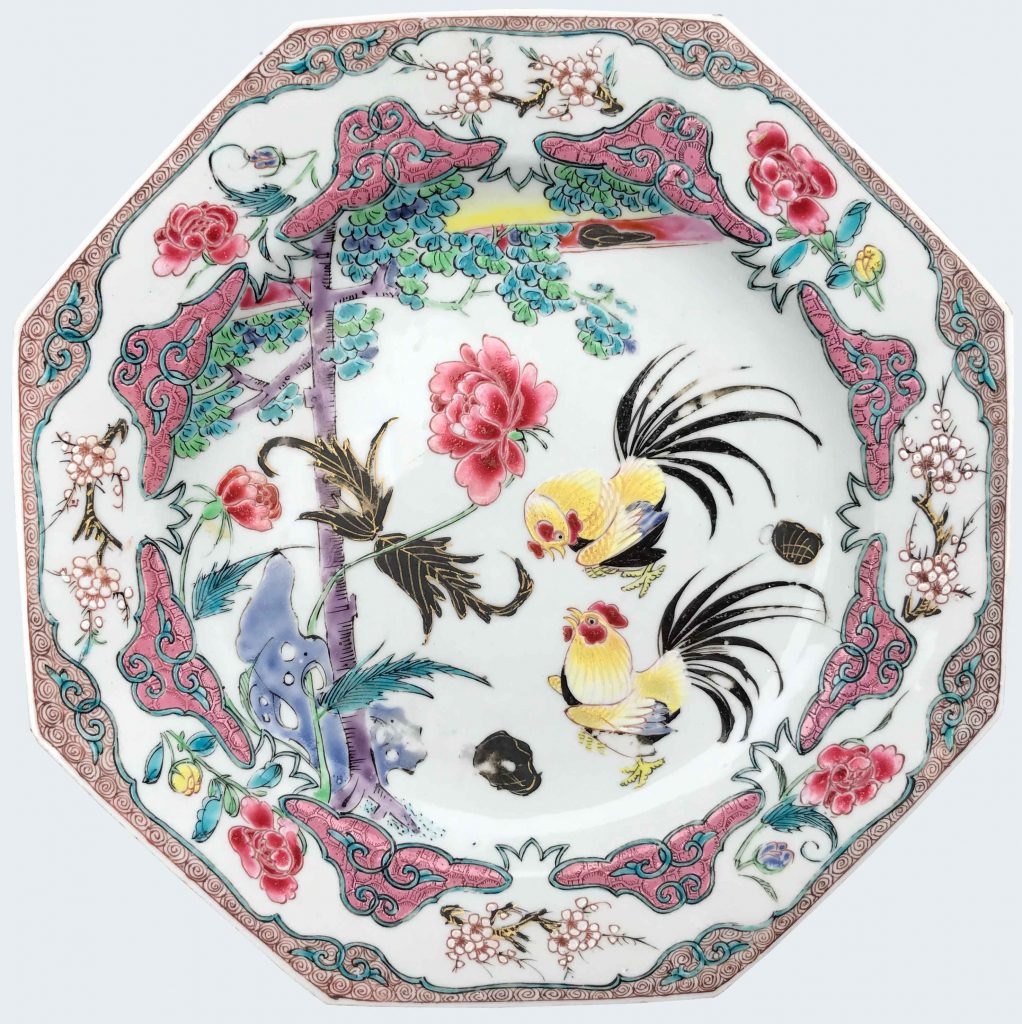
Decorated in the famille rose palette, with two cockerels.
A Chinese armorial plate decorated in the famille rose palette for the English market. Qianlong period.
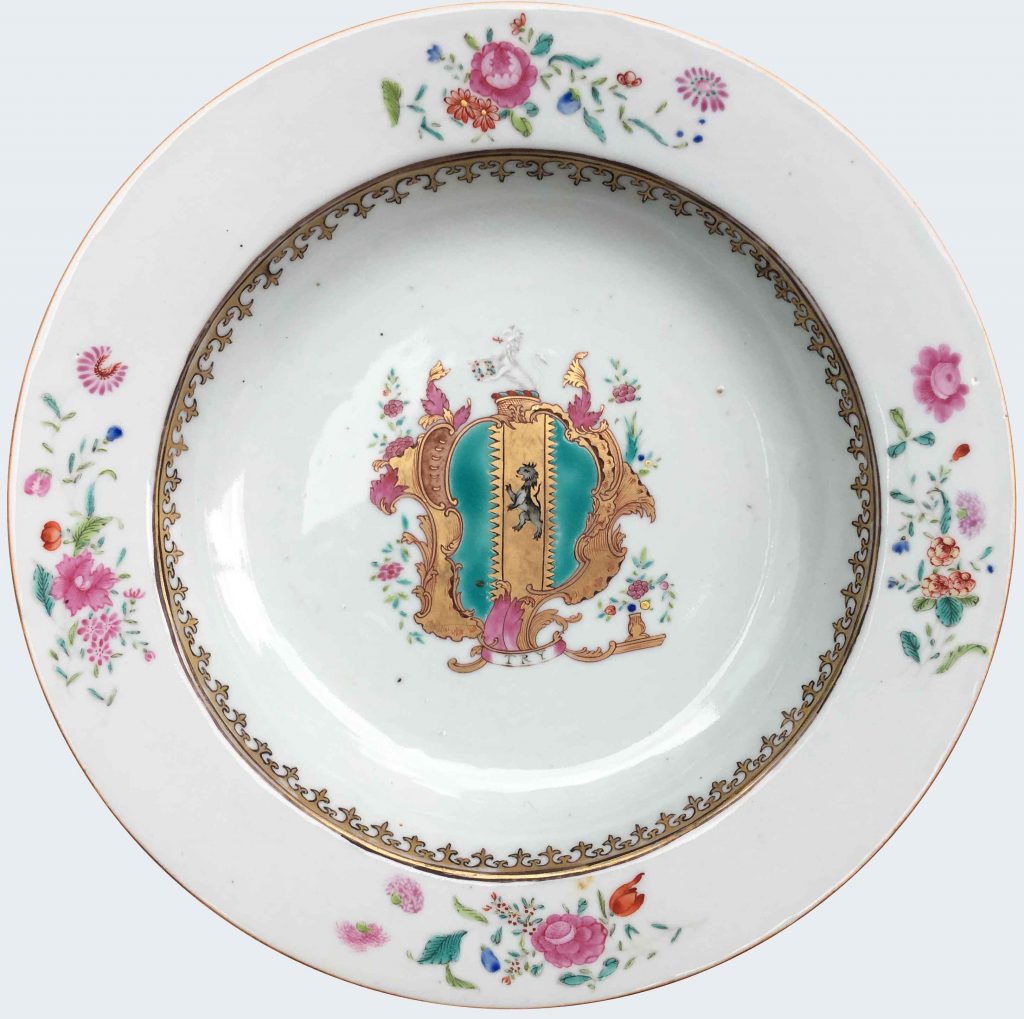
Decorated in the famille rose palette, to the center with the arms of O’Hara, Vert, on a pale radiant or a lion rampant sable ; crest ; A demi lion rampant ermine, holding in the dexter paw a chaplet of laurel vert, fruited gules ; motto “Try“.