
An aubergine and turquoise-glazed ‘Cadogan’ ewer. Kangxi
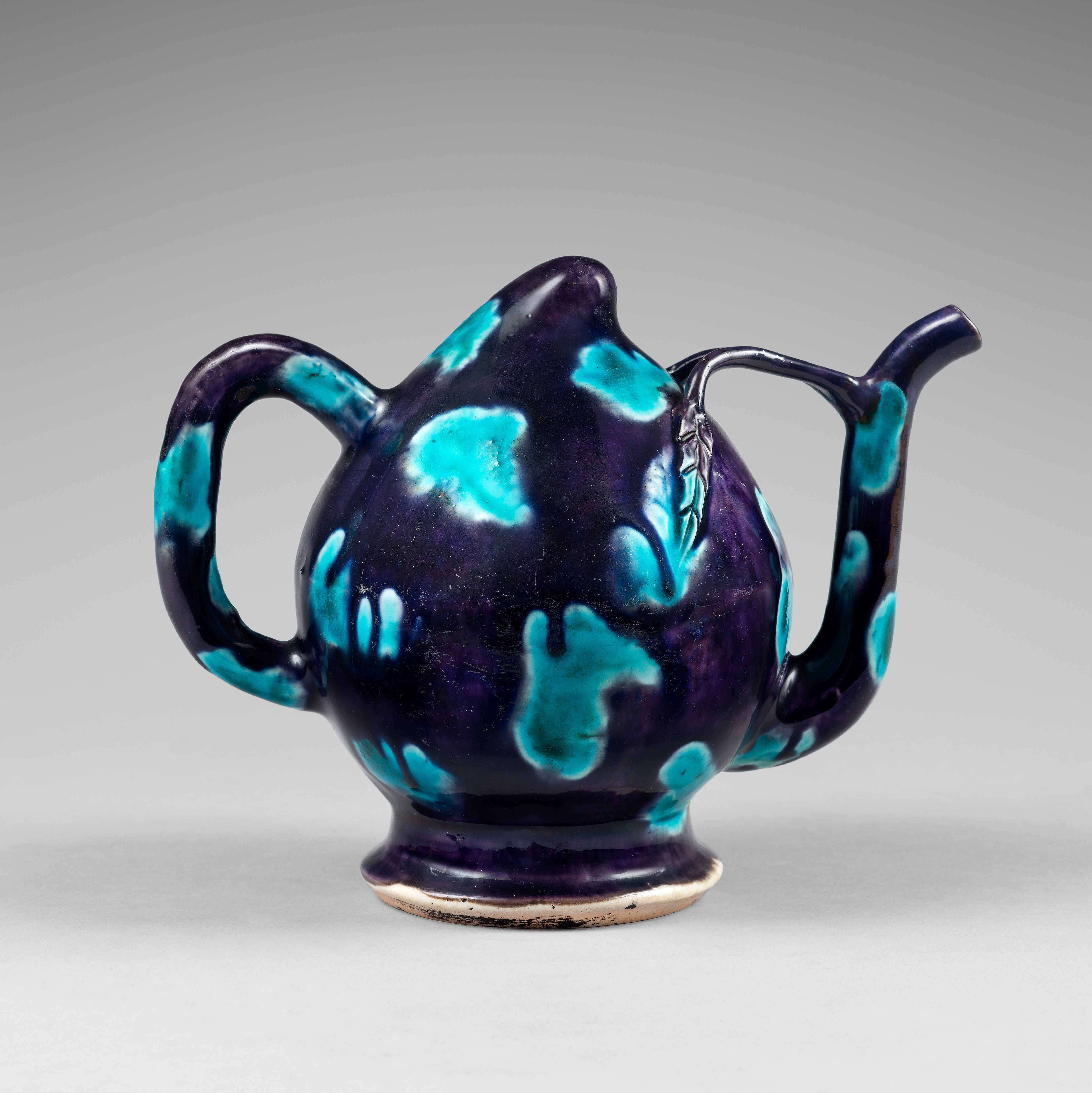
A-peached-shaped ewer with a branch-like spout bearing two leafy stems extending on to the body. It is supported by a splayed foot. The whole piece is covered in a deep lustrous aubergine glaze with turquoise splashes. The recessed aubergine-glazed base has a central aperture and an unglazed footrim.
A famille rose sugar caster and cover decorated with flowers. Qianlong
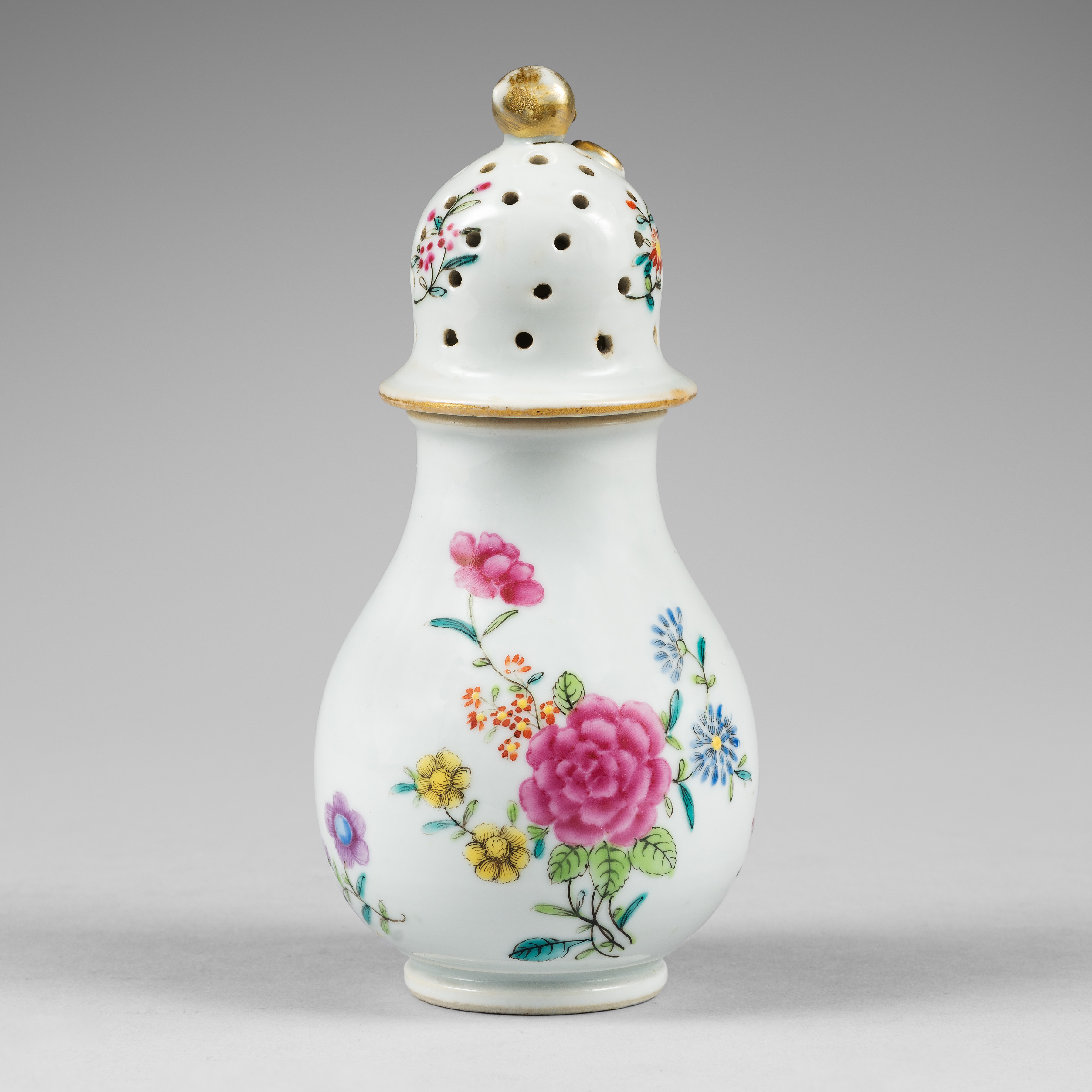
Of a tall baluster shape on a wide, spreading foot, surmounted by a hight domed lid with a bud-shaped finial, this sugar caster is deco- rated in famille rose enamels with sprays of flowers.
A rare grisaille dish with a European subject “L’eau”. Qianlong
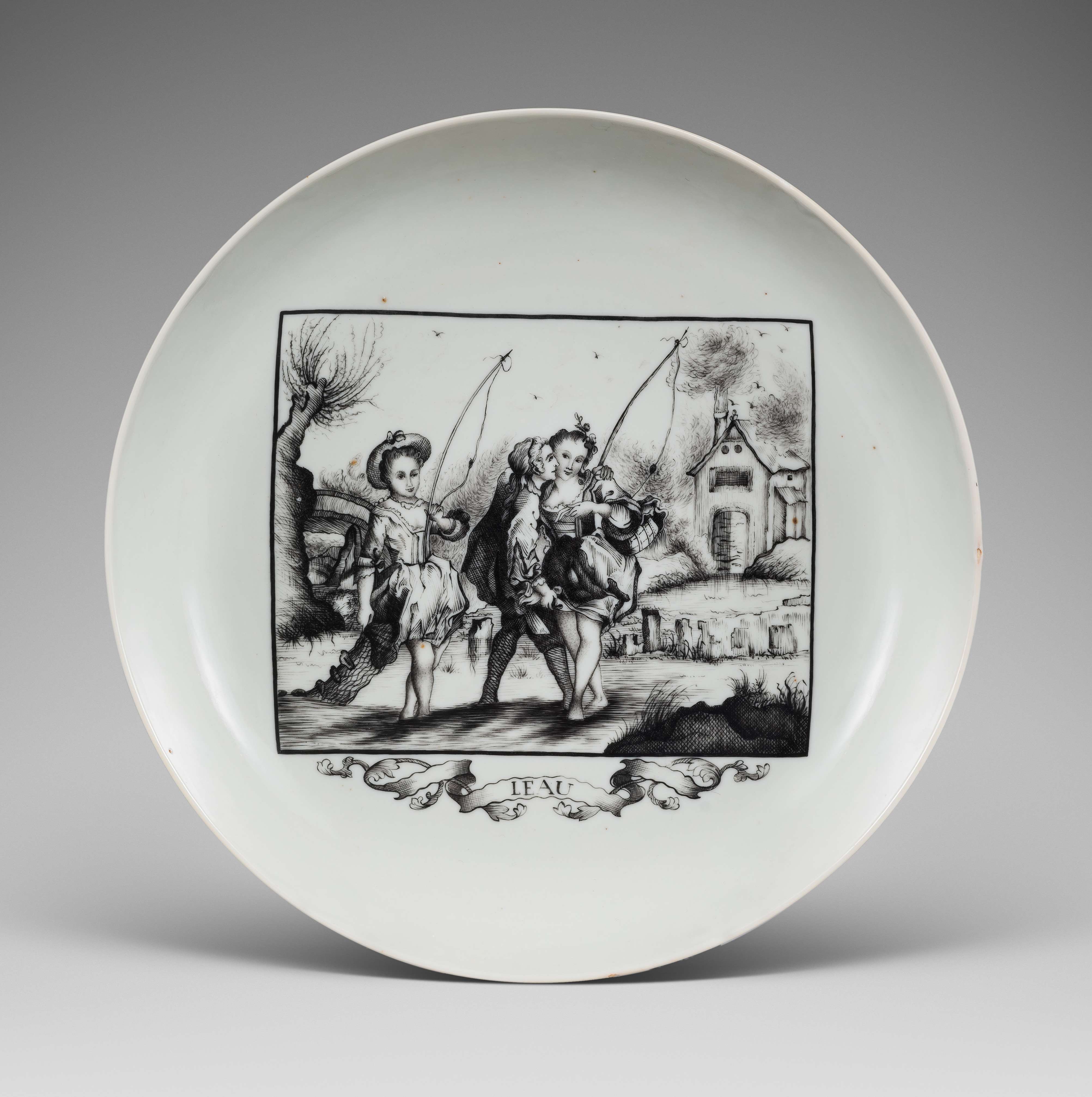
This dish is decorated en grisaille with a cartouche depicting a man fondling a lady while a second one looks on. The scene takes place in a wooded landscape. Both women are holdings fishing rods.
A famille rose “brocade ball” teapot. Yongheng
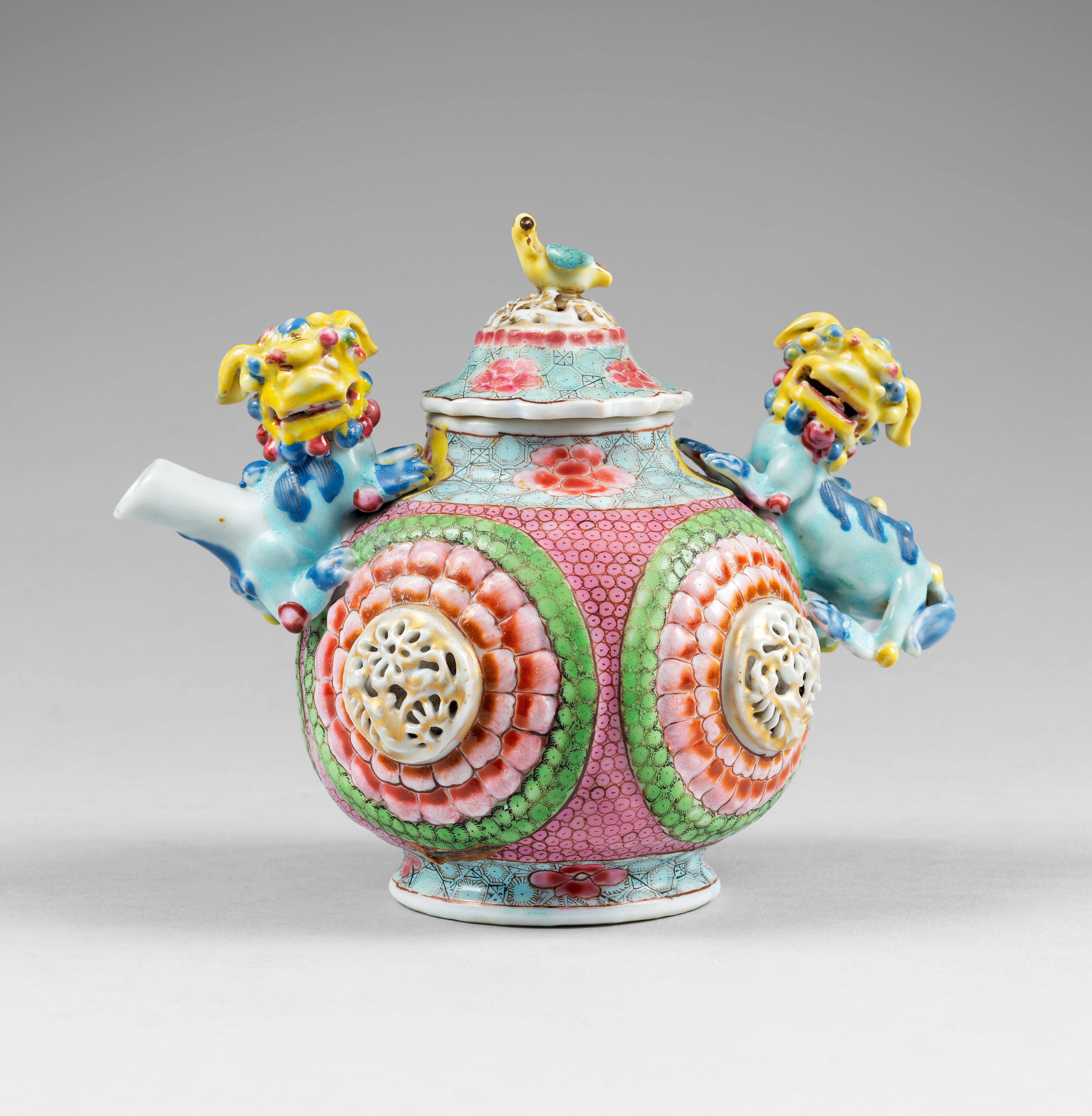
Each side of the teapot is molded with two convex reticulated and gilt roundels encircled by petal lappets on a diaper ground, and the whole is flanked by two Buddhist lions which form the handle and the spout. The cover bears a cockerel-form finial.
A rare famille jaune group depicting the immortal Zhongli Quan on his vessel. Kangxi
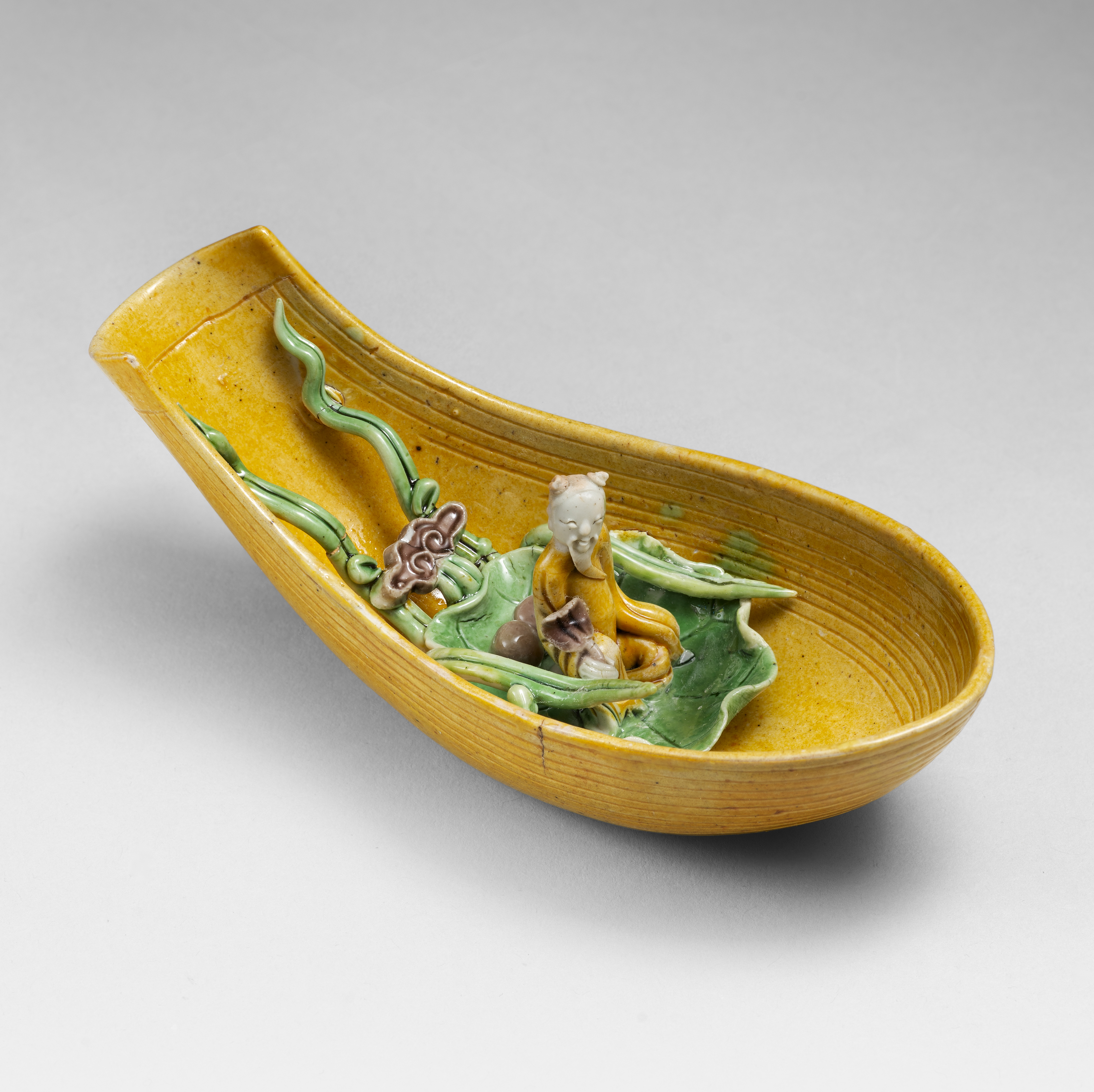
The sculpture is decorated in the famille jaune palette. The immortal Zhongli Quan is sitting on a vessel, the double gourd of the elixir of immortality behind his back. He is holding the magical fan, his passage to immortality.
An imari armorial plate for the French market (Thomas-Auguste Miniac of Saint-Malo). Kangxi
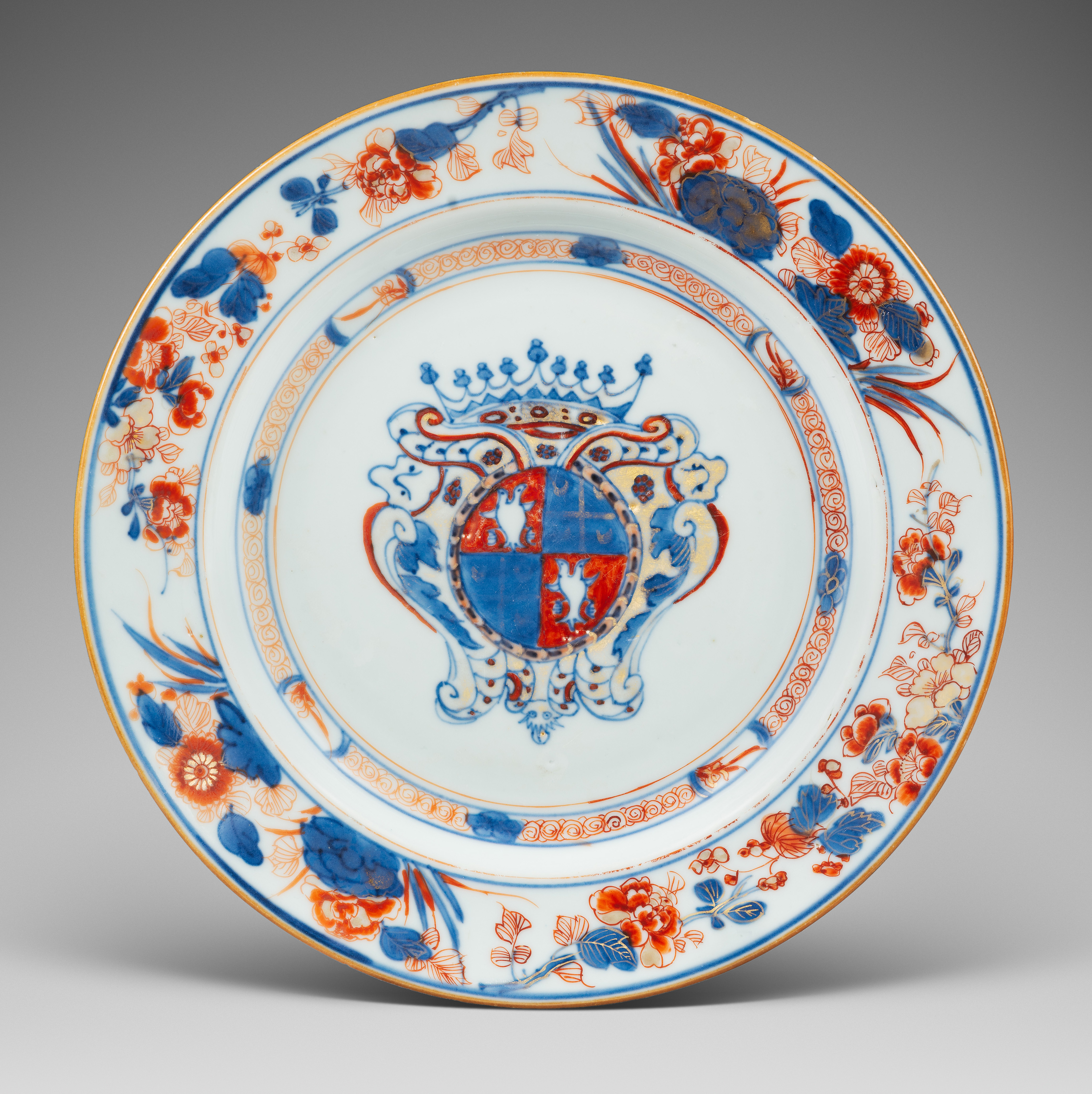
Painted in the centre in characteristic Imari palette, underglaze blue, rouge-de-fer and gilding with the coat-of-arms of Miniac, Quaterly: 1 and 4, gules, an eagle displayed argent between five billets of the last, three and four; 2 and 3, azure, a cross cantoned with four crescent or, within a roptwist border enclosed by scrollwork and […]
A chinese sancai « dragon » roof tile. Ming
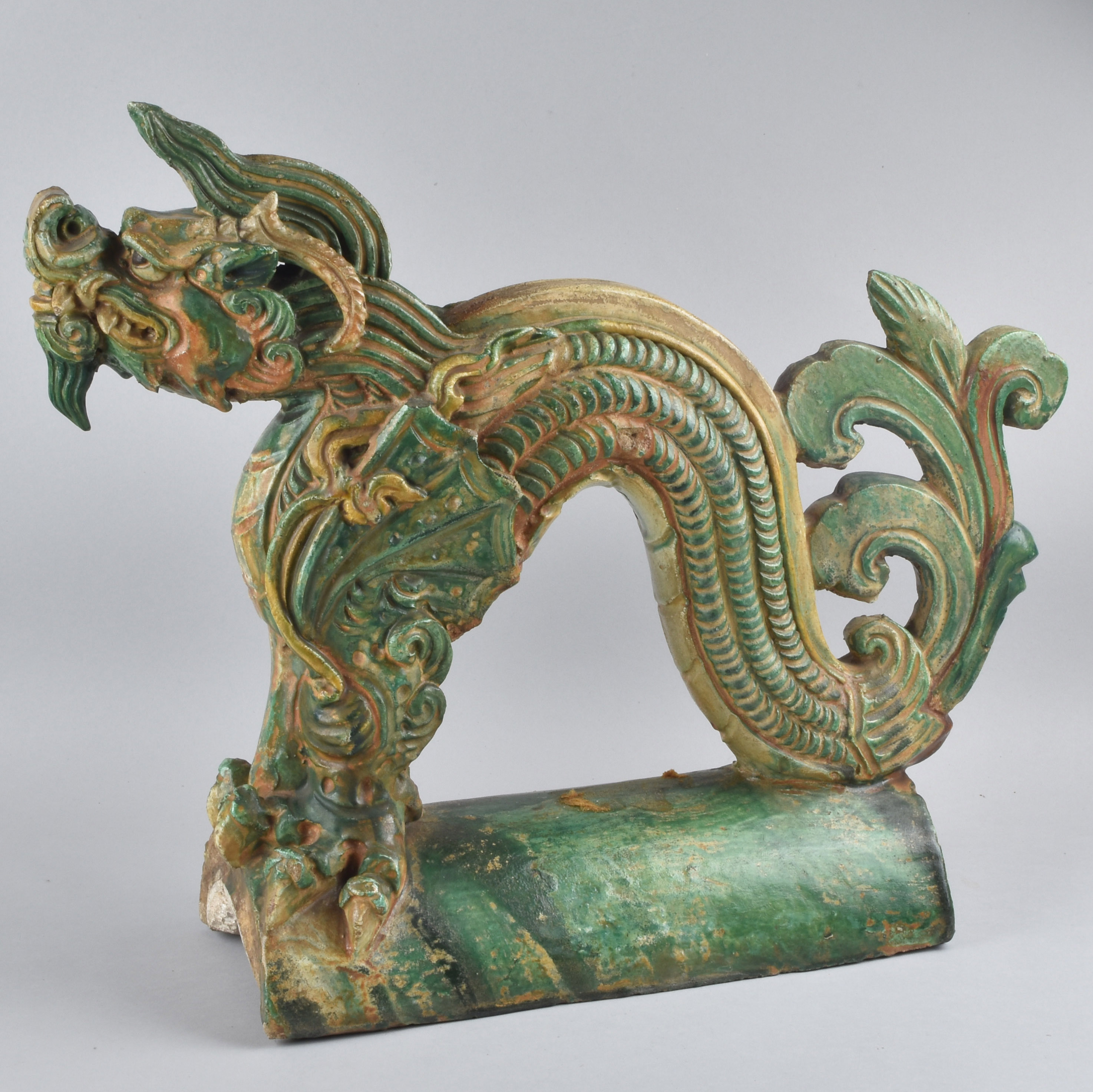
A Chinese sancai roof tile in the form of a dragon.
A blanc-de-Chine figure of Budai. Qing dynasty
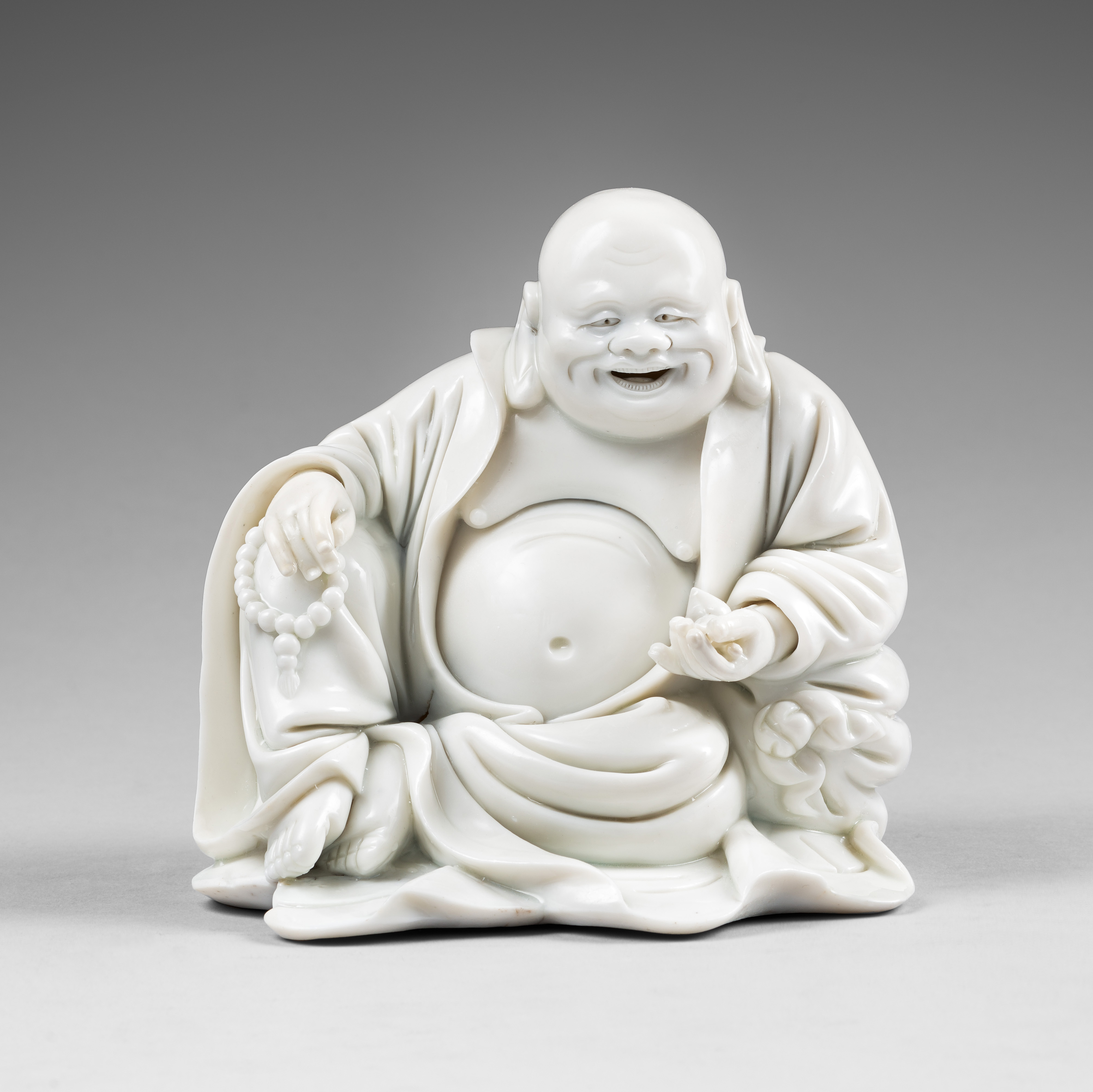
The rotund figure is seated in rajalilaasana, the posture of royal ease, with a cheerful expression and wearing robes that cover the shoulders and legs, leaving the chest and round belly bare. He wears a string of prayer beads.
A famille verte biscuit figure of Li Bai. Kangxi
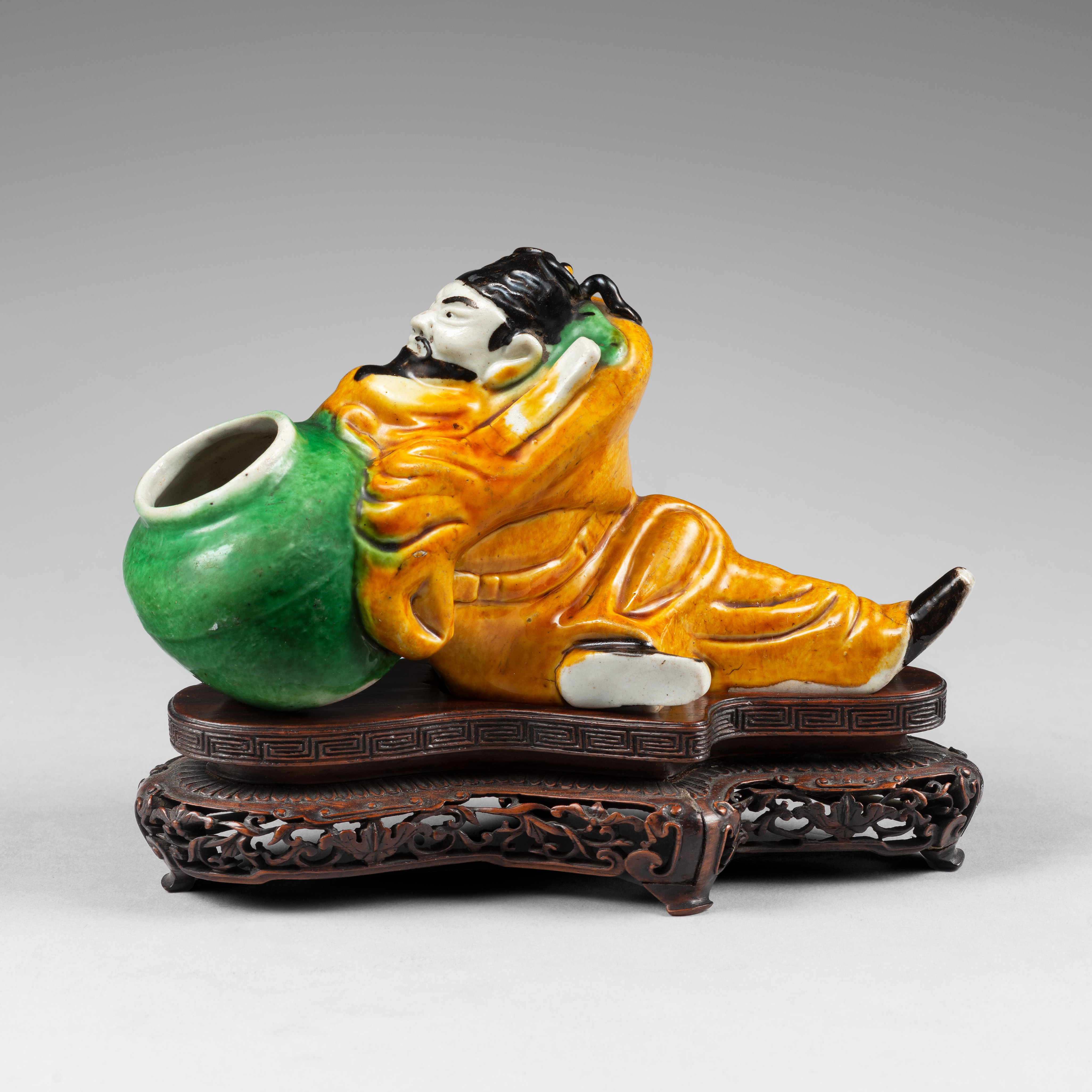
The drunken poet seated with his legs crossed, wrapped in a long robe, wearing a court official’s hat, dressed in yellow robes and with tall boots, leaning on a large green-glazed jar of rice wine
A cat turquoise and aubergine nightlight. 18th century
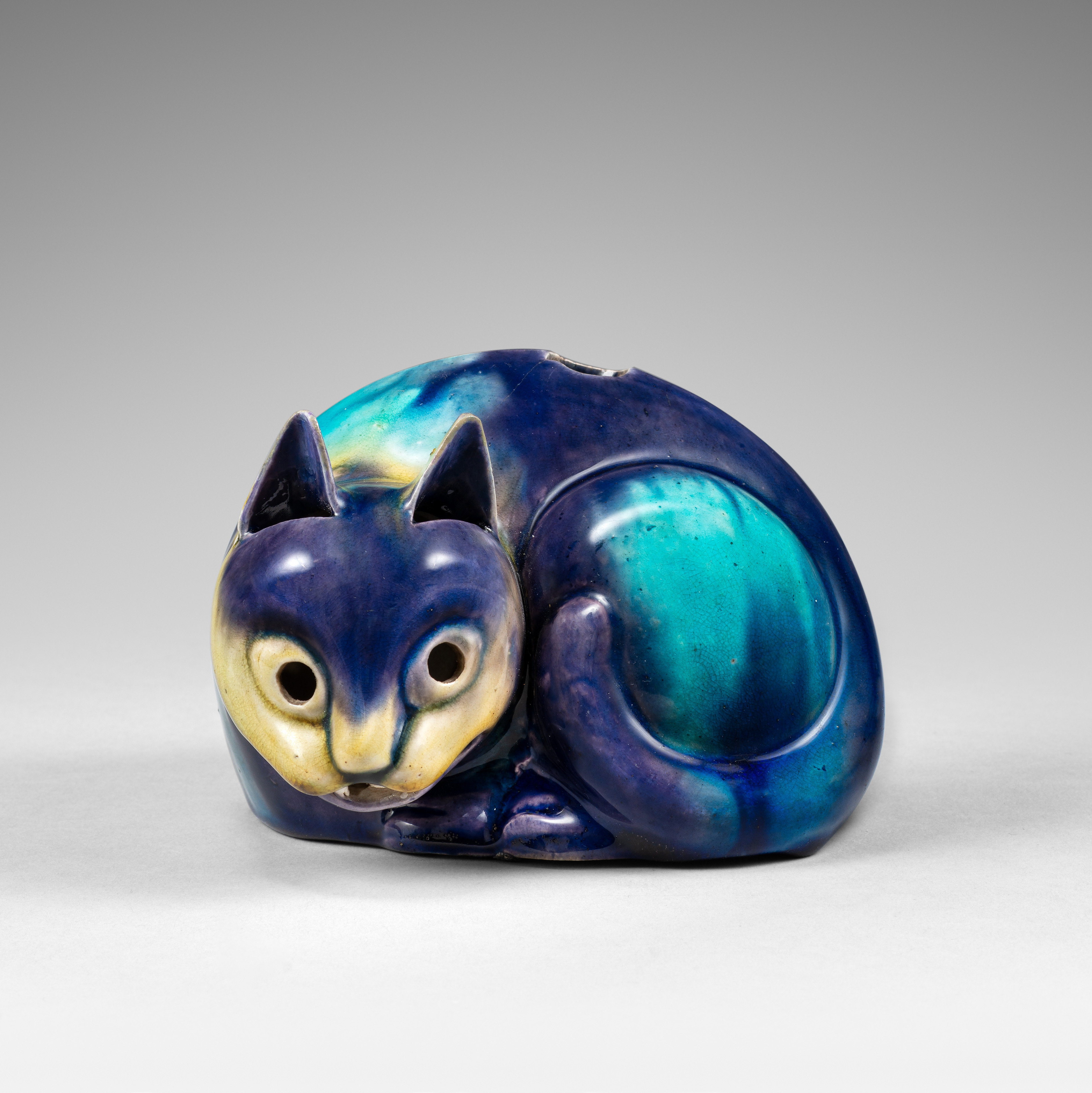
Enameled in bright turquoise, aubergine and yellow, this molded porcelain figure of a crouching cat is hollow with no base. It is pierced with large holes for the eyes and mouth and has an opening in its back. Its teeth and tongue are finely executed. Its ears are pricked and its long tail is curled around its […]