
A Chinese blue and white – Batavia brown (capucin) bowl. Kangxi period
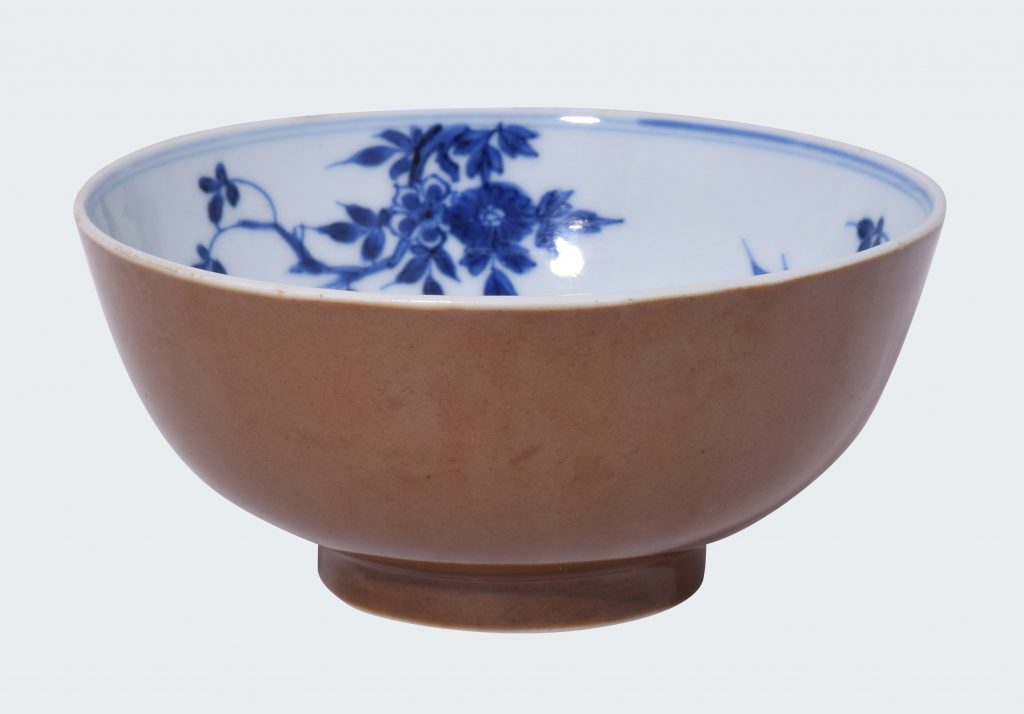
Decorated in underglaze blue with flowers.
A pair of Chinese blue and white dishes decorated with figures. Kangxi period
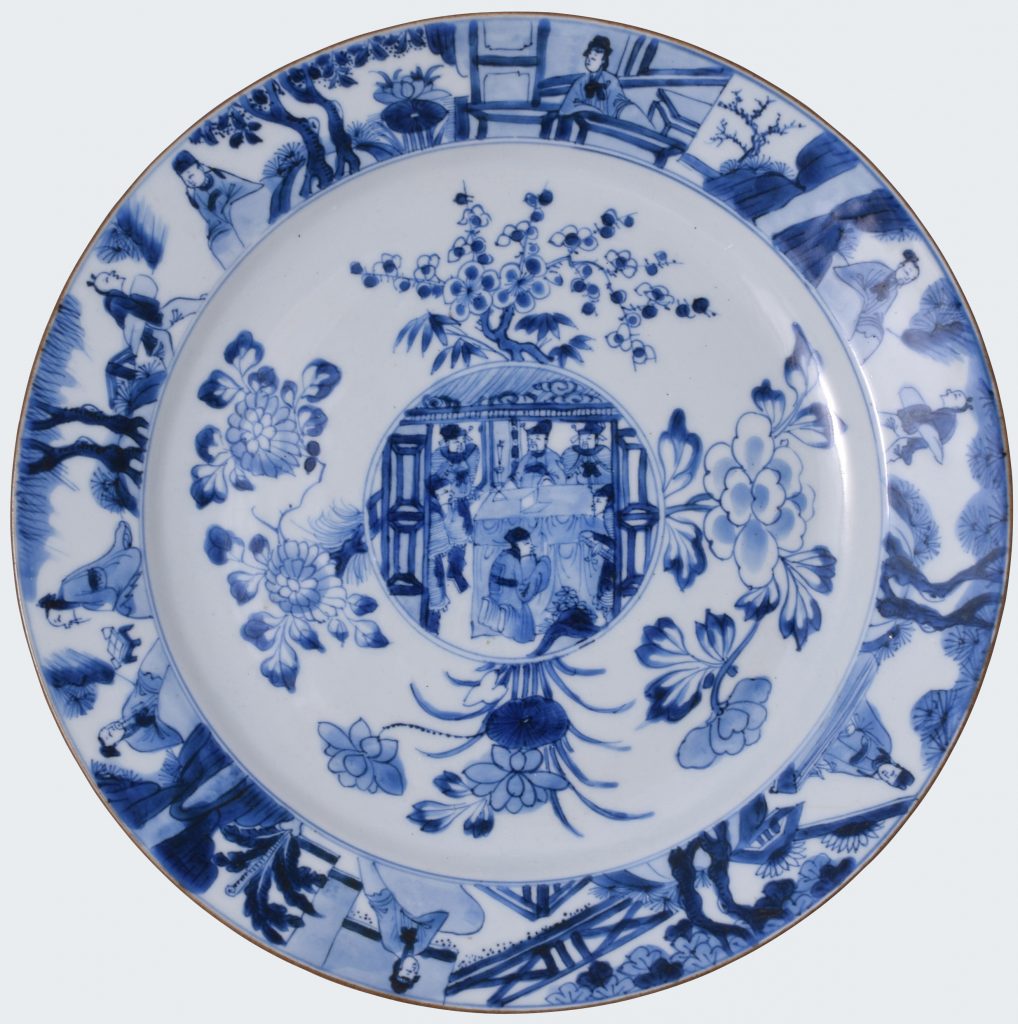
Each decorated in underglaze-blue, the centre with a convex medallion with a scene of an official making judgment on a genuflecting supplicant within a house, flanked in the well with peony prunus, lotus and chrysanthemum plants, the everted rim with a continuous frieze of various scenes of people in landscapes and gardens, the revers with […]
A pair of unusual Chinese famille verte reticulated dishes decorated with a magpie. Kangxi period
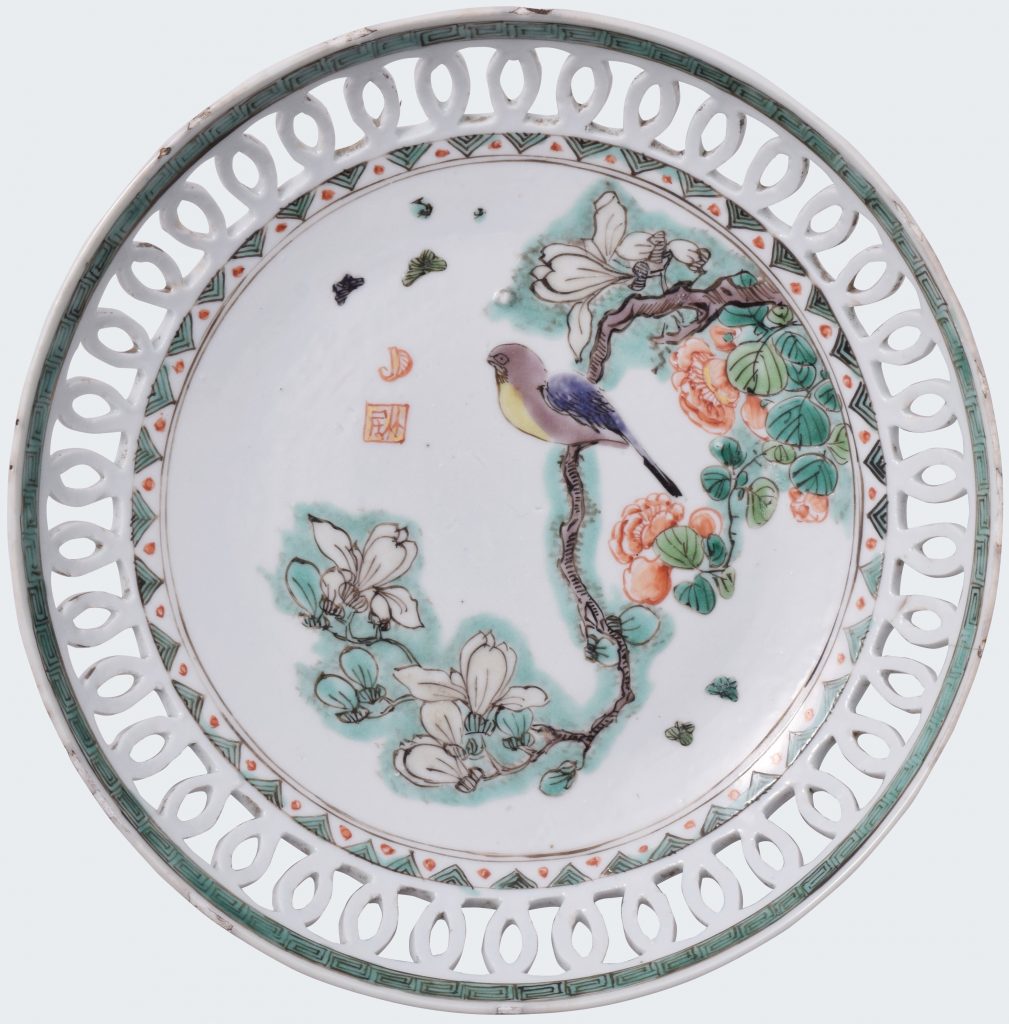
Of circular form with a flat rim pierced with interlocking circles forming a foliate rim, decorated in the famille verte palette with a magpie on a branch of prunus and peonies.
A very large Chinese blue and white basin decorated with birds. Kangxi/Yongzheng period
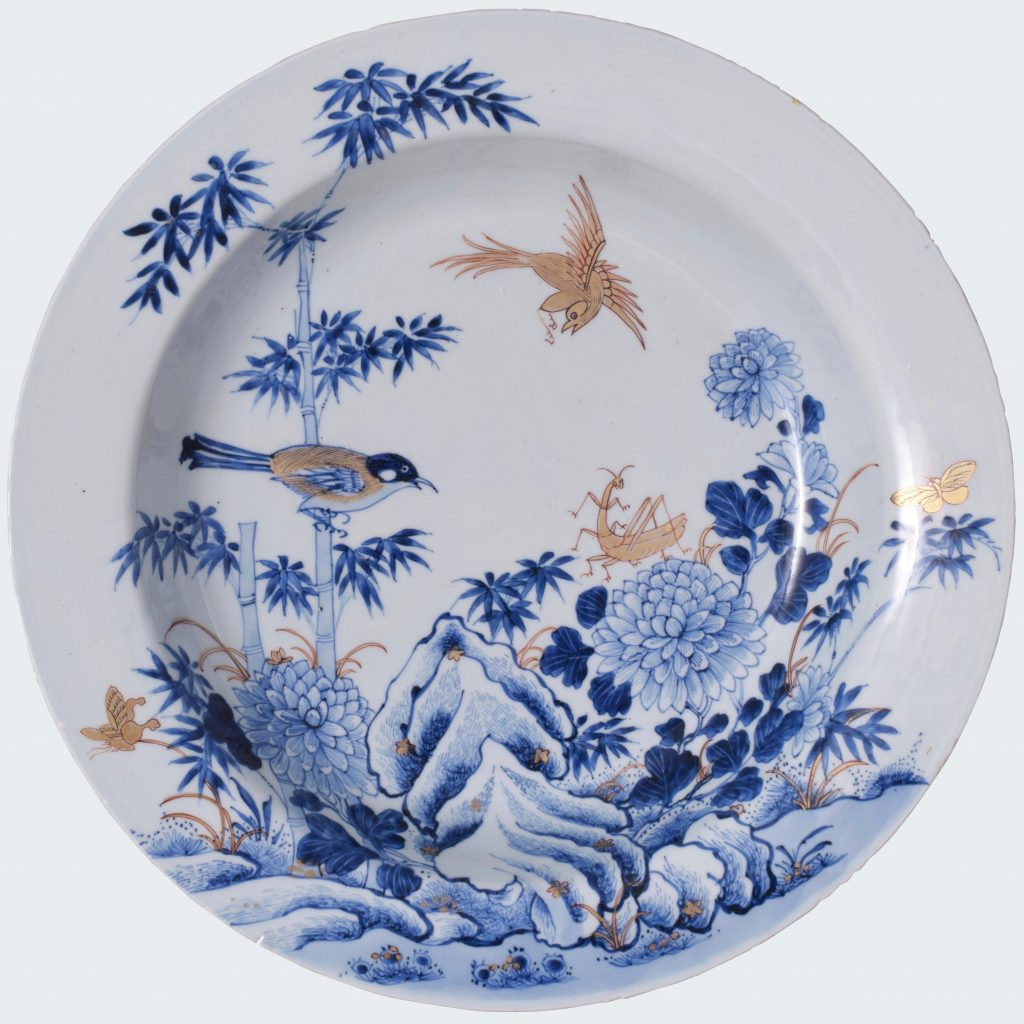
Decorated in blue & white with two birds.
A Chinese Imari bottle decorated with a Chinese landscape. Kangxi period.
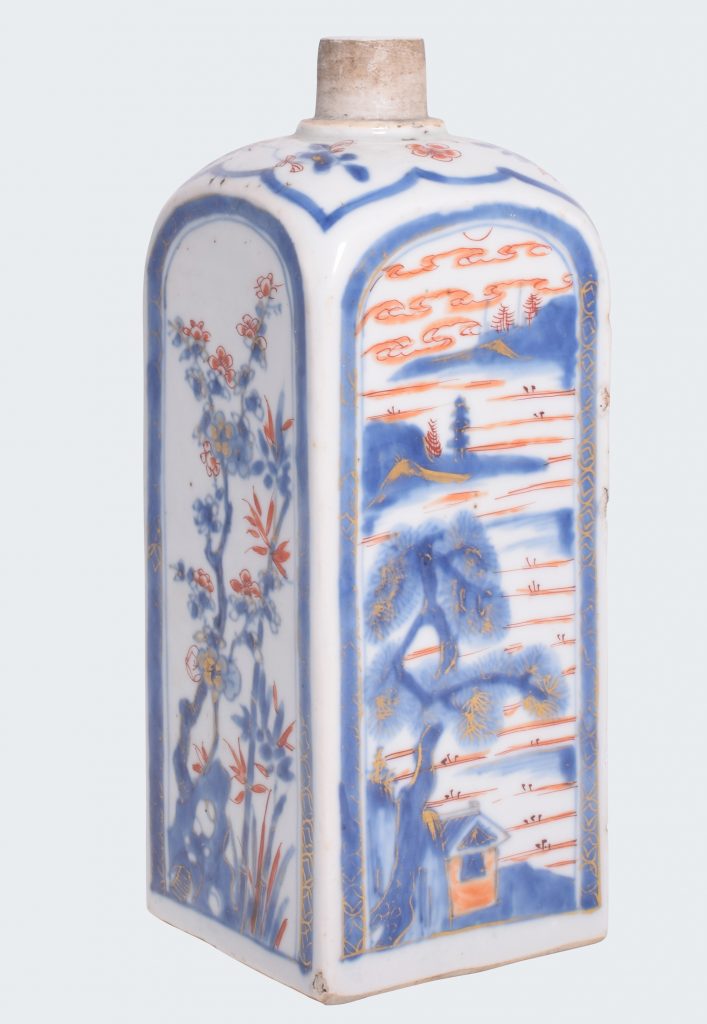
Decorated in the imari palette with Chinese landscape.
A Chinese figure of guanyin decorated with famille verte enamels on the biscuit. Kangxi period.
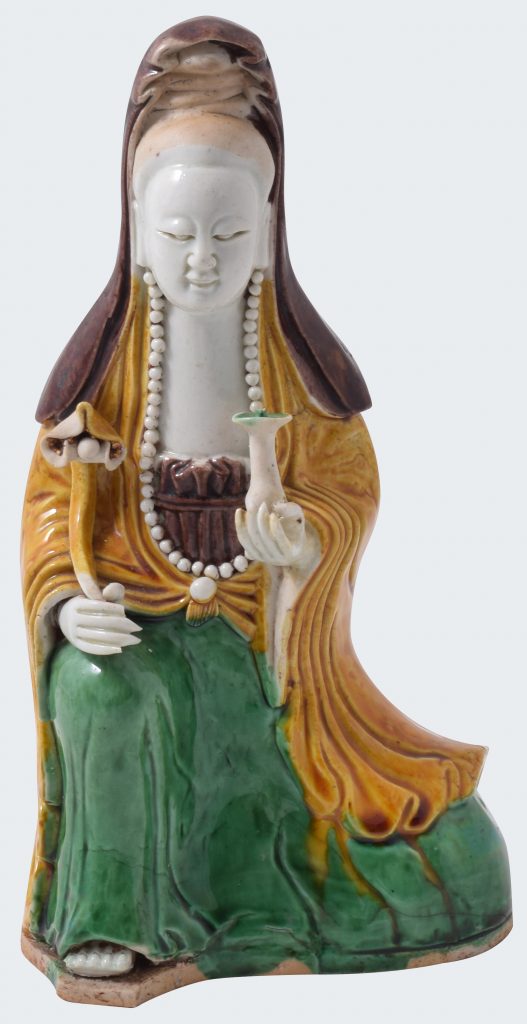
A figure of Bodhisattva Guanyin seated upon a base with one leg touching the ground and the other bent upwards. She wears a long robe and clock over head, and is modeled with a serene expression on her face. She is holding a small vase in one hand and a lotus in the other.
A Chinese miniature powder blue teapot decorated with cockerels. Kangxi period
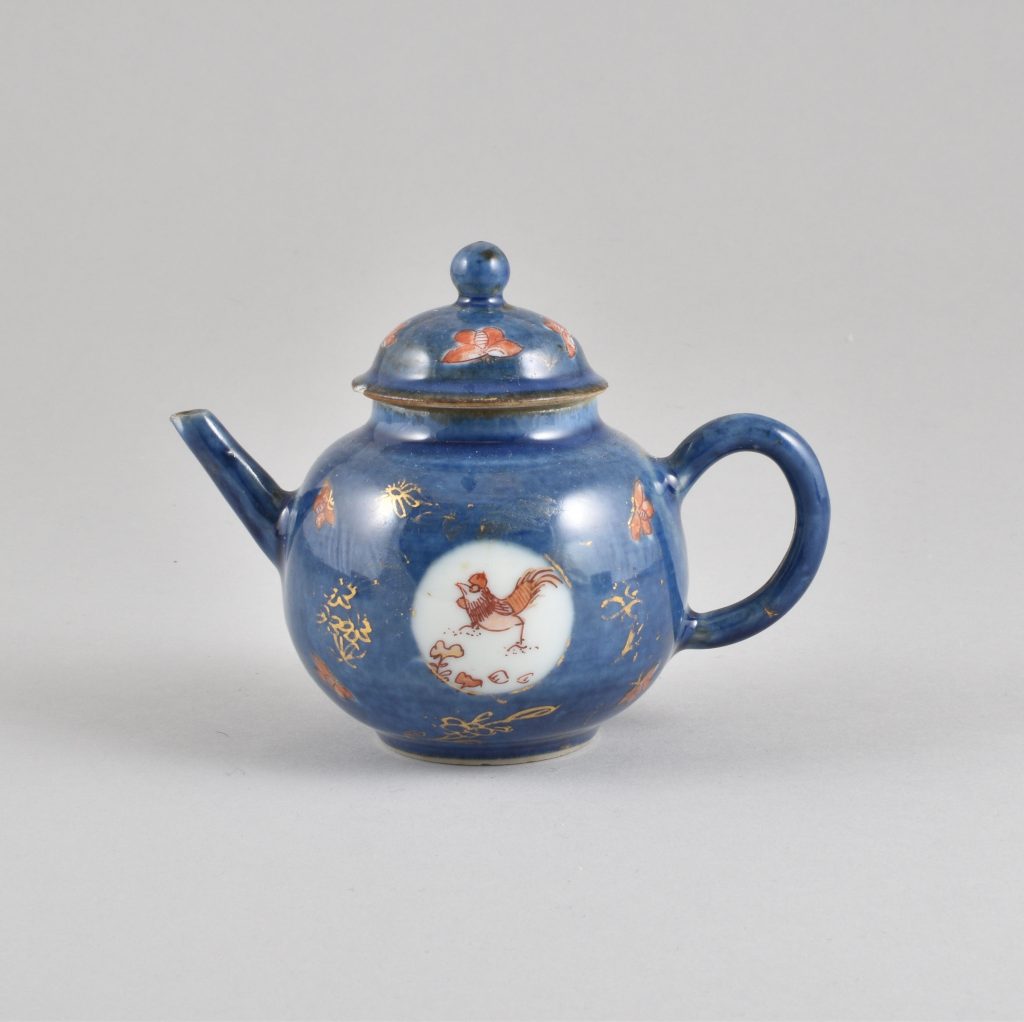
Decorated with underglaze powder-blue ground and panels of cockerels in reserve.
A pair of Chinese powder-blue ground dishes decorated in panels of flowering branches. Kangxi period.
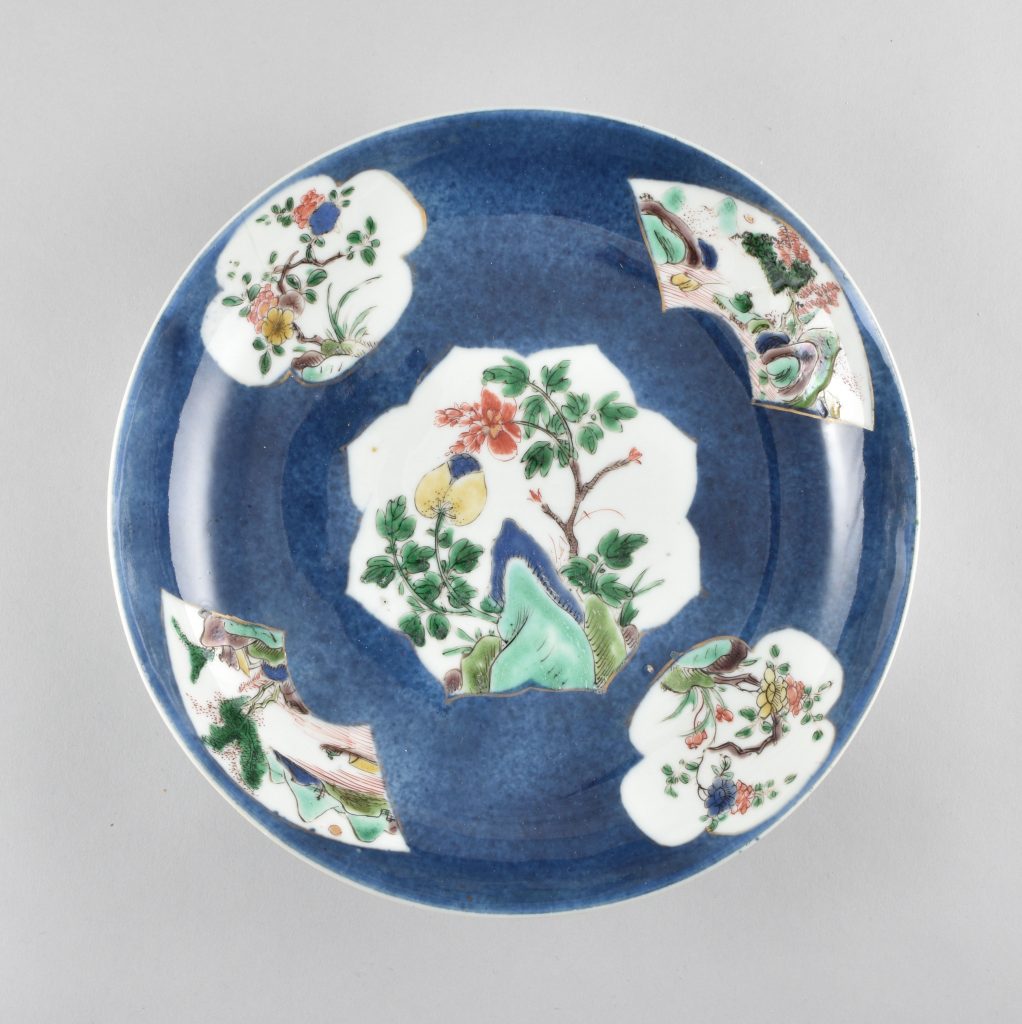
Decorated with barbed famille verte panels of flowers, rocks and landscape.
A Chinese figure of a scholar decorated with famille verte enamels on the biscuit. Kangxi Period.
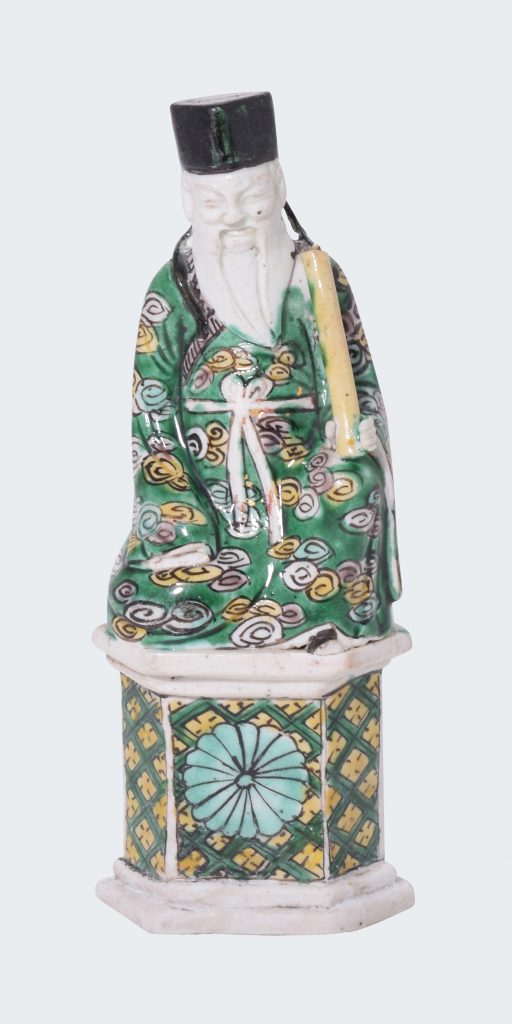
Figure of an immortal seated on a hexagonal base, decorated in famille verte enamels on the biscuit, the face, beard and left hand covered with transparent lead glaze. Three sides of the base have geometrical patterns and rosettes in enamels ; the three sides at the back are undecorated except for a stylized flower or a […]
A Chinese Imari teapot decorated with flowers. Kangxi period
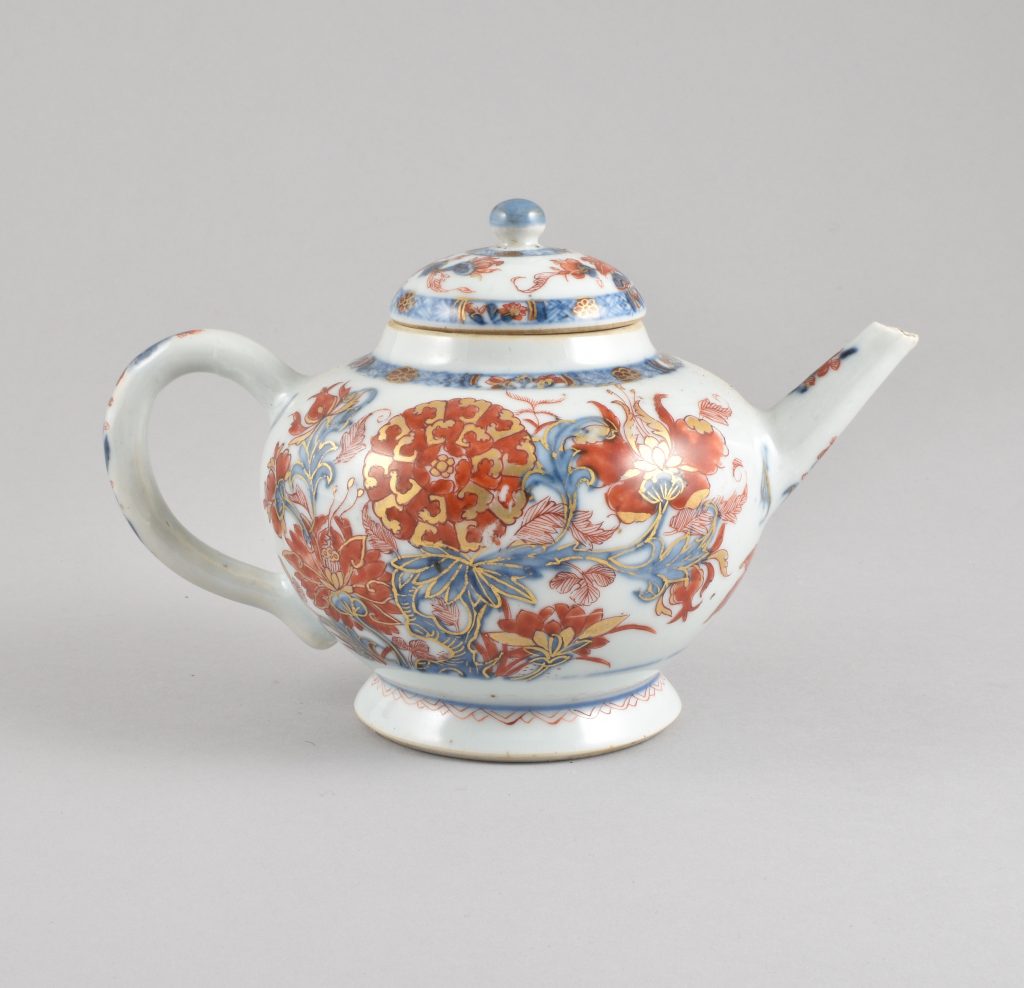
Decorated in the traditional “imari” palette with flowers.