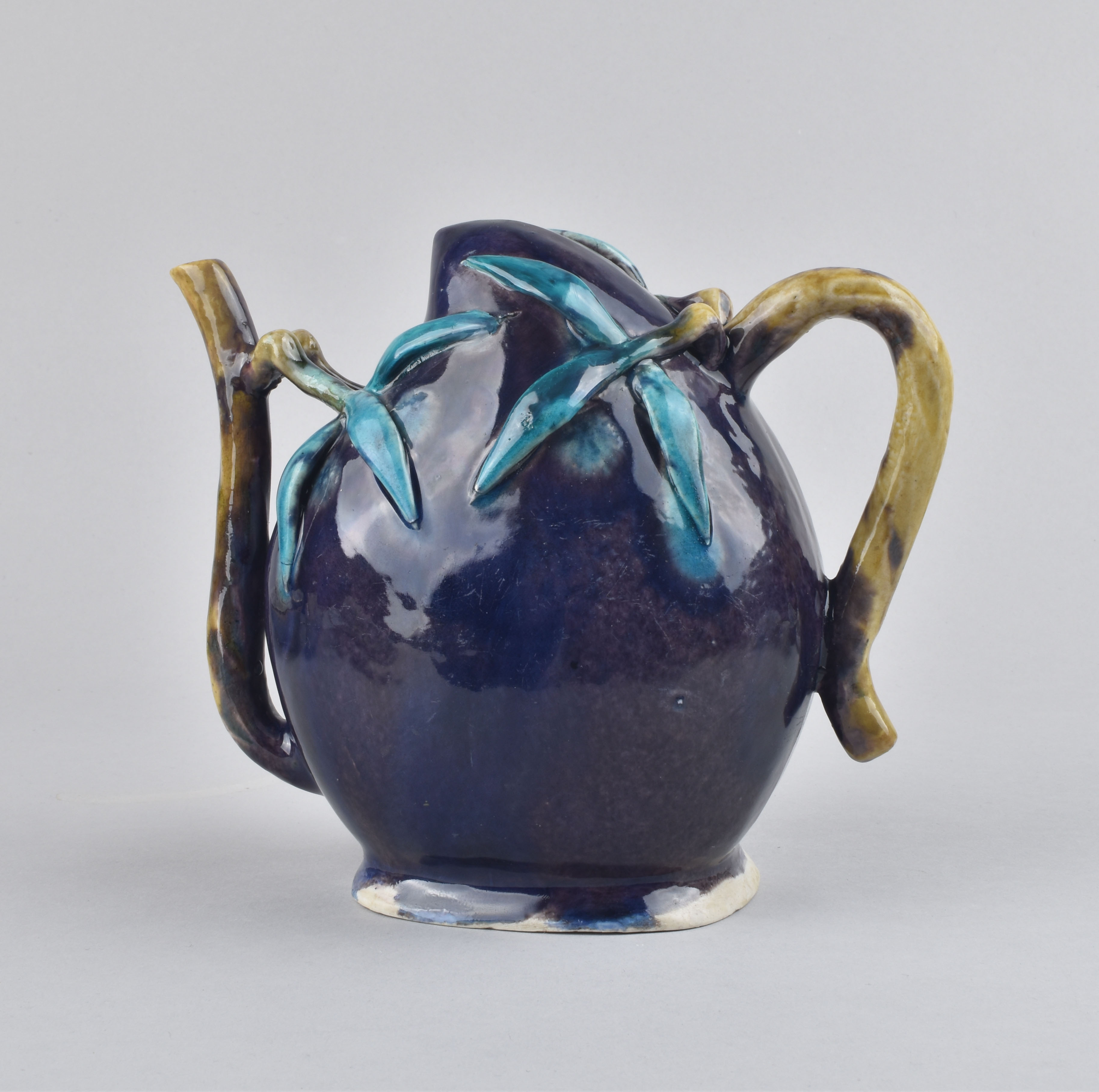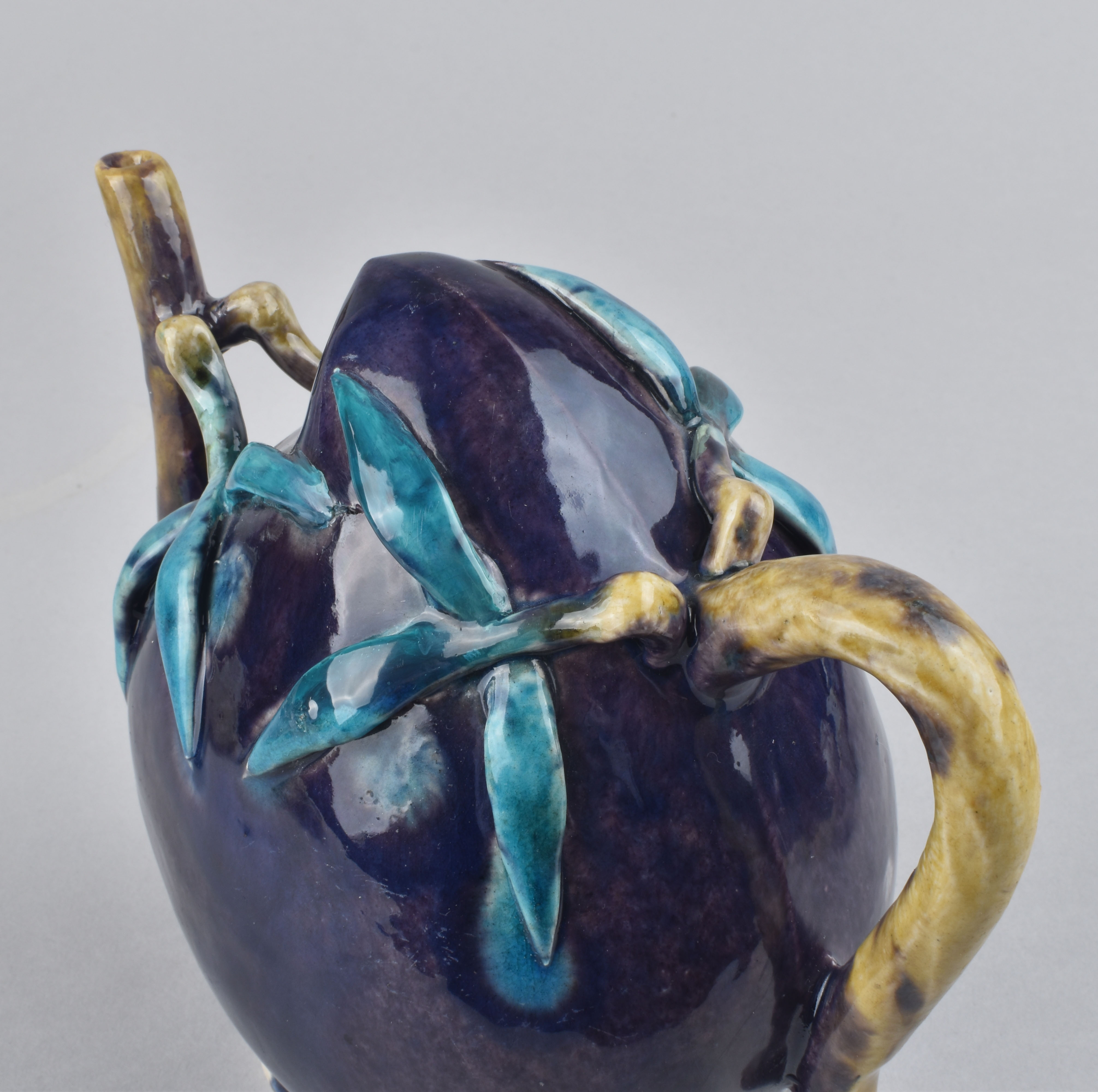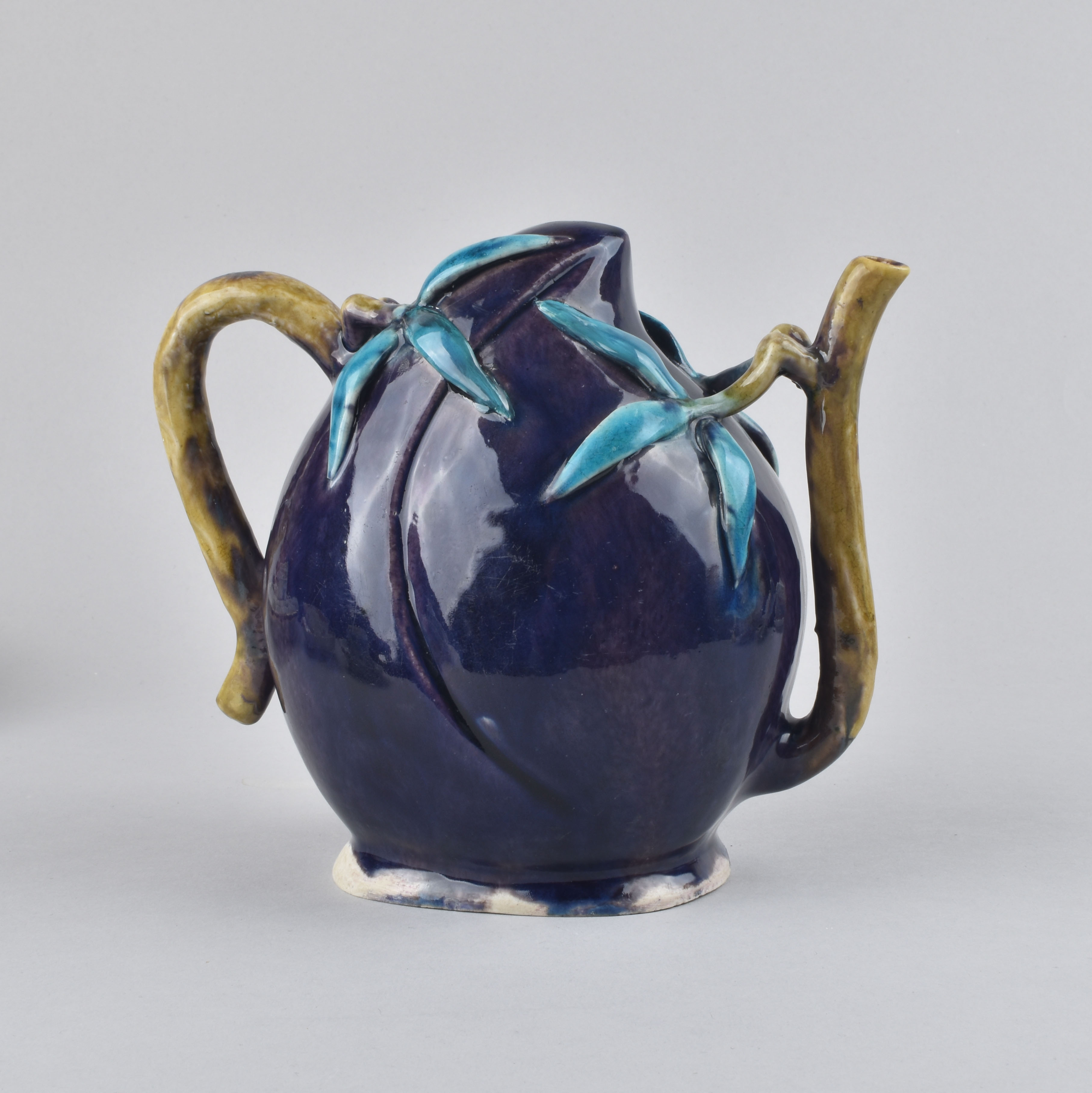
An aubergine and turquoise-glazed ‘Cadogan’ wine-pot. Kangxi

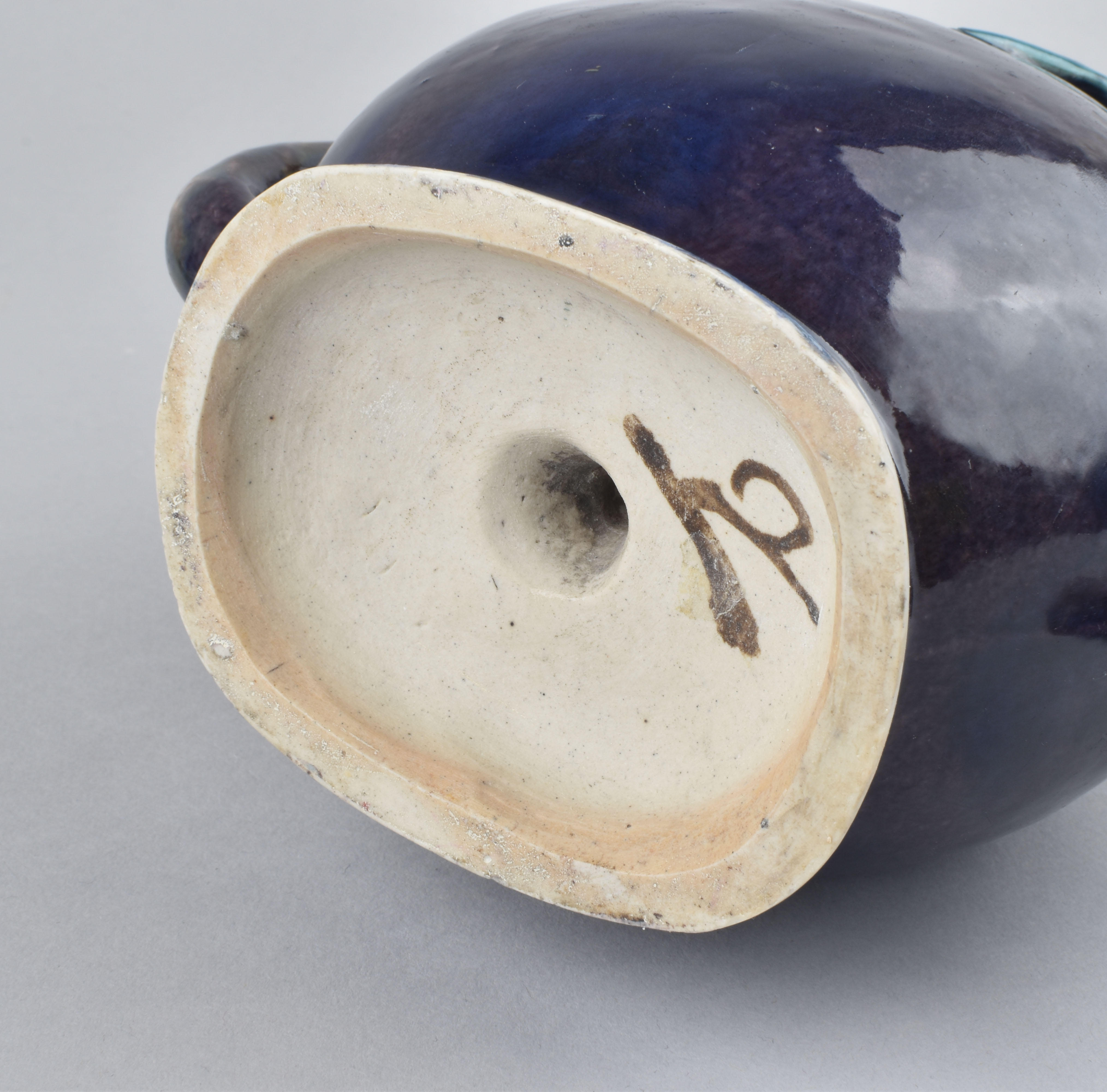
The ewer is of peach-shaped form with a spout formed like a branch issuing two stems terminating on the body with two leaves.  The wine-pot is supported by a splayed foot and the whole piece is covered in a deep lustrous aubergine glaze. The spout and the handle are enameled in manganese, branches are turquoise and the recessed base has a central aperture and an unglazed footrim.
COUNTRY : China
TIME: Kangxi (1662-1722)
MATERIAL : Porcelain (biscuit)
SIZE : 6.29 in. (16 cm)
REFERENCE : D013
STATUS : vendu
Related works.

A similar cadogan teapot is in the collection of the Metropolitan Museum of NYC (accession number 79.2.66, provenance Samuel Putman Avery).

Additional information.

The ‘Cadogan’ wine-pot has no lid and is filled upside down through a hole in the base leading to a tube inside te pot which prevents a back flow. It is known in China as dao guan hu (upside down filling wine pot) and often found in the shape of a peach (symbol of long life).

This type of ewer, also called ‘puzzle pot’, is said to be named after William Cadogan, 1st Earl of Cadogan (1675-1726) who was the first to own a wine-pot of this shape. He and his wife brought an example to Britain where they used it as an entertainment piece.

See other items

Question about condition report

Question about condition report