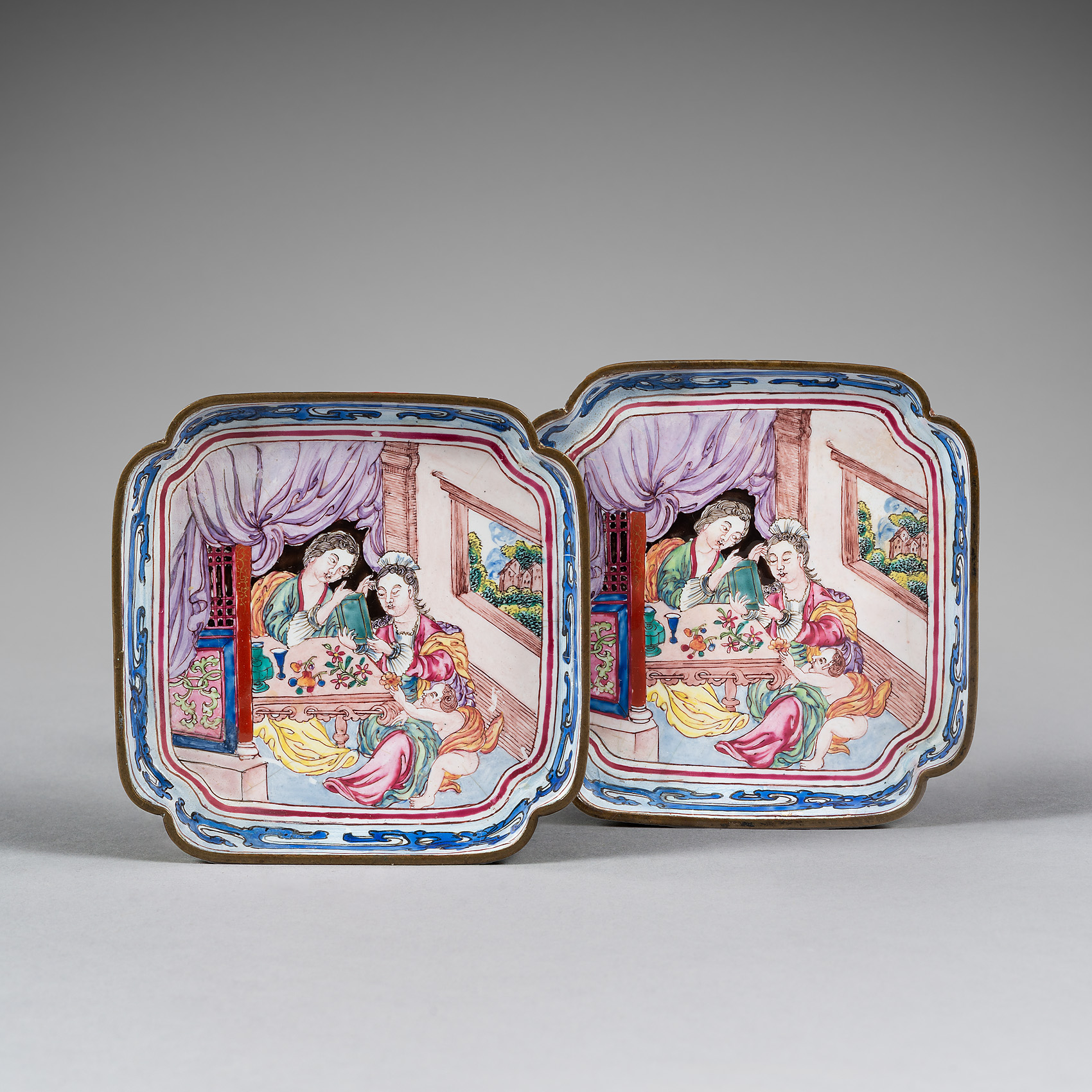
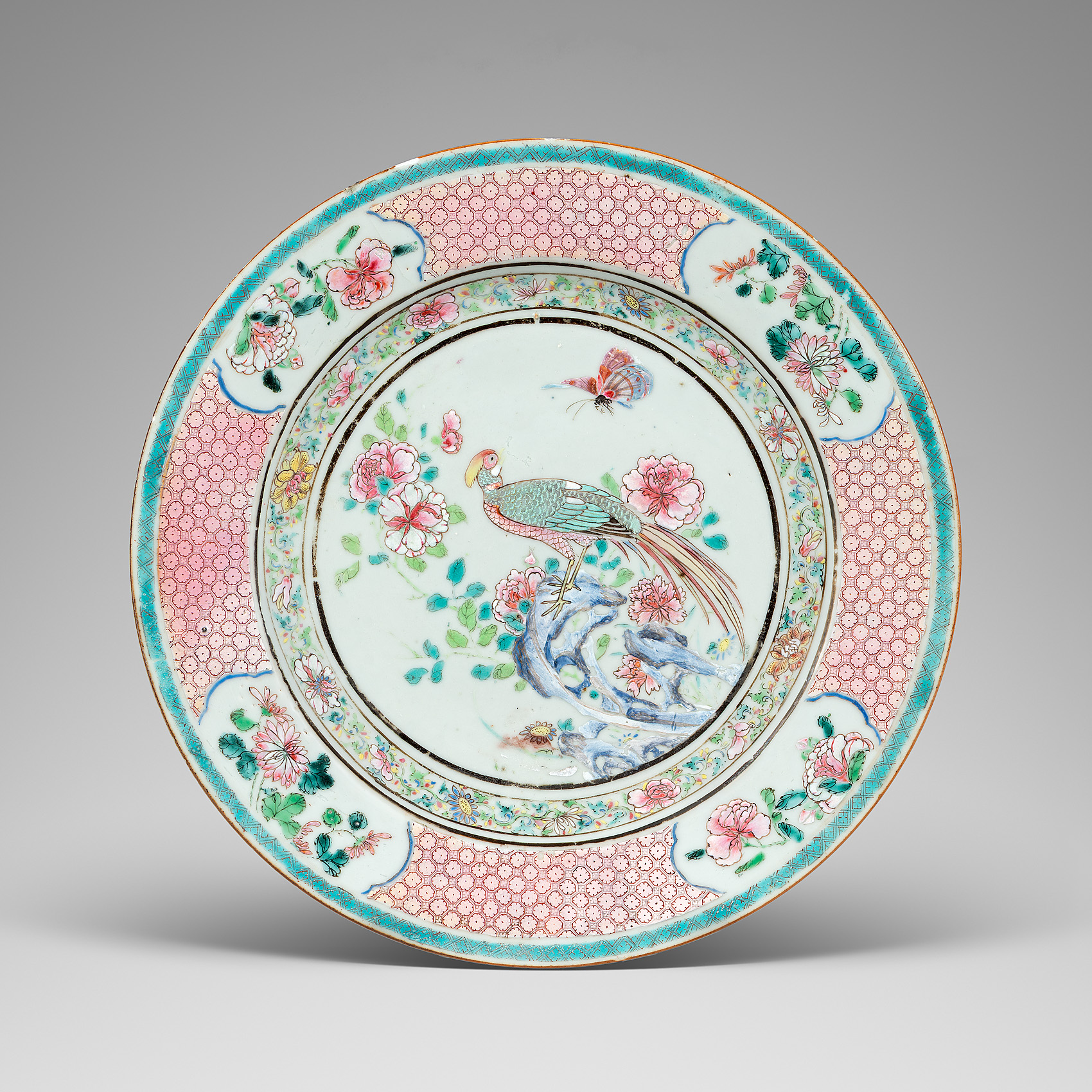
Additional information.This painted-enamel dishes reflect the exchange of craft traditions between East and West. The technique of painted enamel on metal was introduced to China in the early eighteenth century, during the reign of the Kangxi emperor, through contacts with Western missionaries and craftsmen. The Jesuits at the imperial court in Beijing played a decisive role in acquainting Chinese workshops with Western-style enameling around 1710–1720. Initially adopted within the imperial ateliers—where Kangxi and, later, Yongzheng commissioned pieces inspired by European enamels—the technique subsequently spread to Canton (Guangzhou), the great southern port open to foreign trade. By the 1720s–1730s, Canton produced its own painted enamels on copper, alongside the export porcelains for which it was already renowned. Under the Qianlong emperor, production reached its height: it drew upon the famille rose palette (introduced around 1720), which expanded the chromatic range, and responded to the growing demand both from the Qing court and from overseas markets.
Scenes with European figures appear frequently on Chinese painted-enamel wares on copper. This interest in Western imagery is evident throughout the eighteenth century and is found on both porcelain and painted enamels. In 1712, Father d’Entrecolles observed that “The Mandarins, who are aware of the Europeans’ genius for invention, have sometimes asked me to have new and curious drawings sent from Europe in order to show something unusual to the Emperor.” In painted enamels on copper, Europeans are typically depicted with red, brown, or occasionally fair hair, often shown at leisure in Chinese garden landscapes; interior settings occur more rarely.
Painted enamels on copper aroused admiration in the West for their brilliance and exotic appeal, and were regarded as rare Oriental curiosities that delighted European collectors. They never, however, became a commodity of mass export. The Qing authorities prohibited the export of copper, a metal of strategic monetary value, which prevented European trading companies from officially including such objects in their cargoes. As a result, most enamels on copper left China through private or semi-clandestine channels: they were acquired locally by merchants, ship captains, or passengers, and dispatched discreetly to Europe at their own risk and peril.
The skill required to produce such enamels was considerable: each piece, fashioned from fine copper, was coated with successive layers of vitreous enamel and fired multiple times at high temperatures to set the colors—a delicate process in which the slightest flaw could cause the surface to crack or burst. The minute polychrome decoration, applied with a fine brush, reveals the ability of Chinese artists to create miniature works of art with remarkable precision. Intended for decorative rather than functional use, these small cups belonged more to the realm of luxury objects—displayed in a cabinet of curiosities or on a sideboard—than to that of ordinary tableware.
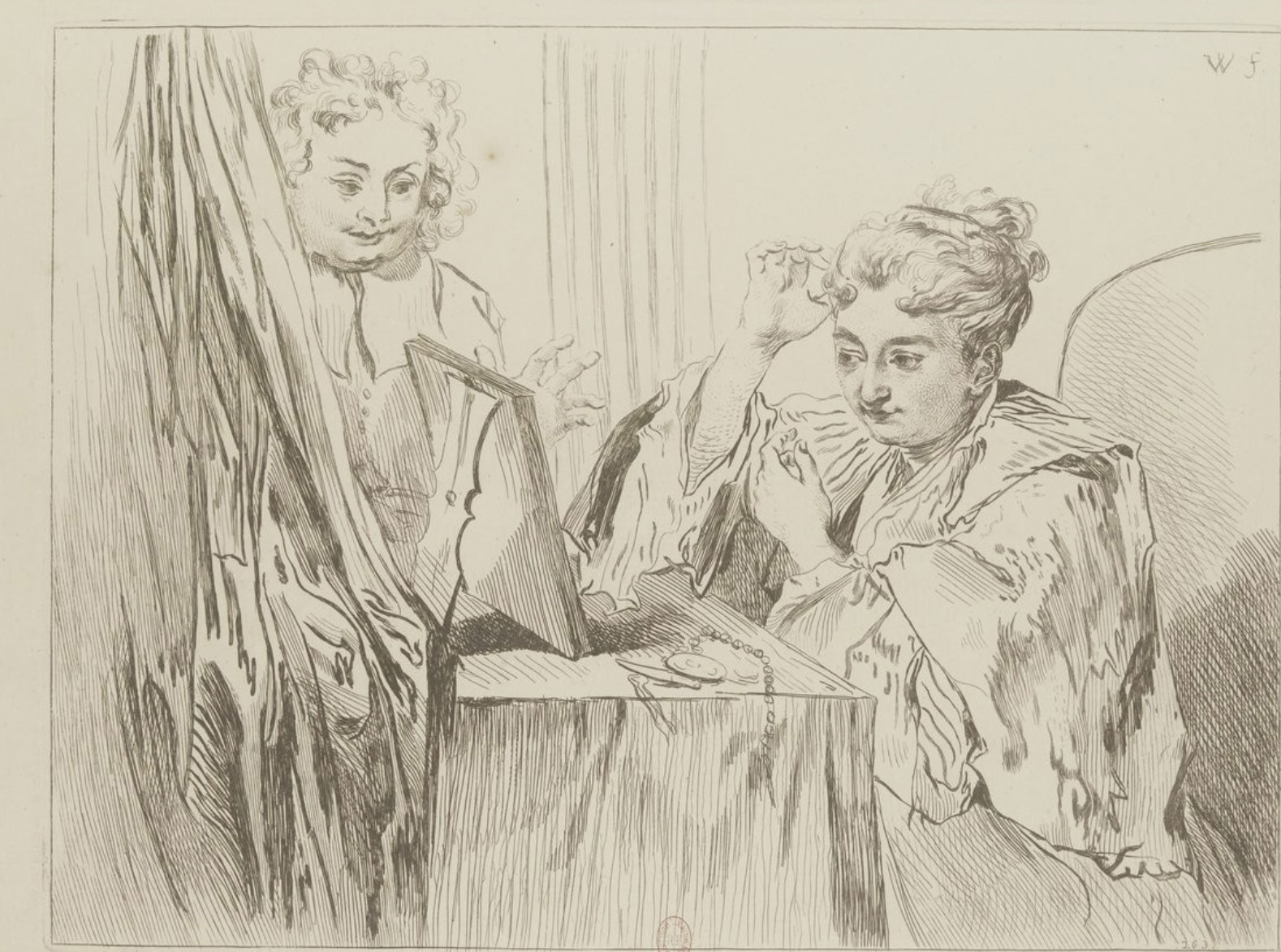
The scene is conceived in the spirit of French rocaille painting of the 1730s, and is related to an engraving after Antoine Watteau (1684–1721), Figures of Various Characters (Woman at Her Toilette, an Abbé beside Her), engraved in Paris in 1728 by J. Audran and F. Chéreau (National Library of France, BnF, FOL-DB-15 (D, 6)).