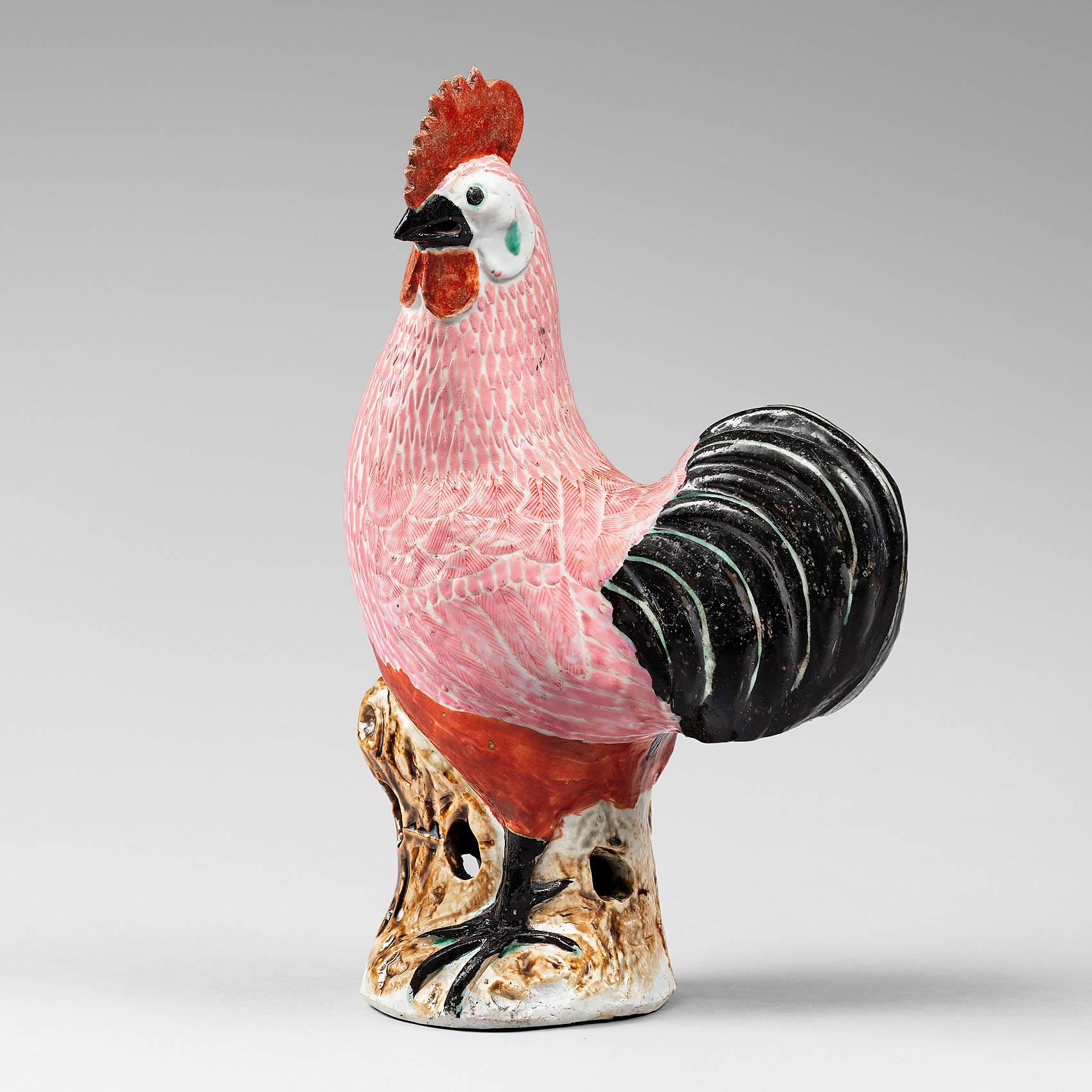
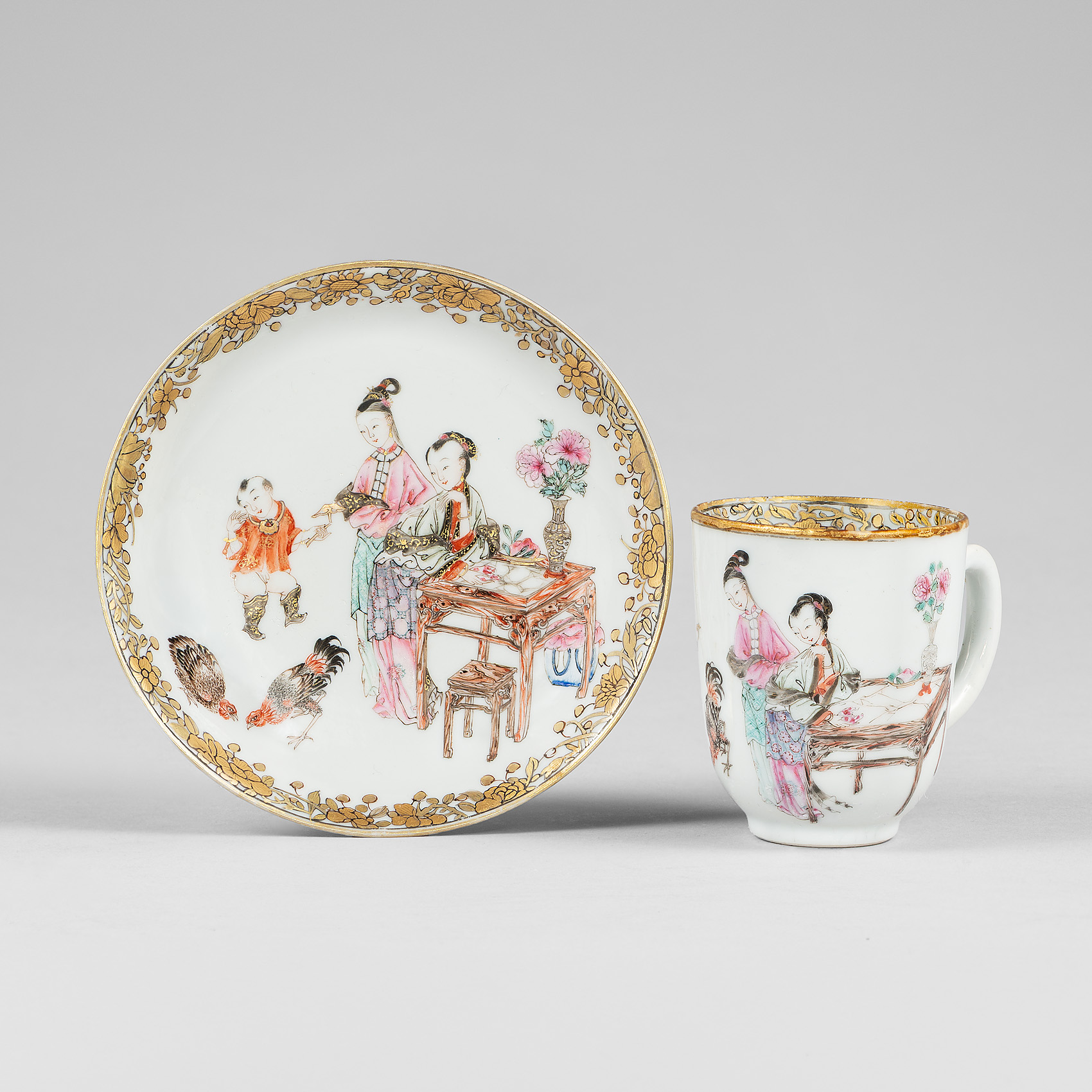
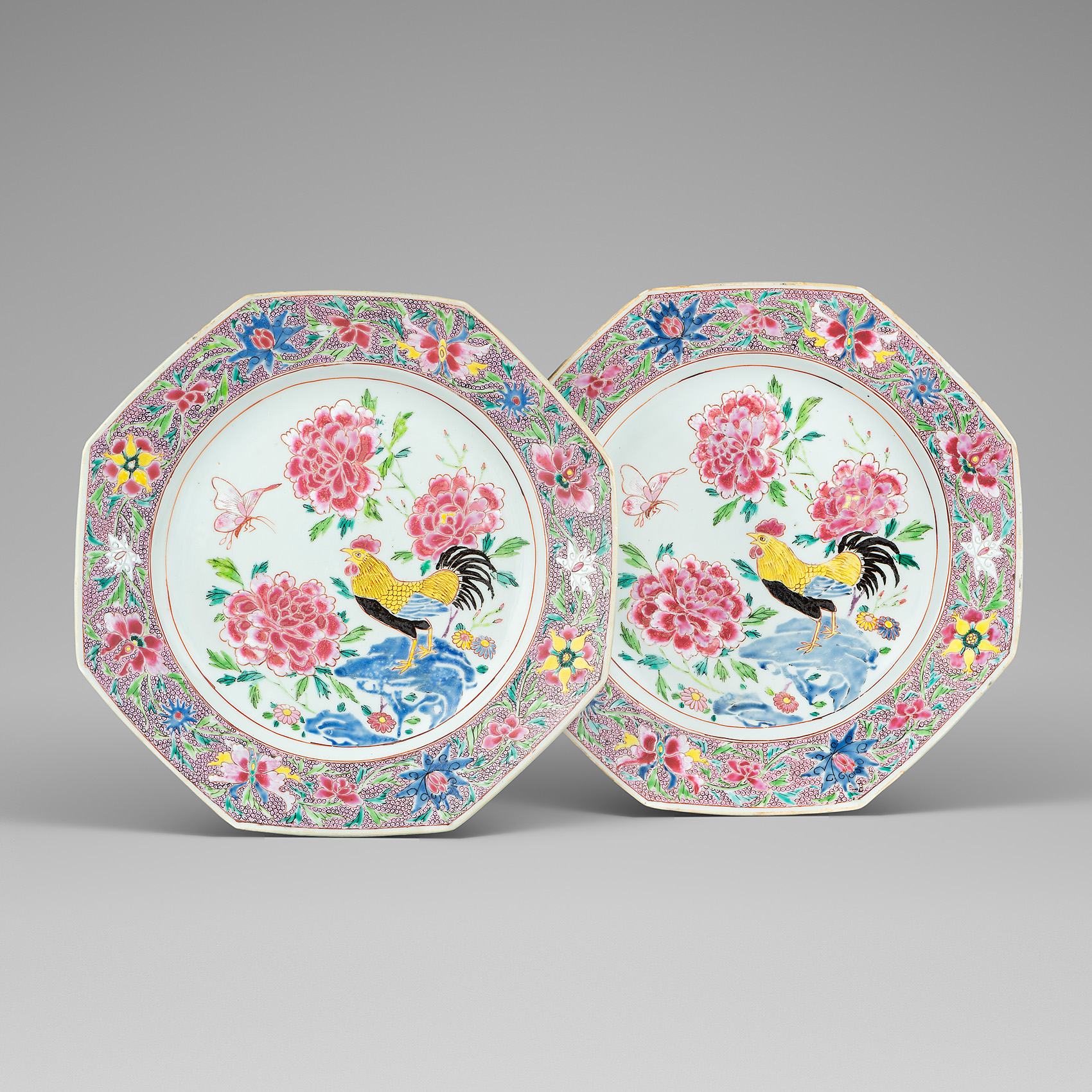
Related works.Six comparable pairs of famille rose roosters[1] are listed in the 1777 inventory of the Chinese Pavilion at Drottningholm where they are still on display.
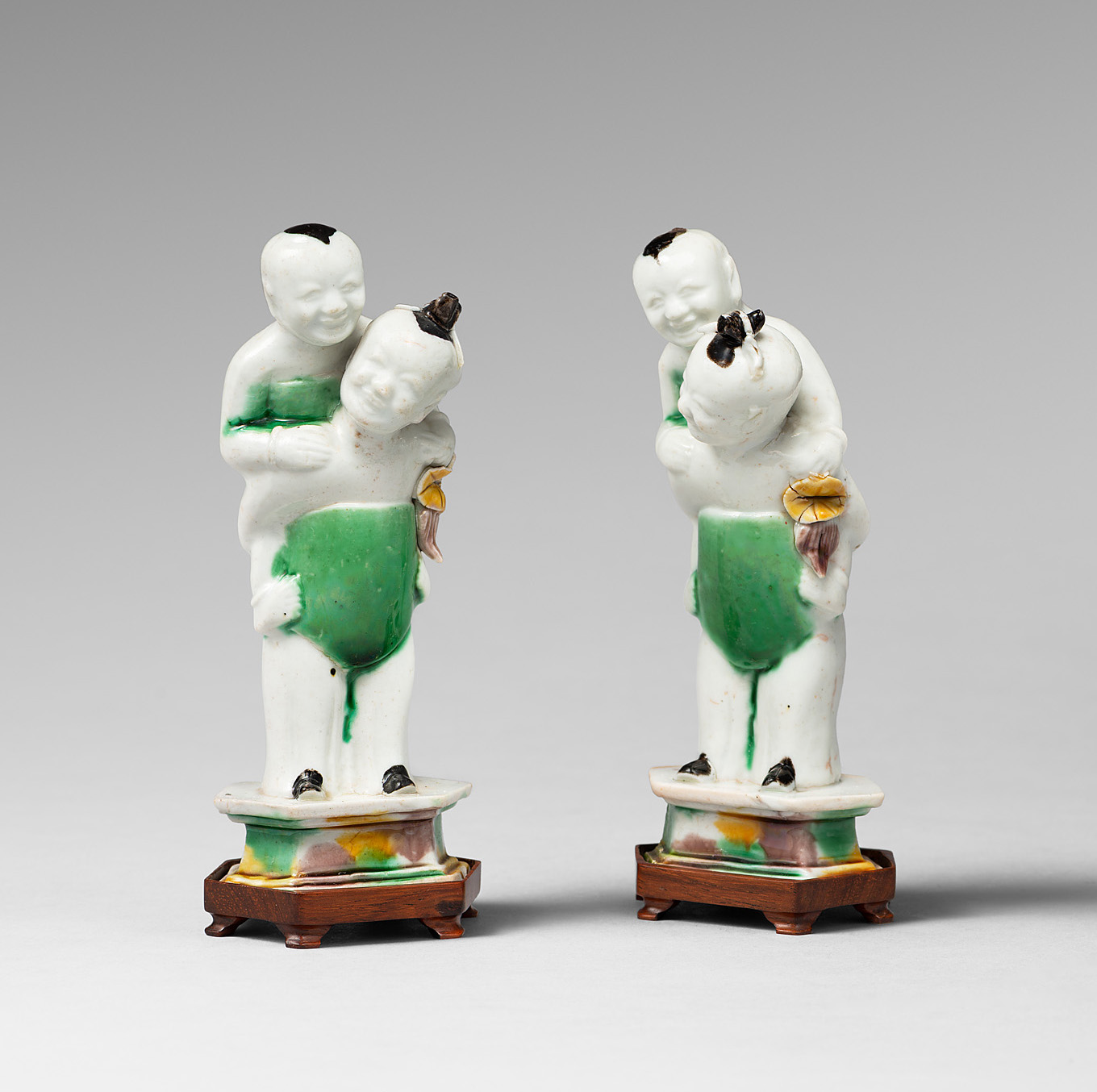
A pair of figures, from the Copeland collection are preserved in the collection of the Peabody Essex Museum. They are illustrated by Bill Sargent in The Copeland Collection: Chinese and Japanese Ceramic Figures, 2006, pp. 141-143.
Laurent Héliot (1848–1909) was a Parisian art dealer, originating from Burgundy. His life and career are sparsely documented, and he often appears only as a name in lists of dealers or donors. He nevertheless played a significant role in building the collection of Ernest Grandidier (1833–1912), supplying nearly a third of the ceramics.
Several French museums acquired objects from Laurent Héliot who also made a number of donations to public institutions. He loaned pieces for the exhibitions organised by the Union centrale des Arts décoratifs. He appears as one of the “active members” of the Association amicale franco-chinoise in the year of its foundation.
His sons, Gaston Héliot (1879–1936) and Maurice Héliot (1877–?), donated a large baluster vase to the Musée du Louvre in memory of their father a few weeks after his death; the vase is on display in the Musée Guimet [2]in Paris.
Between 1886 and 1910, the Union centrale des Arts décoratifs purchased thirty-five Chinese pieces from Héliot, dating from the Ming and Qing dynasties—including twenty-four porcelains and eight glass pieces—as well as a small number of Japanese works. After 1909, Gaston Héliot resumed his father’s activity as a dealer in Asian art, possibly with the assistance of his brother. In the 1920s, Gaston Héliot became Vice-President of the Société des Amis du musée Cernuschi.
[1] Aka Setterwall, The Chinese Pavilion at Drottningholm, Allhem, Sweden, 1974
[2] Inv. G 565