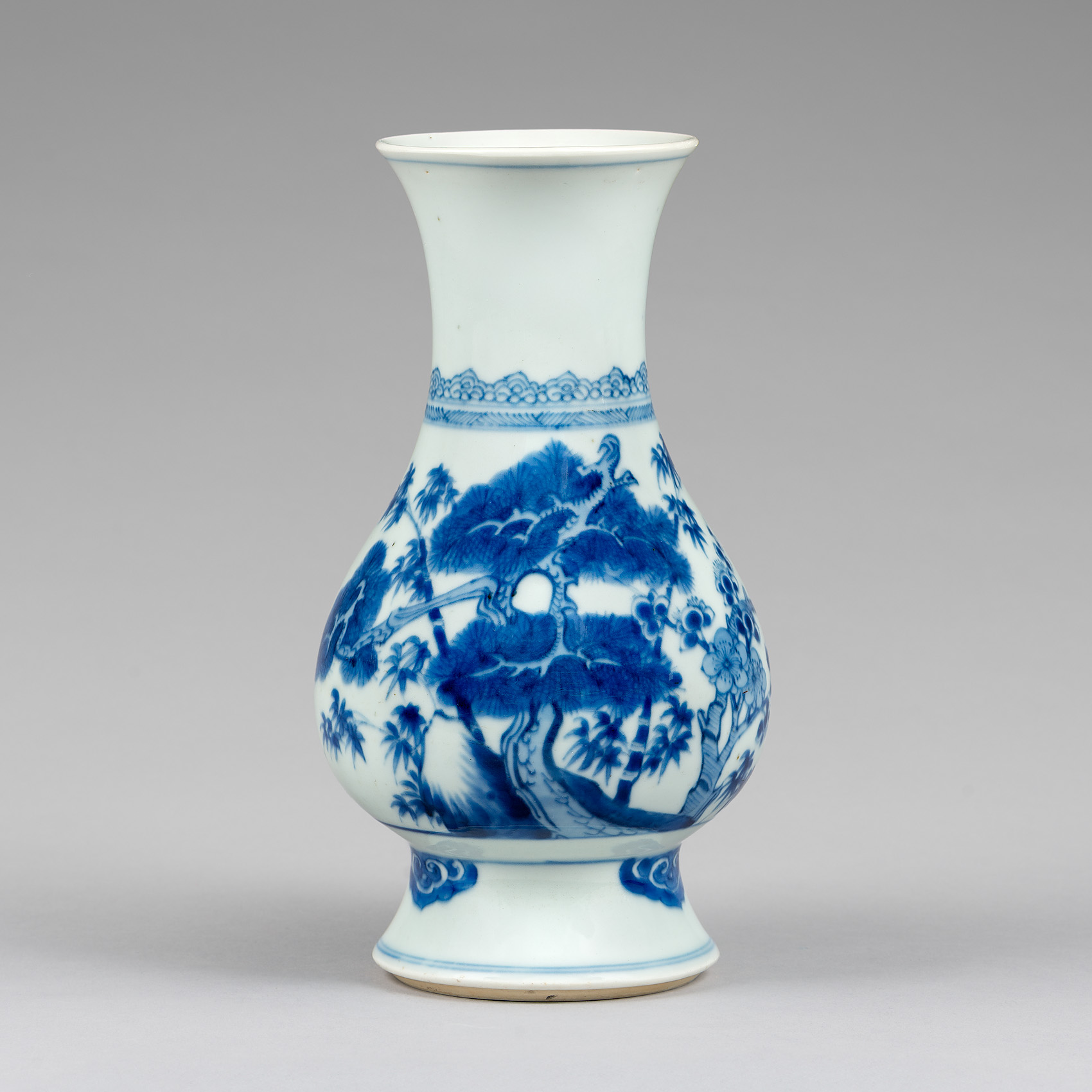
Additional information.This vase is formed in an elegant pear-shaped silhouette with a gently flared neck and spreading foot, a classic profile that emerged in Jingdezhen during the Ming dynasty and reached particular refinement in the Kangxi period. The softly rounded body provides a harmonious surface for painted decoration, while the elongated neck adds balance and vertical emphasis to the composition. Such forms were prized for their clarity of line and restrained elegance, reflecting the aesthetic ideals of the scholar’s studio. Although often associated with the Kangxi reign, this type of vase belongs to a longer ceramic tradition that evolved from earlier Song and Ming prototypes, culminating in the poised and finely proportioned examples of the late seventeenth and early eighteenth centuries.
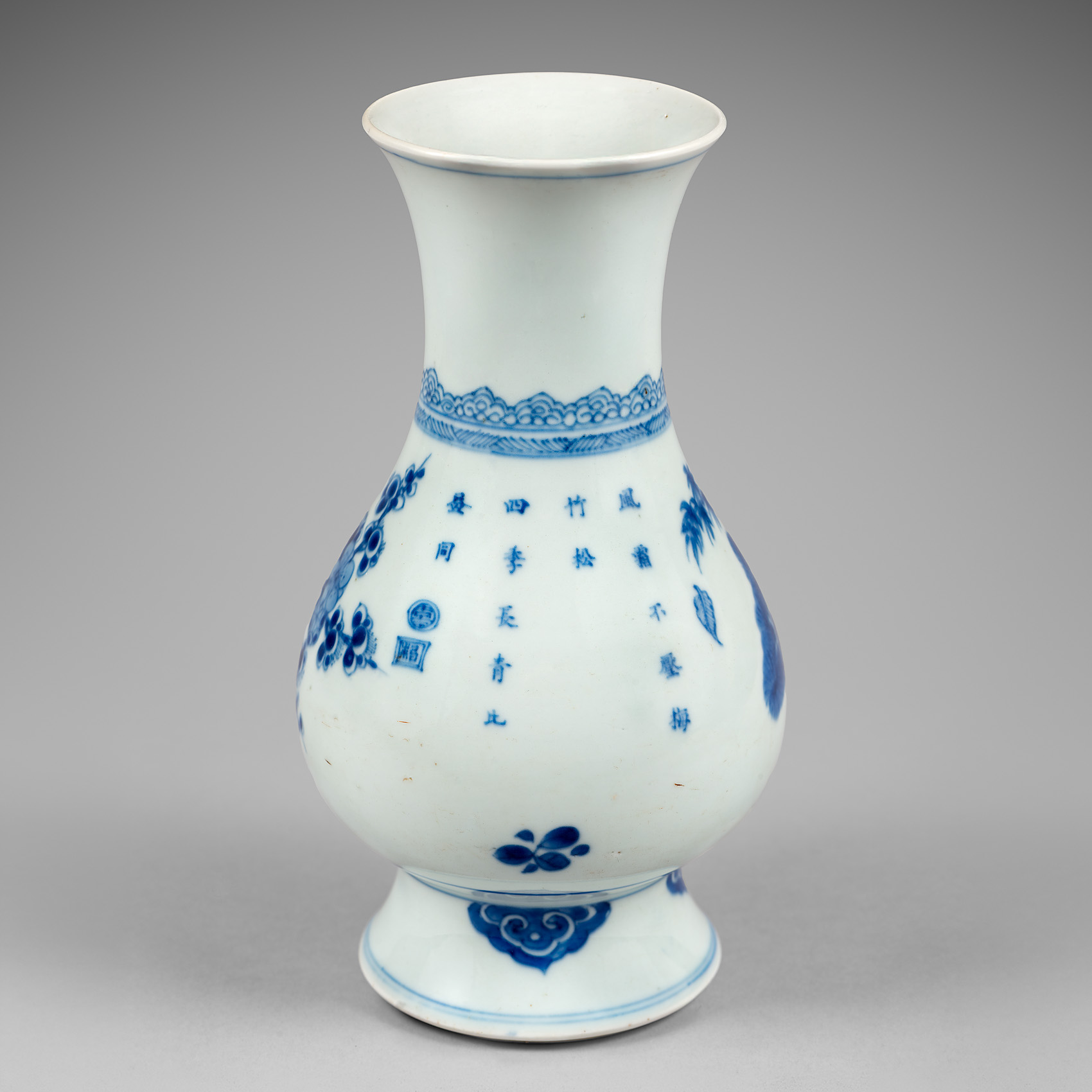
On the reverse, a poetic inscription celebrates the endurance of these symbolic plants:
風霜不壓梅
竹松
四季長青比
Neither wind nor frost can weigh down the plum blossom;
Bamboo and pine
Are evergreen throughout the four seasons.
The poem concludes with the two-character mark 昱同 (Yutong) – a studio name translating as ‘Harmonious Brilliance’ – followed by two seals: a circular mark containing a stylised shou (壽, longevity) character and a square artist’s seal in seal script, apparently unrecorded. This combination of poetic verse, fine calligraphy, and the ‘Three Friends’ theme remained a favourite amongst the literati, serving as a metaphor for the scholar who maintains his principles during difficult times.
The clarity and brilliance of the decoration are achieved through the use of high-quality cobalt blue, purified of the manganese impurities that often produced greyish or lavender tones during the preceding Ming dynasty. This refined ‘sapphire blue’ became a hallmark of the Kangxi period, allowing for a nuanced range of tonal washes and exceptionally precise line work. It is worth noting that the Chinese term qing (青) possesses a distinctive chromatic duality; it refers here both to the enduring green of the pine and bamboo celebrated in the poem, and to the deep blue of the decoration itself. In Chinese, this type of porcelain is known as qinghua (青花) – literally ‘blue flowers’ – illustrating a perfect semantic unity between the nature of the mineral pigment and the botanical symbolism of the ‘Three Friends’.
In the Chinese scholar’s studio, the onset of winter was a period of both physical hardship and spiritual reflection. As the traditional pavilions remained largely open to the elements, harmonising the interior with the landscape, the cold was a tangible reality for the calligrapher – evidenced by the existence of ink palettes mounted upon reservoirs for boiling water, designed specifically to prevent the ink from freezing.
This fascination with the winter season and its botanical survivors reached its decorative zenith in the Imperial Court. The Qianlong Emperor, inspired by his southern inspection tours to Suzhou, commissioned the Sanyou Xuan (Pavilion of the Three Friends) within the northern residential quarters of the Forbidden City. As detailed in the definitive study Palaces of the Forbidden City[1], the interior is a masterpiece of craftsmanship, where the panelling is intricately carved with the Three Friends, often set against the ‘cracked ice’ motif (binglie wen) – a pattern where plum blossoms appear to adhere to a frozen surface.
Such poetic refinements permeate the classics of Chinese literature. The celebrated Song dynasty poet Su Shi (1037–1101) famously championed this symbolism, particularly regarding bamboo, which he likened to a man of noble character: upright, humble (hollow), and flexible yet unbreakable. In the 18th-century masterpiece The Dream of the Red Chamber (or The Story of the Stone), the fastidious and elegant cousin Lin Daiyu exemplifies this extreme sophistication by serving tea brewed with water from snow gathered specifically from the blossoms of the plum tree, believed to possess a unique purity. The pine tree, with its gnarled trunk and evergreen needles, completes this triad by representing the venerable dignity of old age and the Confucian virtue of filial piety.
During the Qianlong reign, the technical mastery of the Jingdezhen imperial kilns reached a pinnacle of virtuosity. A remarkable example of this period[2] – now preserved in the Musée Guimet in Paris – illustrates the motif of the ‘Three Friends’ rendered in classic blue and white but strikingly adorned with a trompe l’oeil‘wrapped’ brocade sash (baofu). This sash is painted with fastidious detail in vibrant famille rose enamels, mimicking the texture and folds of luxurious silk tied around the vessel’s neck.
[1] Yu Zhuoyun, Palaces of the Forbidden City, 1984
[2] G4877