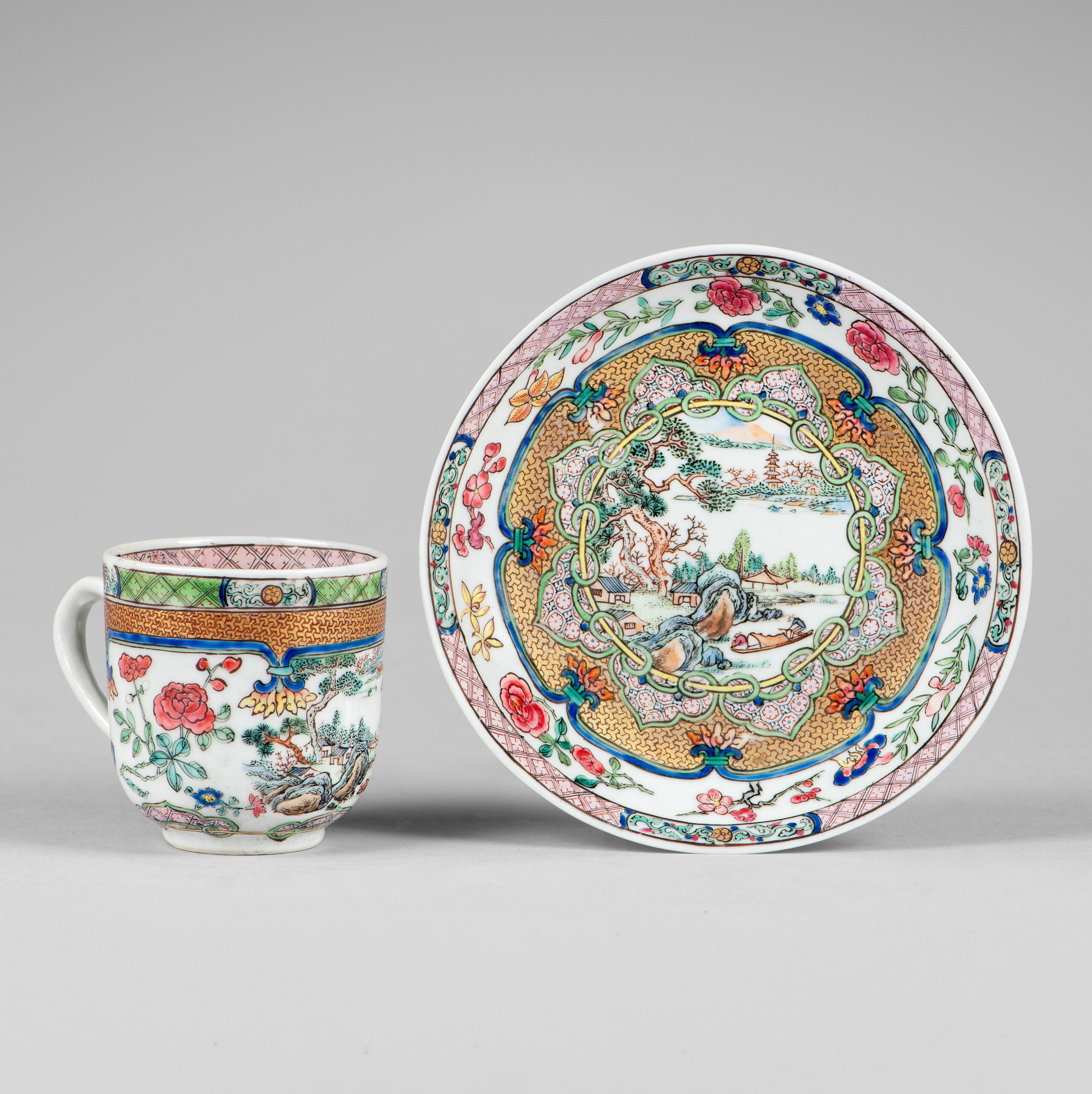
The cup and saucer are painted with a central shanshui (mountain and water) scene, depicting figures in a sampan navigating a riverbank near cottages. This landscape is framed by a double-border system: a yellow line entwined with pink cell-diaper ruyi panels, and a series of stylised lotus petals, echoing the structured compositions of Imperial cloisonné enamels, where the lotus—a fundamental Buddhist symbol of purity—is often rendered as a corolla. This arrangement, combined with the eight ruyi heads, subtly invokes the Eight Auspicious Treasures of Buddhism (babao).
The surrounding floral sprays, including clearly identifiable peony and prunus, are treated more naturalistically. This tension between the organic and the structured continues to the outer rim, where a delicate band of symmetrical, slender scrolls frames five-petalled blossoms. These scrolls may be interpreted by the viewer as clouds, lingzhi (fungus of immortality), or archaic dragons.