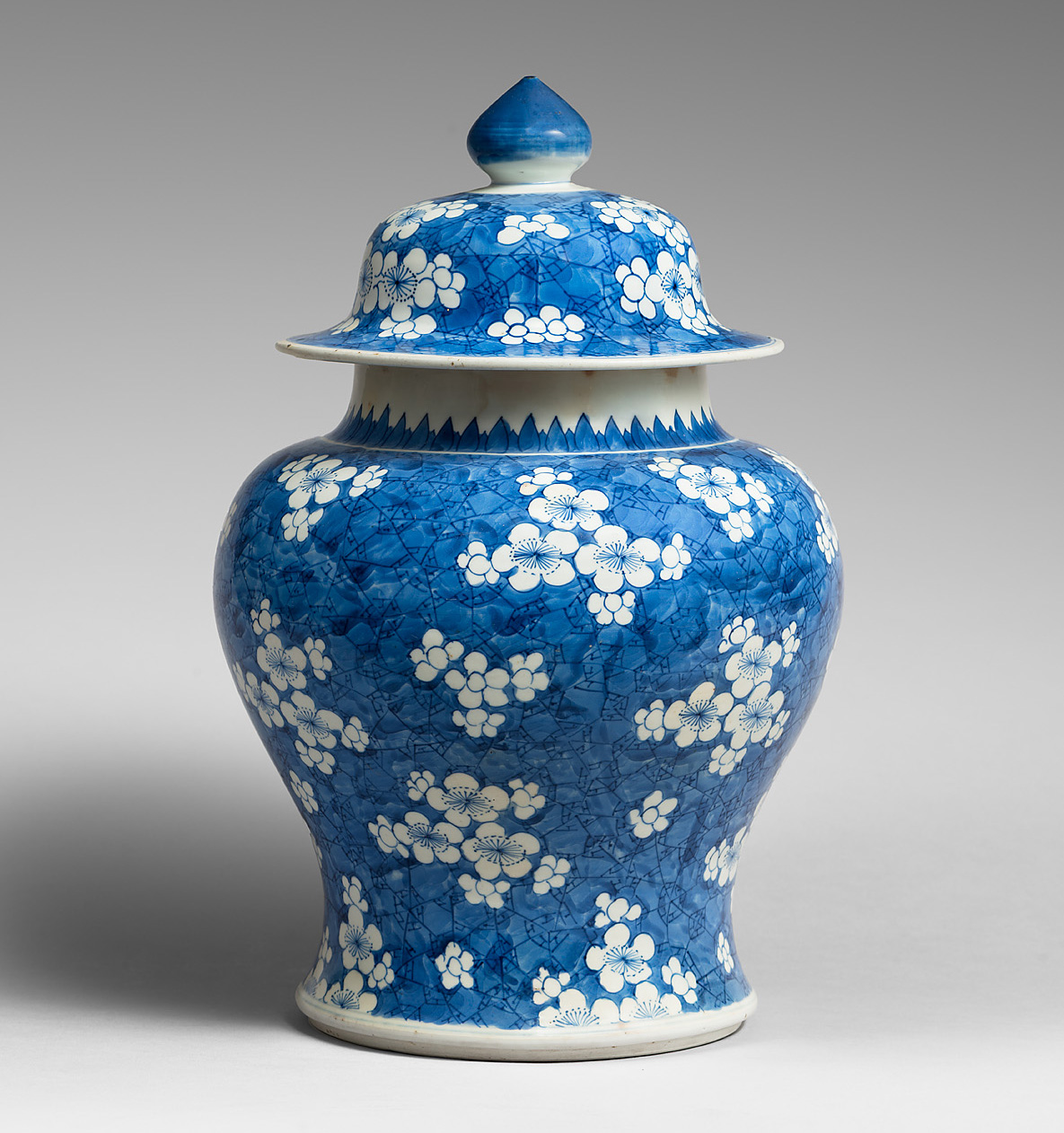
The vase, of baluster form is painted in rich cobalt-blue tones with large branches of prunus set against a cracked-ice ground. The domed cover similarly decorated and surmounted by a lotus bud finial.

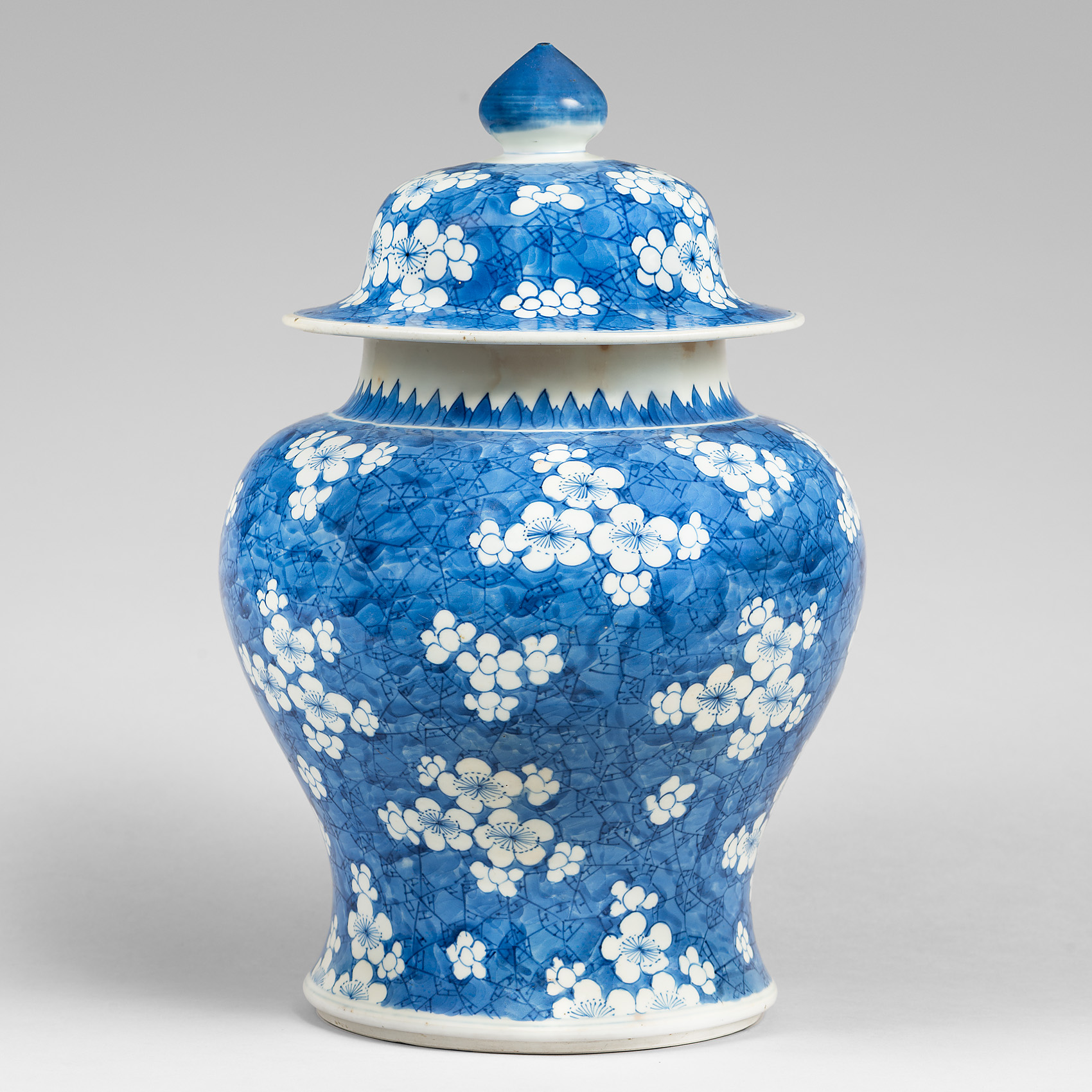
The vase, of baluster form is painted in rich cobalt-blue tones with large branches of prunus set against a cracked-ice ground. The domed cover similarly decorated and surmounted by a lotus bud finial.
For others examples of ‘Hawthorn jars’ of varying types see Walter Bondy, Kang-hsi. Eine Blüte-Epoche der chinesischen Porzellankunst, München, Buchenau & Reichert, 1923, pl. 111 ; W.G. Gulland, Chinese Porcelain, Chapman & Hall, 1928, no. 247, 248 and 249.
A related vase is in the collection of the Metropolitan Museum, New York (inventory number 20.41.7a, b).
The prunus-on-cracked-ice design, traditionally known in the West as the “Hawthorn” pattern, ranks among the most celebrated blue and white decorative schemes produced at the kilns of Jingdezhen during the Kangxi period (1662–1722). Despite its long-established English name, the motif does not depict hawthorn but the blossoms of the Chinese plum (Prunus mume), one of the most enduring symbols in Chinese art and literature. The term “Hawthorn” originated in nineteenth-century England through a botanical misidentification by early collectors and has remained deeply rooted in Western scholarship ever since.
The Chinese plum is the first tree to blossom at the end of winter, often flowering while snow and ice still cover the ground. Its delicate five-petalled flowers, reserved in white against a deep cobalt-blue ground incised with a network of lines suggesting cracked ice, announce the arrival of spring. This poetic imagery symbolises renewal, resilience and the triumph of life over the hardships of winter, while also embodying purity, moral integrity and perseverance, virtues long admired by Chinese scholars and literati. The gnarled, age-worn branches of the tree further evoke vigour and endurance despite the passage of time.
The symbolism of the design is enriched by the association of the plum blossom with the Five Blessings (wufu): longevity, wealth, health, the love of virtue and a peaceful death. These blessings are alluded to by the five petals of each blossom, the number five itself being regarded as particularly auspicious in Chinese tradition. Whether represented as scattered blossoms upon a cracked-ice ground or as flowering branches emerging from the melting frost, the motif celebrates the end of winter and the promise of a new beginning.
This design enjoyed immense popularity both in China and abroad. The potters of Jingdezhen exploited the expressive qualities of cobalt blue with remarkable virtuosity, creating a striking contrast between the luminous white blossoms and the rich, vibrant ground. By the nineteenth century, these impressive jars and vases had become among the most admired examples of Chinese blue-and-white porcelain in Europe, occupying a prominent place in the collections and interiors of Victorian connoisseurs and playing a significant role in the Aesthetic Movement.