This imposing vessel is decorated in the ‘Imari’ palette – a combination of underglaze cobalt blue, overglaze iron red, and gilding. The jar’s surface is a densely packed landscape of natural and cultural symbols, organised with rhythmic precision.

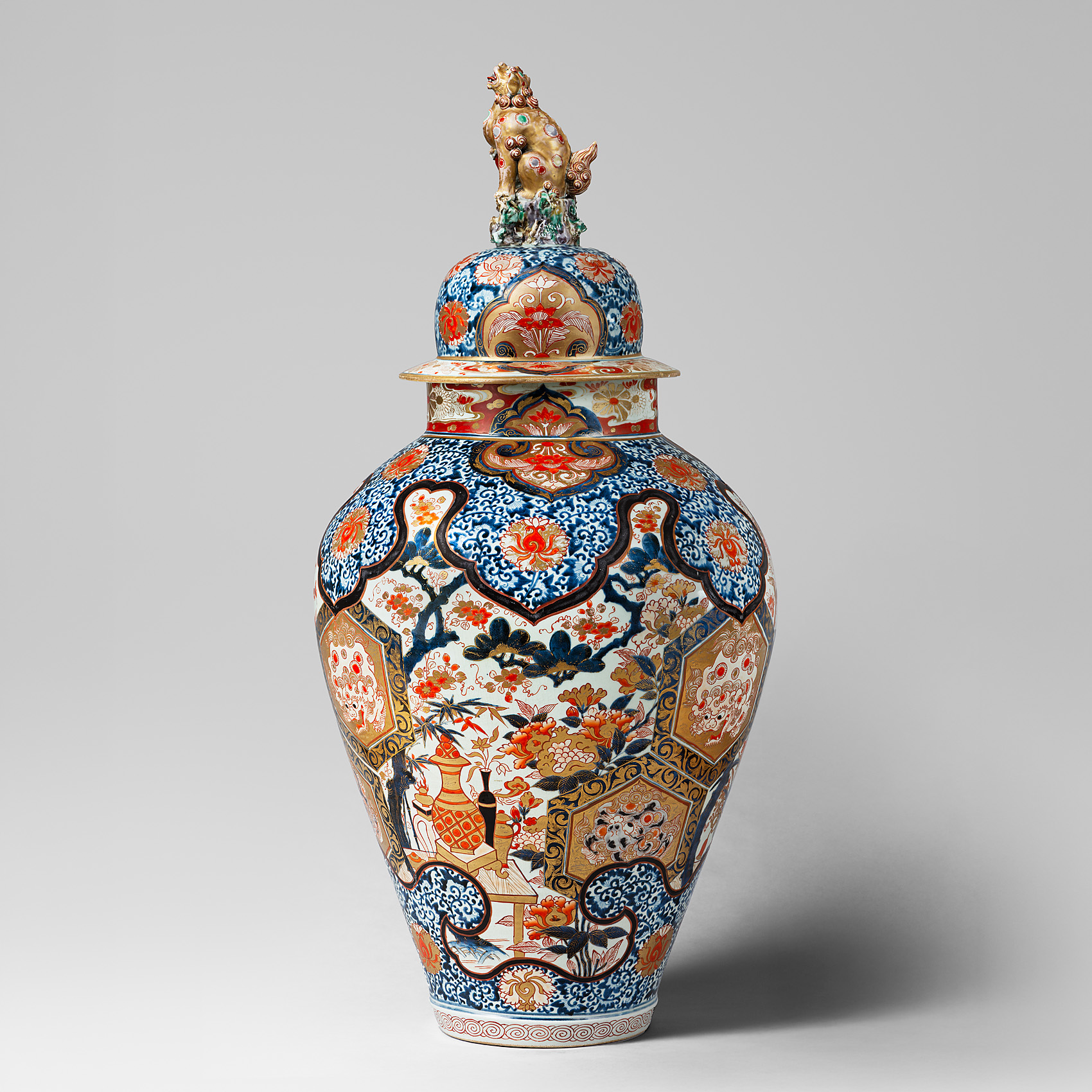
This imposing vessel is decorated in the ‘Imari’ palette – a combination of underglaze cobalt blue, overglaze iron red, and gilding. The jar’s surface is a densely packed landscape of natural and cultural symbols, organised with rhythmic precision.
Imari kinrande refers to a type of Japanese porcelain produced at Arita in the late seventeenth and early eighteenth centuries, during the Edo period. It represents the most sumptuous expression of Arita ware created for export. The term kinrande, meaning “brocade of gold style,” evokes the textile richness of its decoration. These pieces combine underglaze cobalt blue with overglaze iron red and lavish gilding, creating a surface of remarkable visual intensity. The compositions are dense and carefully structured, often organised into alternating medallions and registers. Motifs typically include peonies, chrysanthemums, scrolling foliage, and the mythical karashishi lion. The ornamented surface produces an opulent, almost theatrical effect, clearly conceived to impress. This aesthetic corresponded closely to European Baroque taste, with its preference for symmetry, brilliance, and decorative abundance. By contrast, Kakiemon ware favours expanses of white ground, lighter compositions, and a more restrained elegance. Whereas kinrande is luxuriant and richly charged, Kakiemon seeks balance and visual clarity. Imari kirande decoration appears most frequently on large covered jars, monumental vases—often conceived as garnitures—and exceptionally large dishes. Together, they represent the most spectacular and ornate facet of early Japanese export porcelain.
The decoration is a botanical encyclopedia of auspicious plants. Prunus (cherry) and lotus blossoms dominate, the latter rendered with their distinctive, seed-filled central pistils. Interwoven amongst these are ripe pomegranates – symbols of fertility and numerous progeny – along with chrysanthemums, representing longevity and the resilience of the scholar.
Amidst this floral abundance, a scholar’s arrangement appears, placing the natural world into a cultural frame. On a finely rendered table, a large vase holds a single, elegant orchid – the emblem of refinement and modesty. Nearby, a censer rests upon an incense table, evoking the olfactory and contemplative rituals of the literati.
The artist displays a sophisticated, if intentionally fragmented, approach to space. The scholar’s table is rendered with clear perspective, featuring a tabletop of moku-me (wood-grain) pattern. However, this illusion of three-dimensional depth is purposefully interrupted and flattened by the insertion of large hexagonal cartouches in the form of tortoiseshell. These hexagons act as secondary windows, containing further naturalistic scenes and two-dimensional representations of the karashishi –the mythical Chinese guardian lion.
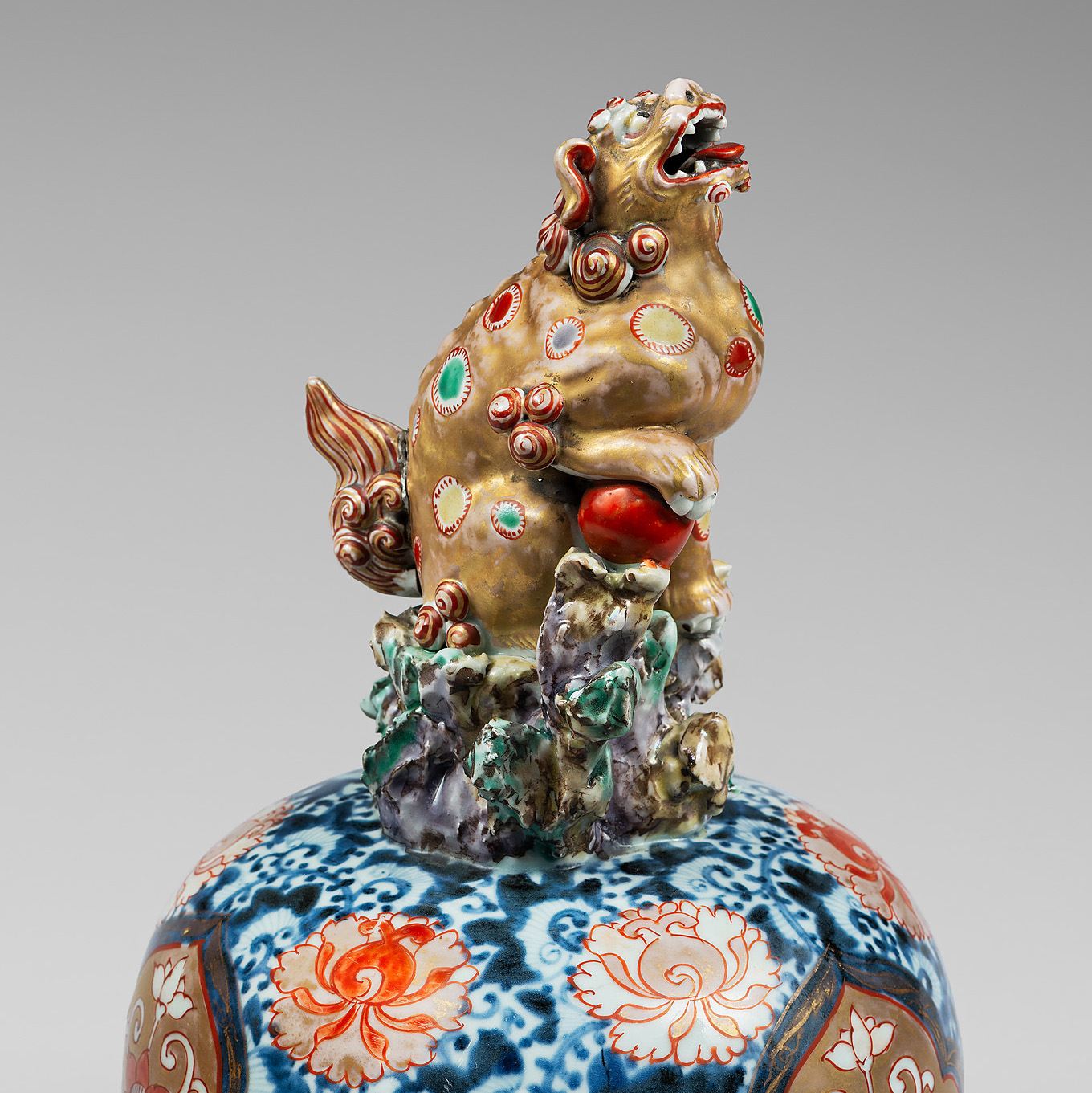
The jar is crowned by a magnificent three-dimensional finial in the form of a karashishi glazed in warm ochre and turquoise tones. This protective creature is echoed throughout the body of the vase, appearing in two-dimensional form within the hexagonal registers. The karashishi represents the guardianship of sacred knowledge.
Vessels of this scale were not mere storage containers; they were essential instruments of courtly display, where the intimacy of a private chamber met the ostentation of royal protocol. In European palaces, such jars were often grouped in pairs or suites. A notable historical parallel can be found in the Oval Chinese Room at Schönbrunn Palace in Vienna. There, a pair of such jars, resting on ornate Rococo gilt-wood stands, presides over the geometric parquet floor. The room, a salon for gaming and company, features white and gold Rococo panelling inset with Chinese black and gold lacquer panels, supported by numerous consoles holding smaller porcelains.
The creation of this jar coincides with a period of fierce competition for the European market. By the early 18th century, Jingdezhen potters were aggressively imitating Japanese Imari styles to regain market share from their Japanese rivals. This aesthetic was so persuasive that immediately following the discovery of hard-paste porcelain in Saxony, Johann Friedrich Böttger began producing Imari-style services at Meissen, testifying to the universal appeal and prestige of this specific palette across both the Asian and European continents.