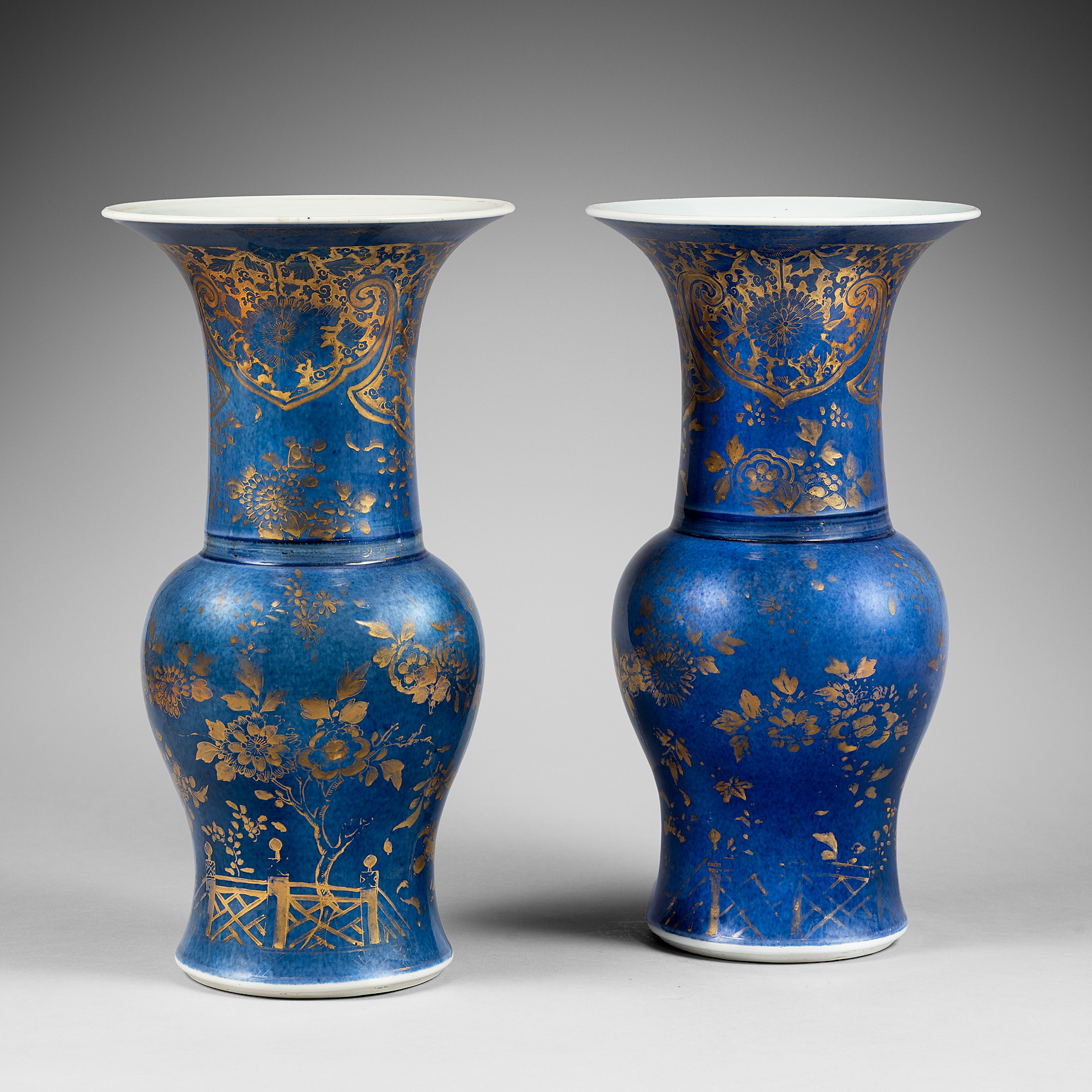
A pair of powder-blue-ground gilt-decorated yenyen vases. Kangxi period

The yenyen or phoenix-tail vases, with a cobalt blue ground, are adorned with a gilt decoration of peonies and chrysanthemums among flowering fences on the lower part of the vase and a border composed of flowering ruyi motifs on the upper part of the vases.

COUNTRY : China
PERIOD : Kangxi (166-1722)
MATERIAL : Porcelain
SIZE : 36 cm
REFERENCE : E653
STATUT : sold
Additonal informations :

Yenyen refers to a vase with a swelling midsection, a long trumpet-shaped neck (gu), and a flaring foot shorter than the neck. In China, this form derives from archaic bronze vessels of the Shang and Zhou periods, intended for ritual use (gufor wine). Under the Ming dynasty (1368–1644) and during the Transitional period, the potters of Jingdezhen revived the silhouette of ritual bronzes to produce porcelain vases decorated in underglaze blue or in wucai enamels. From the Kangxi period (1662–1722) onwards, this form reached its height, with yenyen produced for export to Europe in blue and white, famille verte, powder blue, iron-red, celadon, or, from the Yongzheng period onwards, in famille rose enamels.

The yenyen form is often referred to in English as a “phoenix tail vase” (fengwei zun, 凤尾尊 in Chinese, literally “phoenix-tail vase”). The name comes from the flaring profile of the neck, reminiscent of the spread tail feathers of a phoenix. In China, the term fengwei zun has been attested since the Ming dynasty to describe certain vases in bronze and porcelain, encompassing the form that Western collectors call yenyen.

Demande de condition report

Question about condition report