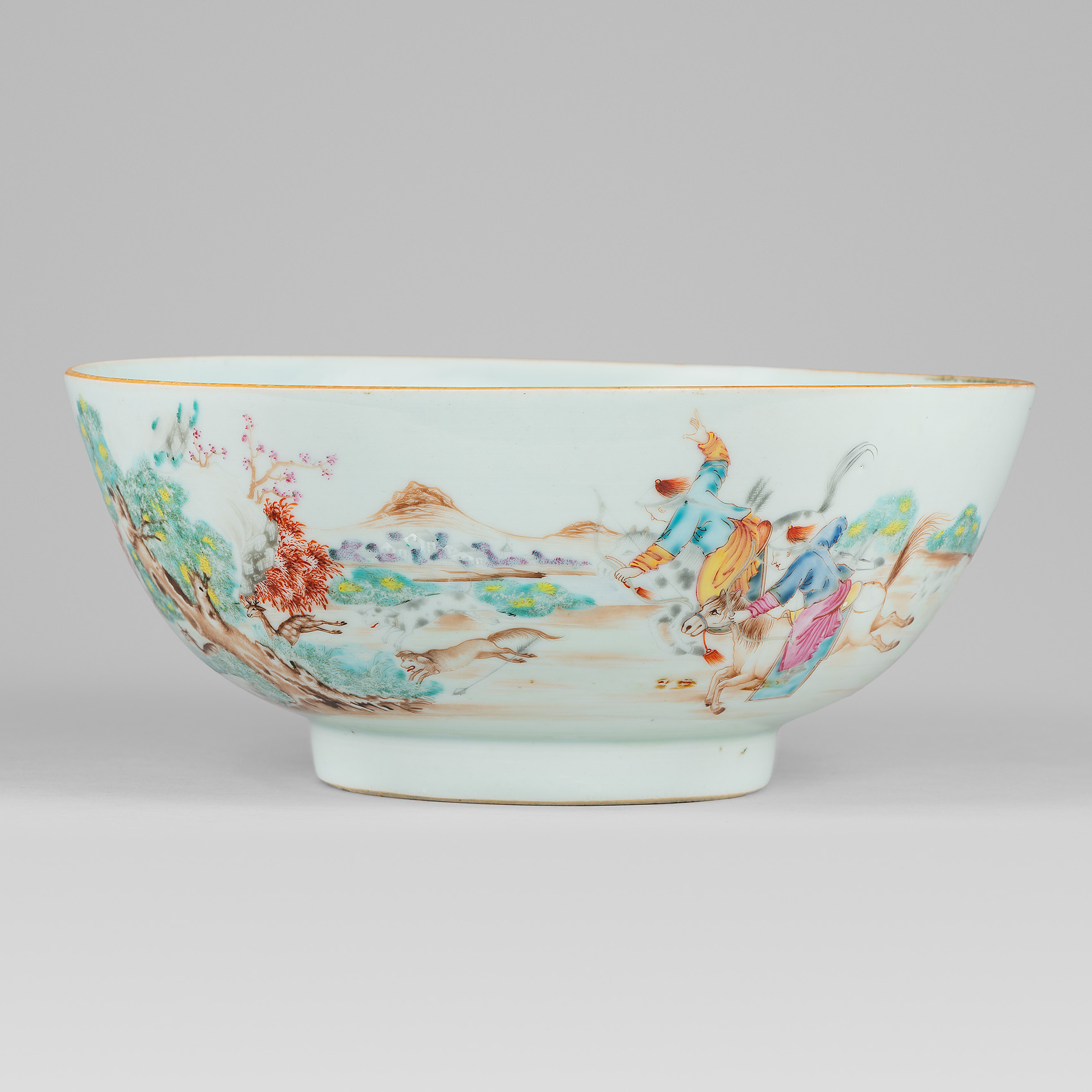
Additional information.Tiger hunting occupied a significant place in the cultural and political traditions of Qing China, where it was associated with courage, martial prowess and imperial authority. For the Manchu rulers, hunting was not merely a form of recreation but an essential expression of their military heritage, providing an opportunity to demonstrate physical strength, skill with weapons and the virtues expected of a sovereign. The Kangxi Emperor (r. 1661–1722) was particularly celebrated for his hunting achievements, reportedly having killed 135 tigers during his lifetime. His grandson, the Qianlong Emperor (r. 1735–1796), continued this tradition, commissioning court artists, notably the Jesuit painter Giuseppe Castiglione (1688–1766), to commemorate imperial hunts and celebrate the courage of the ruling dynasty.
The tiger held a particularly important position in Chinese symbolism. Traditionally regarded as the king of wild animals, it embodied strength, bravery and military power, while also possessing protective qualities and the ability to ward off evil influences. Its representation in hunting scenes therefore carried associations extending beyond the pursuit of a dangerous animal. The confrontation between hunters and tiger could evoke the triumph of human courage, discipline and martial skill over a formidable force of nature
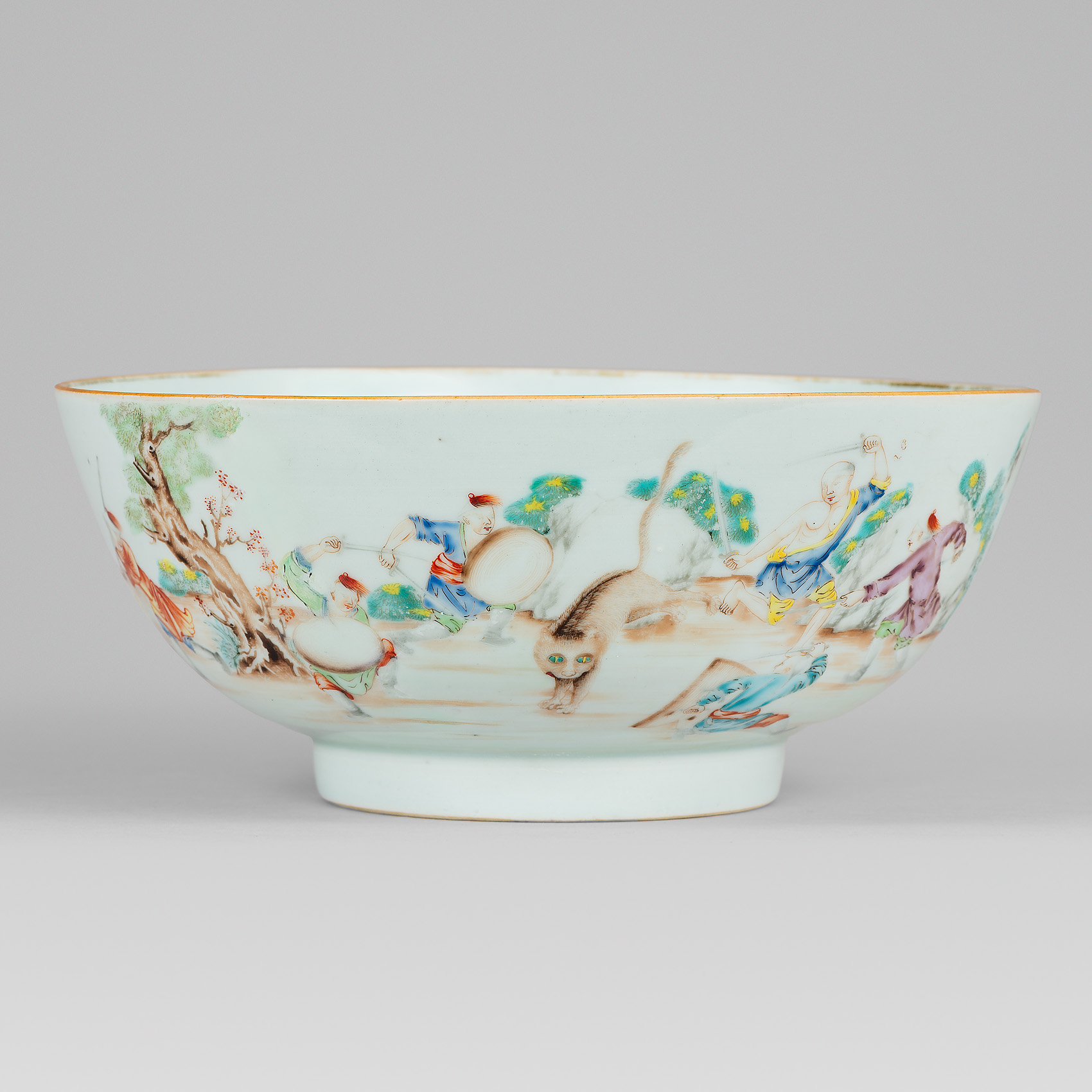
The iconography of tiger hunting was not, however, confined to the Chinese imperial tradition. During the eighteenth century, representations of exotic hunts circulated widely between Asia and Europe, particularly through prints, paintings and objects associated with maritime trade. In India, where tigers were both feared predators and prestigious quarry, tiger hunting became closely associated with princely authority and, increasingly, with the activities of European residents. Such subjects also entered the decorative repertoire of Chinese export porcelain, as demonstrated by famille rose plates traditionally described as depicting the Calcutta Tiger Hunt, produced during the Qianlong period.
The presence of hunters on foot carrying swords and shields is especially intriguing. Unlike the mounted archers and spearmen frequently encountered in Qing imperial hunting imagery, these figures may reflect a different pictorial tradition, potentially drawing upon Indian or other Asian representations of the tiger hunt. Their weapons and the manner in which they confront the animal suggest a composition concerned not simply with the pursuit of game, but with the dramatic encounter between man and beast.
The combination of a deer hunt and a tiger hunt within a single decorative programme is equally noteworthy. It brings together two contrasting forms of hunting: the pursuit of relatively harmless game and the confrontation with one of the most formidable predators in the natural world. This juxtaposition creates a narrative of increasing danger and intensity, while offering the porcelain painter an opportunity to explore movement, expression and dramatic tension.