
A ‘Blanc-de-Chine’ Dehua figure of “Adam”. Kangxi period.
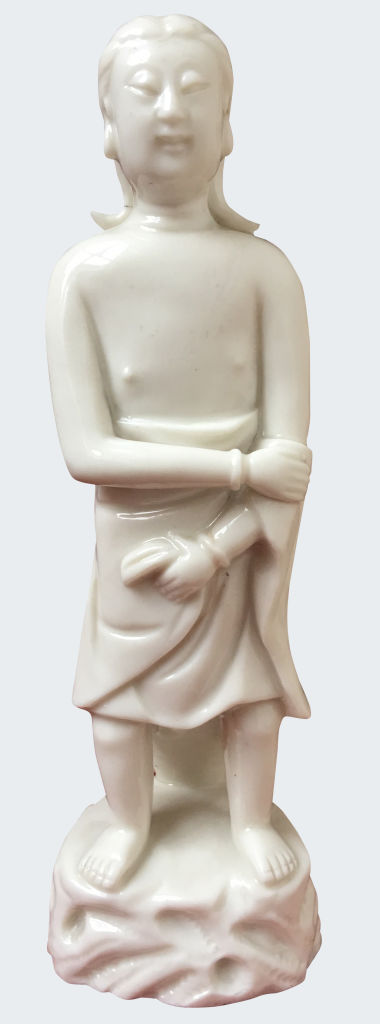
Standing barefoot on a rockwork base, his arms crossed in front, both hands clasping the ends of the short skirt draped around his waist, his upper torso bare, his head facing forward with smiling expression, his hair combed back behind his ears and falling to his shoulders.
A very large Chinese “blanc de Chine” libation cup. Kangxi period.
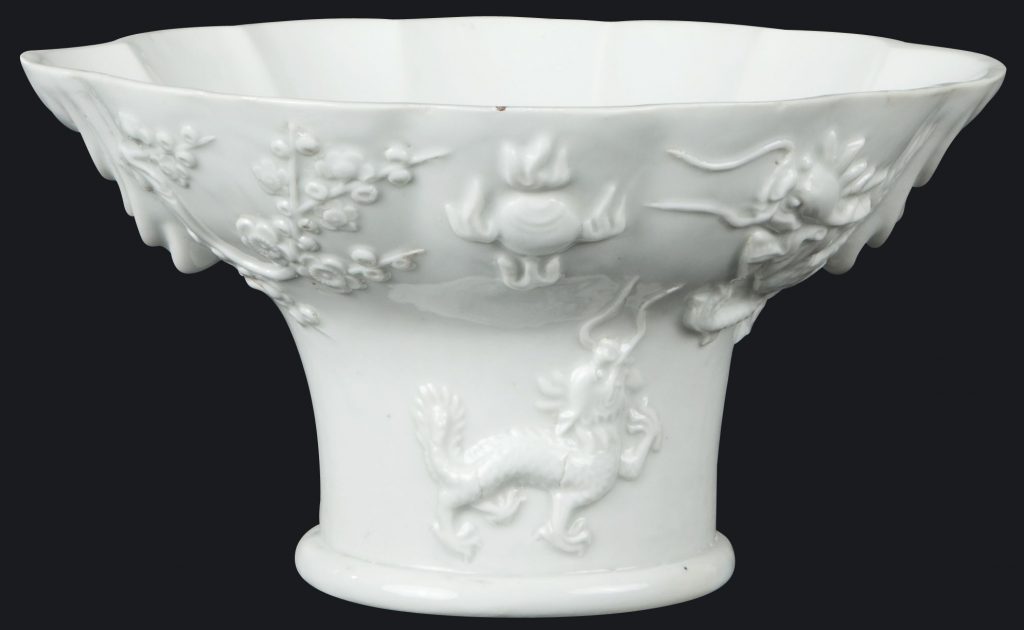
Libation cup “Blanc de Chine” with wavy rim and spreading foot. The sides are moulded with a prunus branch, a dragon pursuing a pearl and a ch’i-lin on one side, and a pine branch, crane, moon and tiger on the other. Porcelain of cold grayish-white tone.
A Chinese Blanc de Chine surprise cup with a figure of an immortal. Kangxi period.
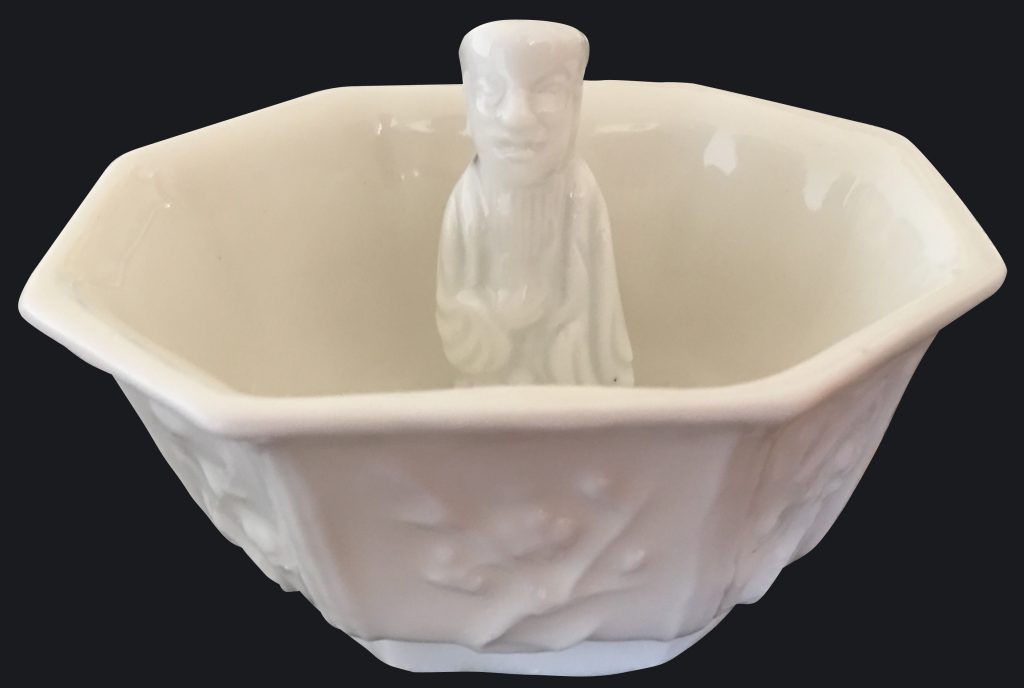
With a hexagonal form, decorated with moulded branches of prunus on the walls, with the figure of an immortal, probably Cao Guojiu.
A Chinese Dehua “Blanc de Chine” porcelain libation cup in the shape of a rhinoceros horn. Kangxi period.
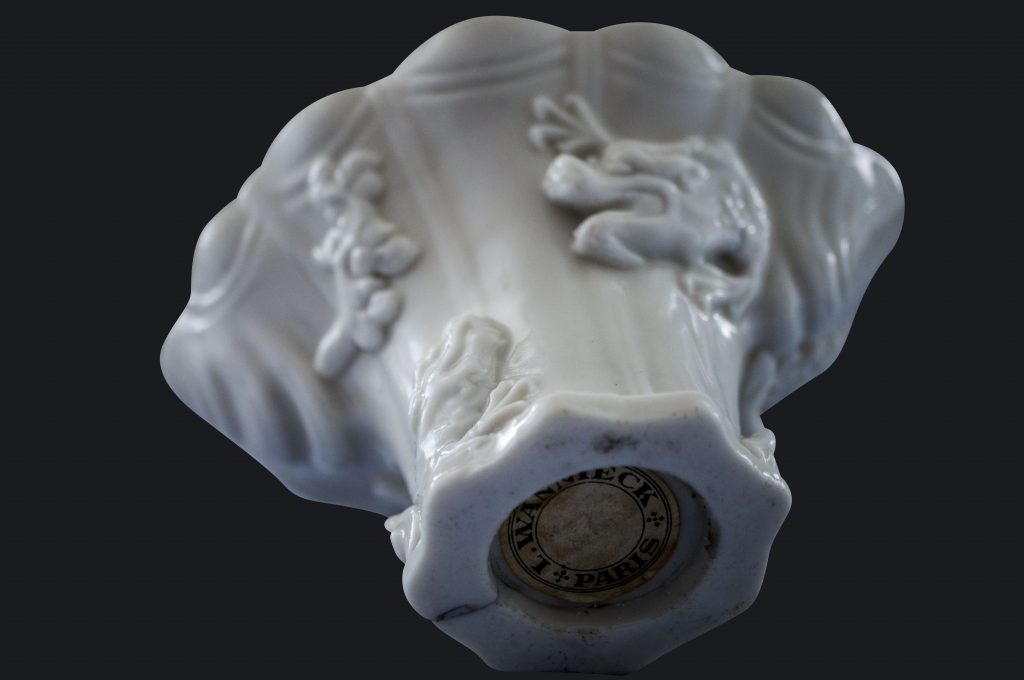
Decorated in relief with auspicious signs of deer and plum branches, with two figures of monsters on the other side.
A Chinese trick cup with the figure of Han Zhongli. Ming-Transitional period.
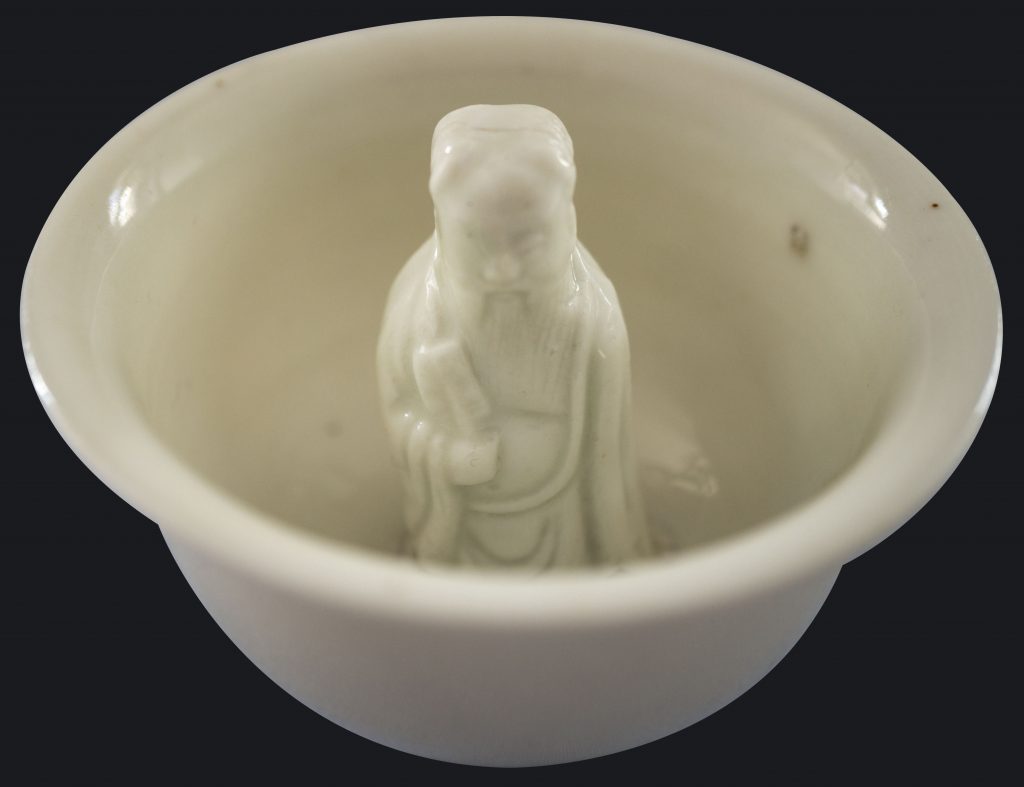
“Trick cup”, also know as « porcelain surprise », « Gong Dao Bei », « don`t be greedy cup », « fairness cup » or « puzzle cup » in blanc de chine, with the central figure of Han Zhongli, one of the eight immortels.