
A pair of famille verte tureens, covers and stands. Kangxi / Yongzheng
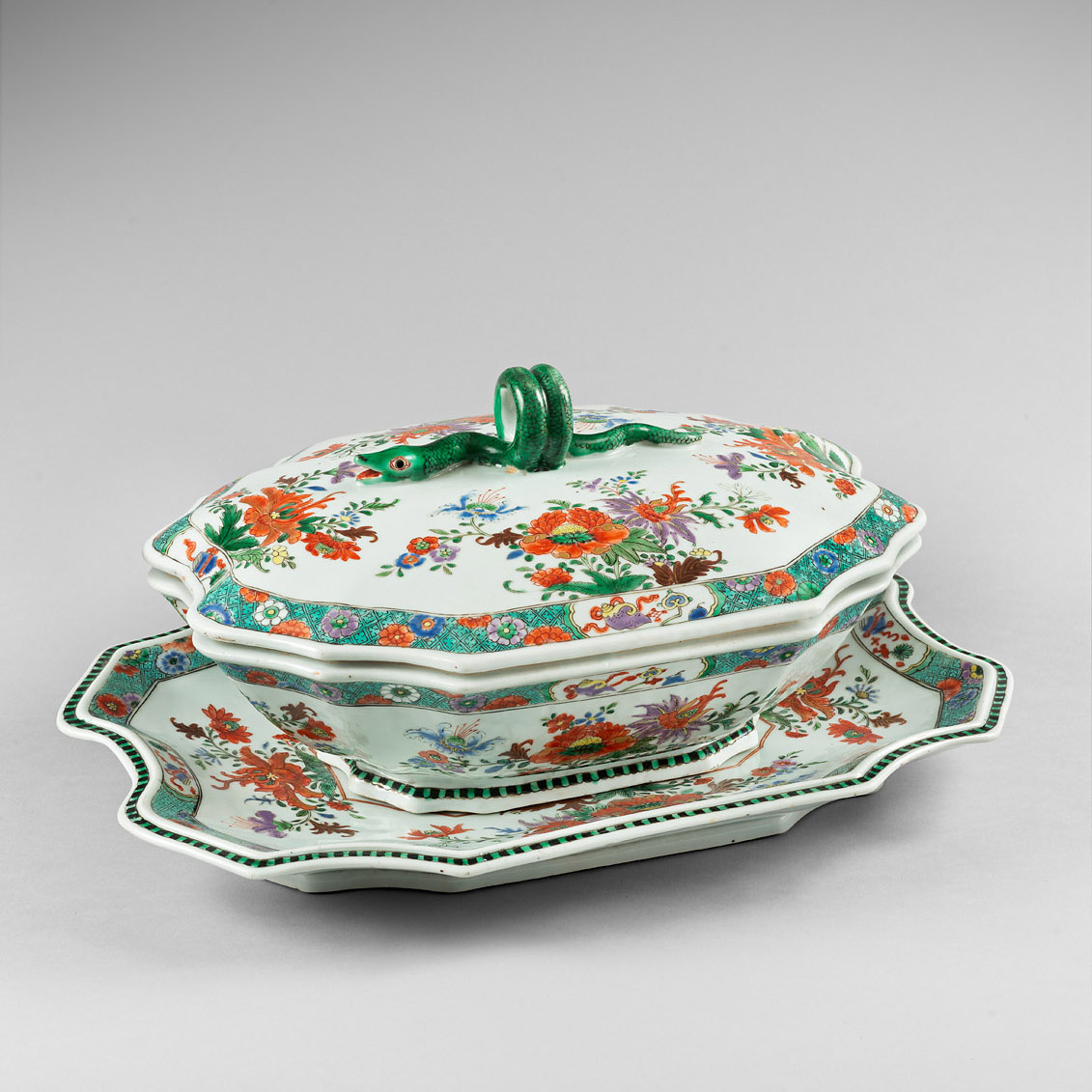
Modeled after a European faience original, each oval hexagonal tureen has lightly fluted sides and rim, its cover surmounted is surmounted by a finial in the shape of a green-glazed eel doubly-coiled. The cover, sides and stand are brightly enameled and gilded with bold clusters of hibiscus and peony amongst smaller flowers and foliage, all […]
A fine pair of emerald green-glazed parrots. Kangxi
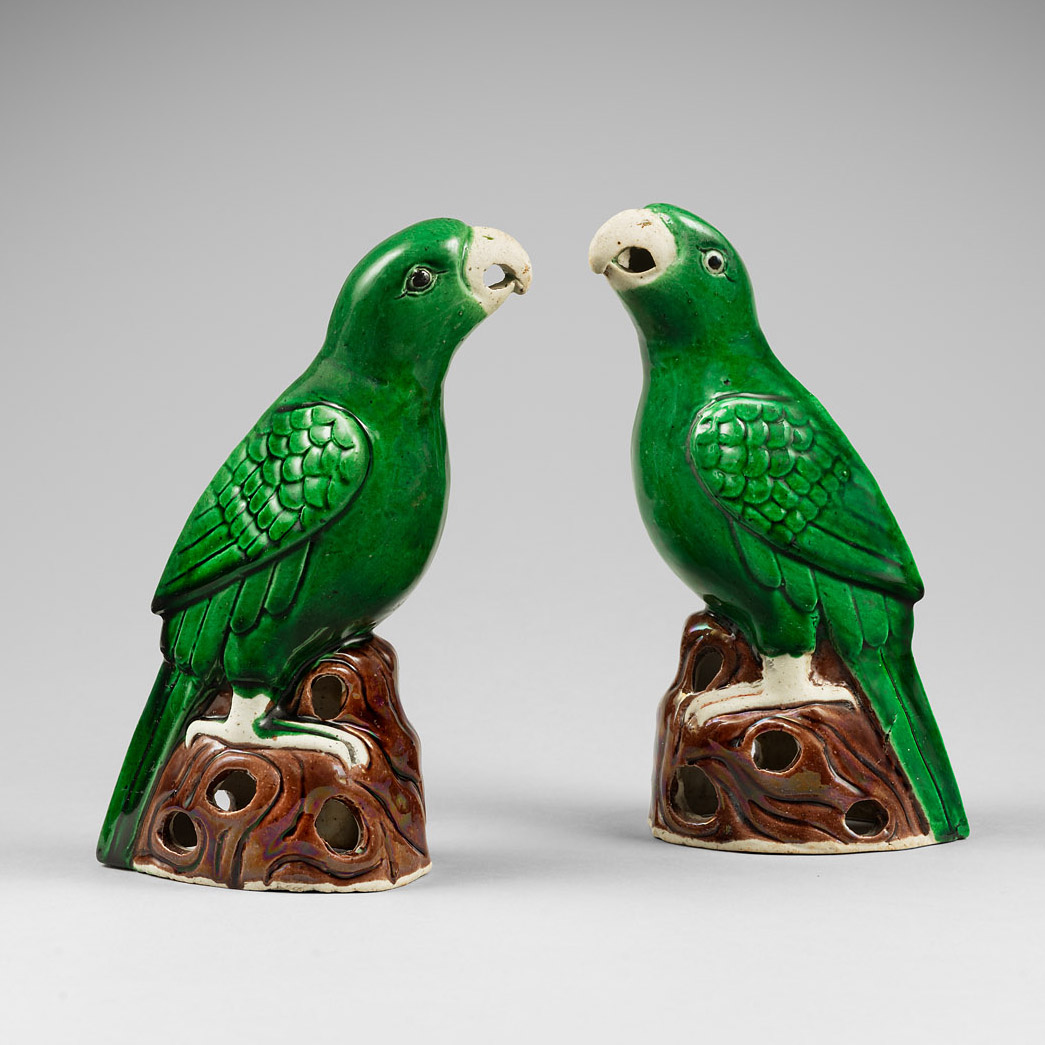
Naturalistically moulded in two halves, perched on a pierced rock work base and with folded wings with plump bodies. The plumage of the parrots very detailed, and glazed with a vibrant emerald green enameling.
A pair of fine Dehua pear-shaped vases. Kangxi, Xuande mark.
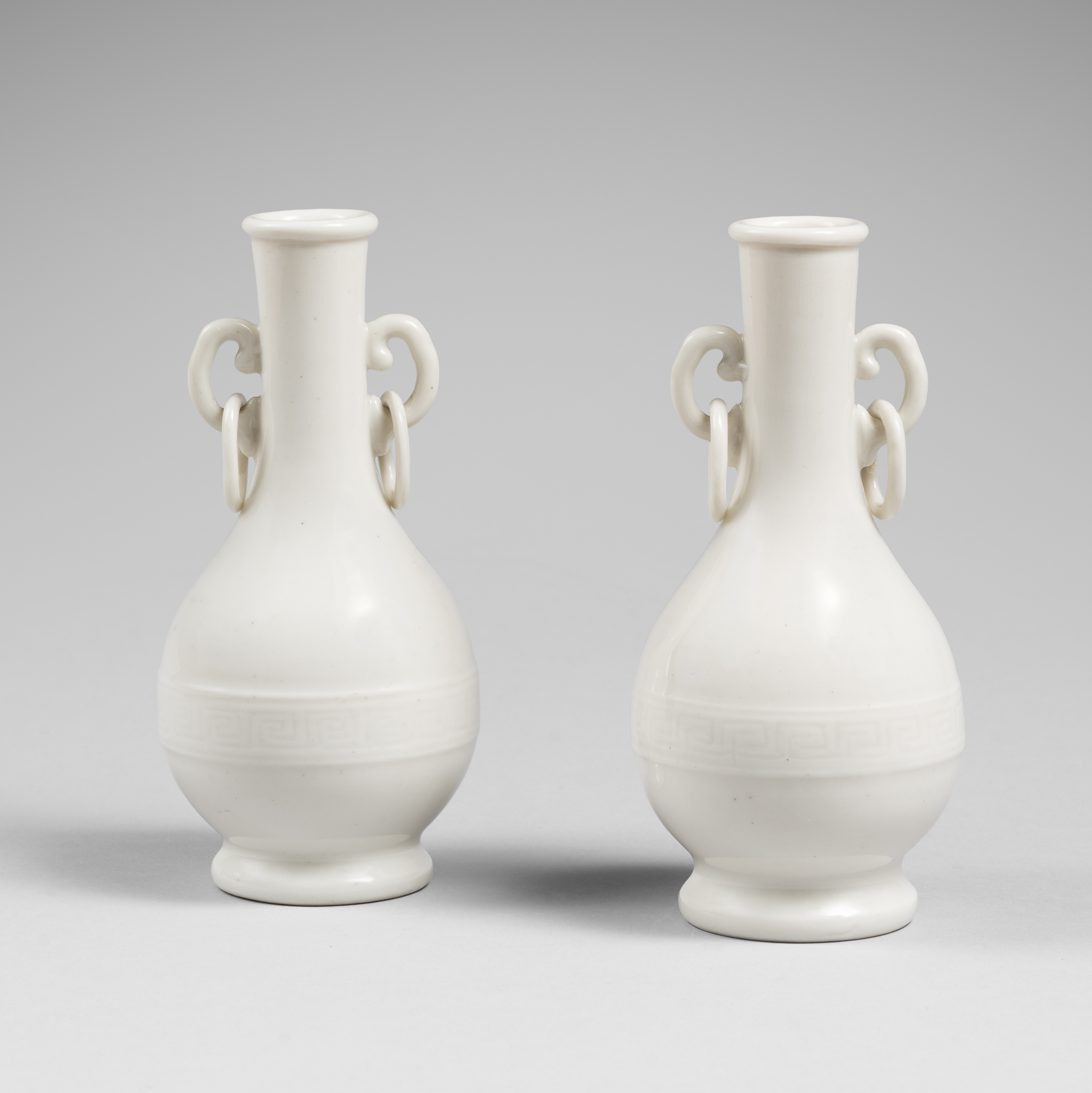
The pear-shaped body incised by a raised keyfret band, and the tapering neck flanked by ear-shaped handles suspending loose rings. An apocryphal Xuande six characters mark is impressed to the base of each vase.
An aubergine-brown glazed pomegranate pyramid. China, 18th c.
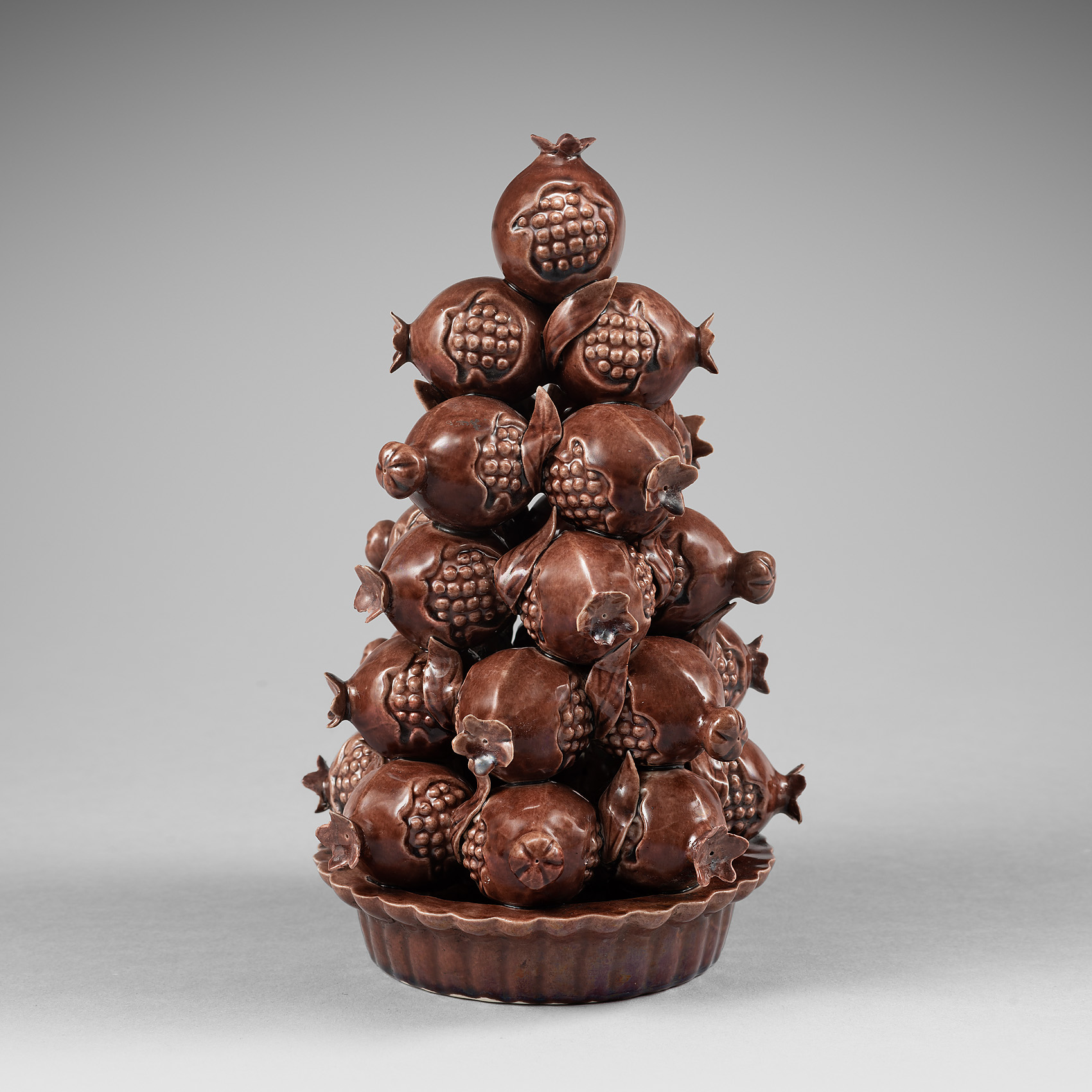
The pyramid with naturalistic miniature pomegranates sits on a fluted dish. The fruits are arranged in six layers with leaves added in between. To construct this piece, each pomegranate would have been individually moulded, then arranged layer by layer.
A Chinese blue and white “hu” vase. Kangxi
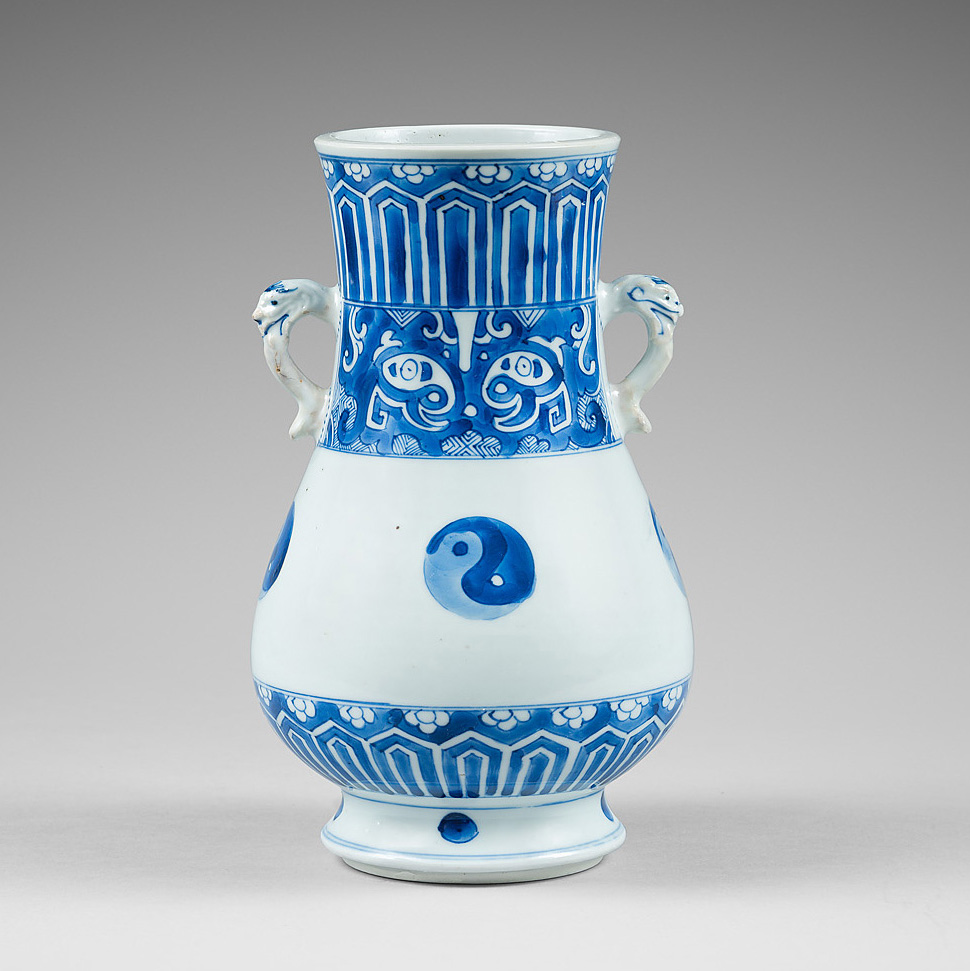
Of pear shape, stoutly potted, with a slightly spreading neck, twin beast mask loop handles, standing on a flared foot, it is decorated in underglaze blue with yin yang symbols ; underneath, a blue band with cut-out leaf motifs and half flowers. The neck with the same band and with a ‘taotie’ masks on napkin […]
A Chinese blanc-de-chine group of Wenchang. Kangxi
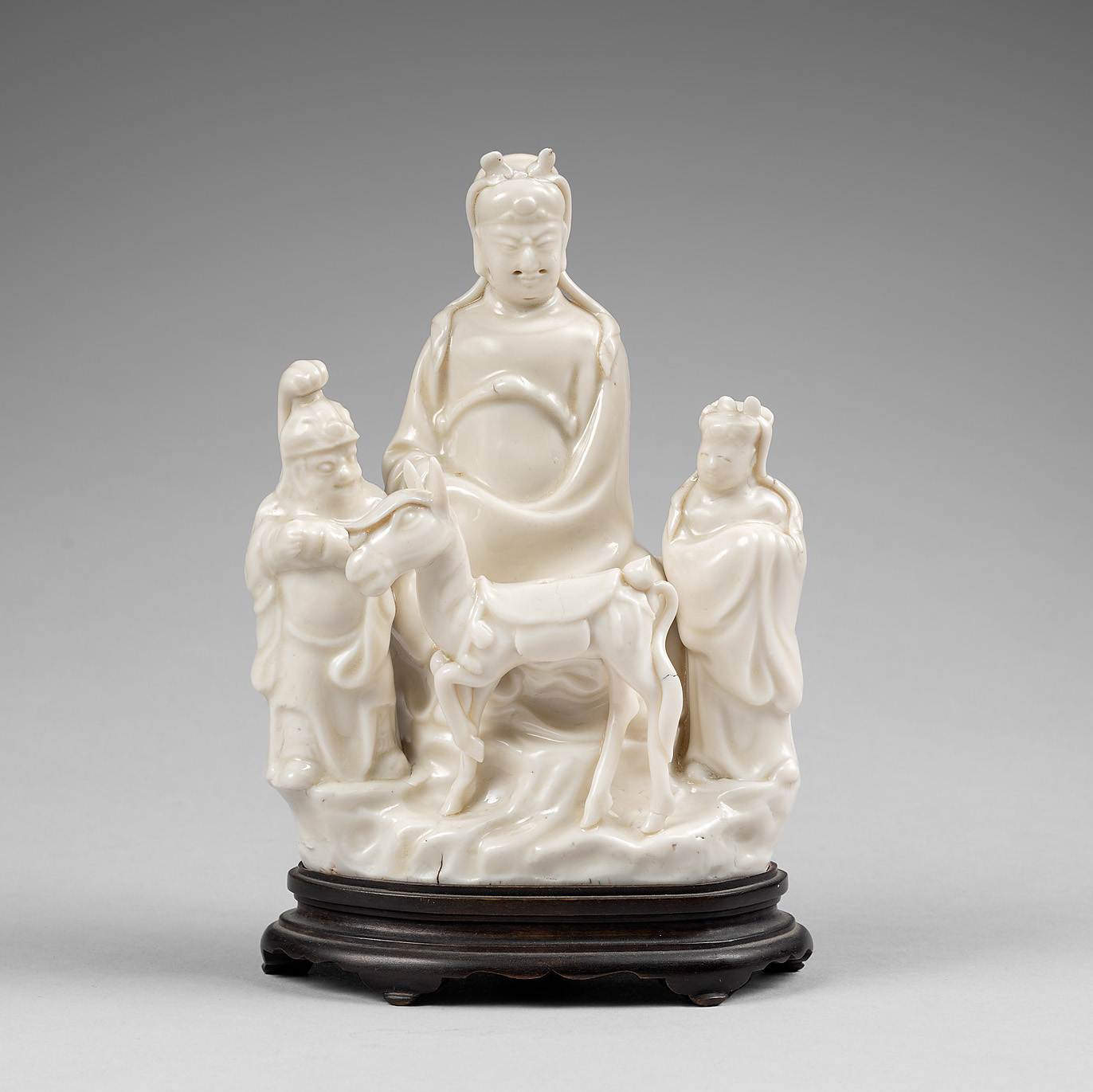
The (blanc de Chine) group depicts Wenchang and two attendants. Wenchang is seated on a rocky throne, wearing long robes with an ornamented belt, and an official’s hat. Below stand a horse between his two acolytes, Tianlong (‘Heavenly Deaf’) and Diya (‘Earthly Dumb’).
A pair of imari armorial plates for the French market (Thomas-Auguste Miniac of Saint-Malo). Kangxi
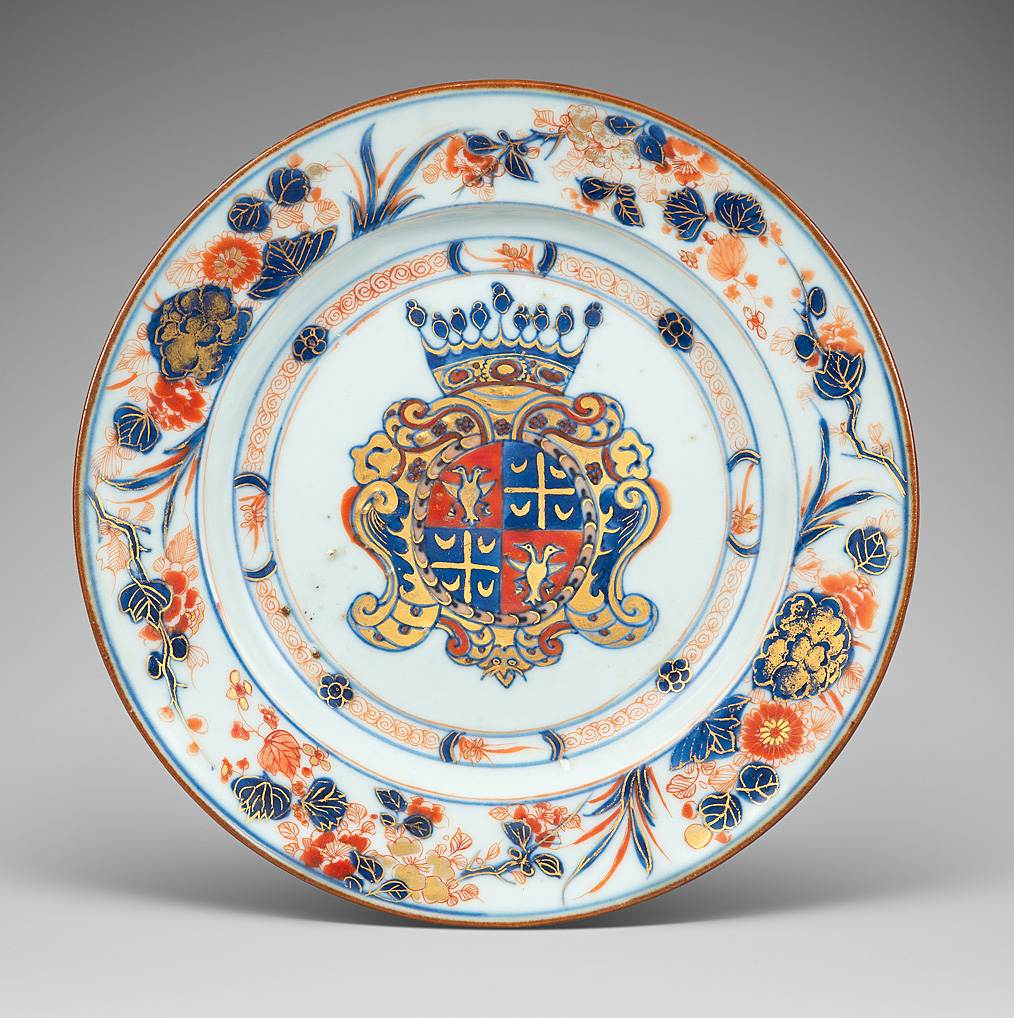
Painted in the centre in characteristic Imari palette, underglaze blue, rouge-de-fer and gilding with the coat-of-arms of Miniac, Quaterly: 1 and 4, gules, an eagle displayed argent between five billets of the last, three and four; 2 and 3, azure, a cross cantoned with four crescent or, within a roptwist border enclosed by scrollwork and […]
A Blanc-de-chine figure of Zhenwu, Supreme Emperor of the Dark Heaven. 17th c.
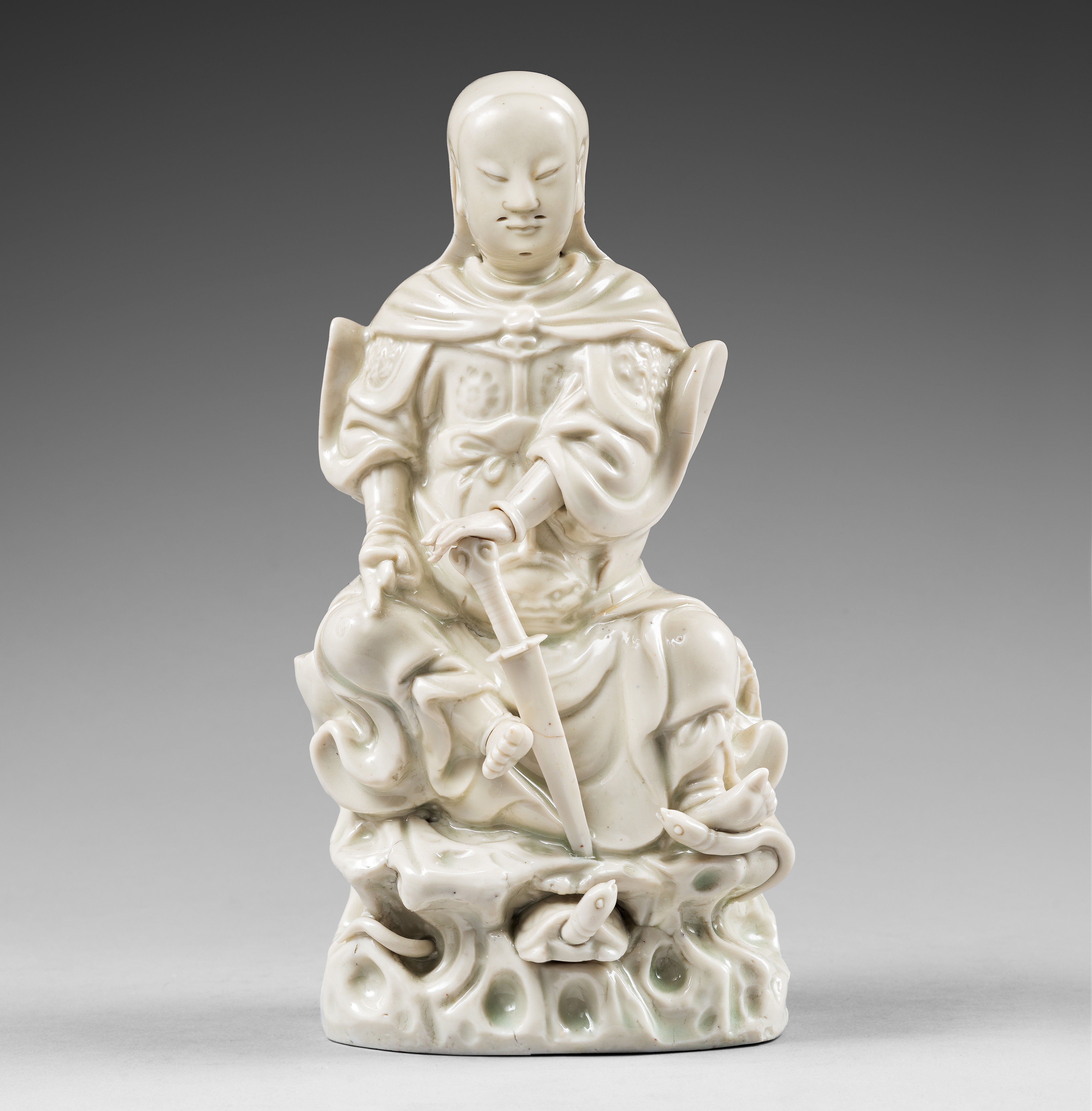
The figure modelled as Zhenwu seated in a domineering posture on jagged rockwork with a tortoise and snake emerging from the crevices, dressed in martial attire with cape over his shoulders, depicted with characteristic long combed-back hair, bare feet and mudra, with seven apertures over the face. He holds a sword in his left hand. The […]
A Chinese brush rest decorated with green enamels on the biscuit. Kangxi period
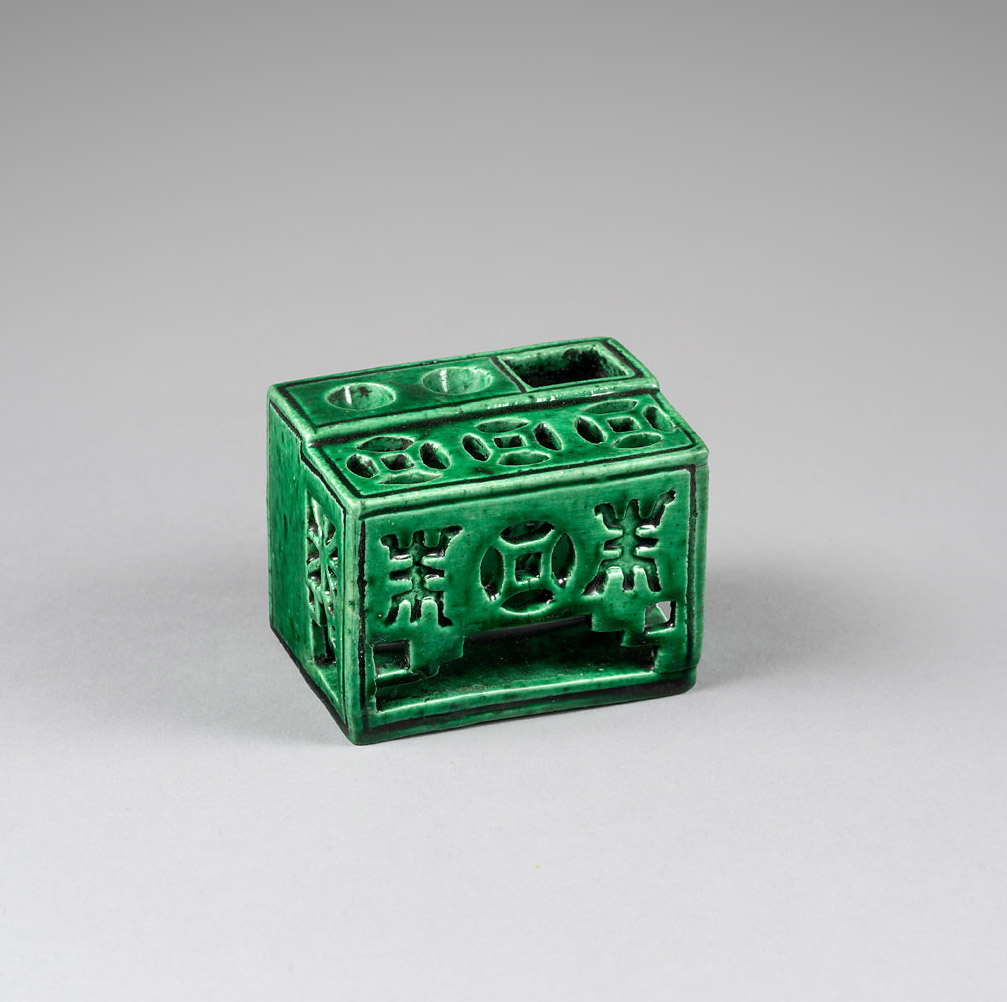
A hallow rectangular box-shaped brush rest, with three openings on the top for holding brushes, two of which are circular and the other in a shape of a square, which open into a sealed cavity. The top surface is also pierced with three openwork cash-shaped designs above a hollow space. The front vertical side is […]
A finger citrons biscuit pyramid. China, Kangxi
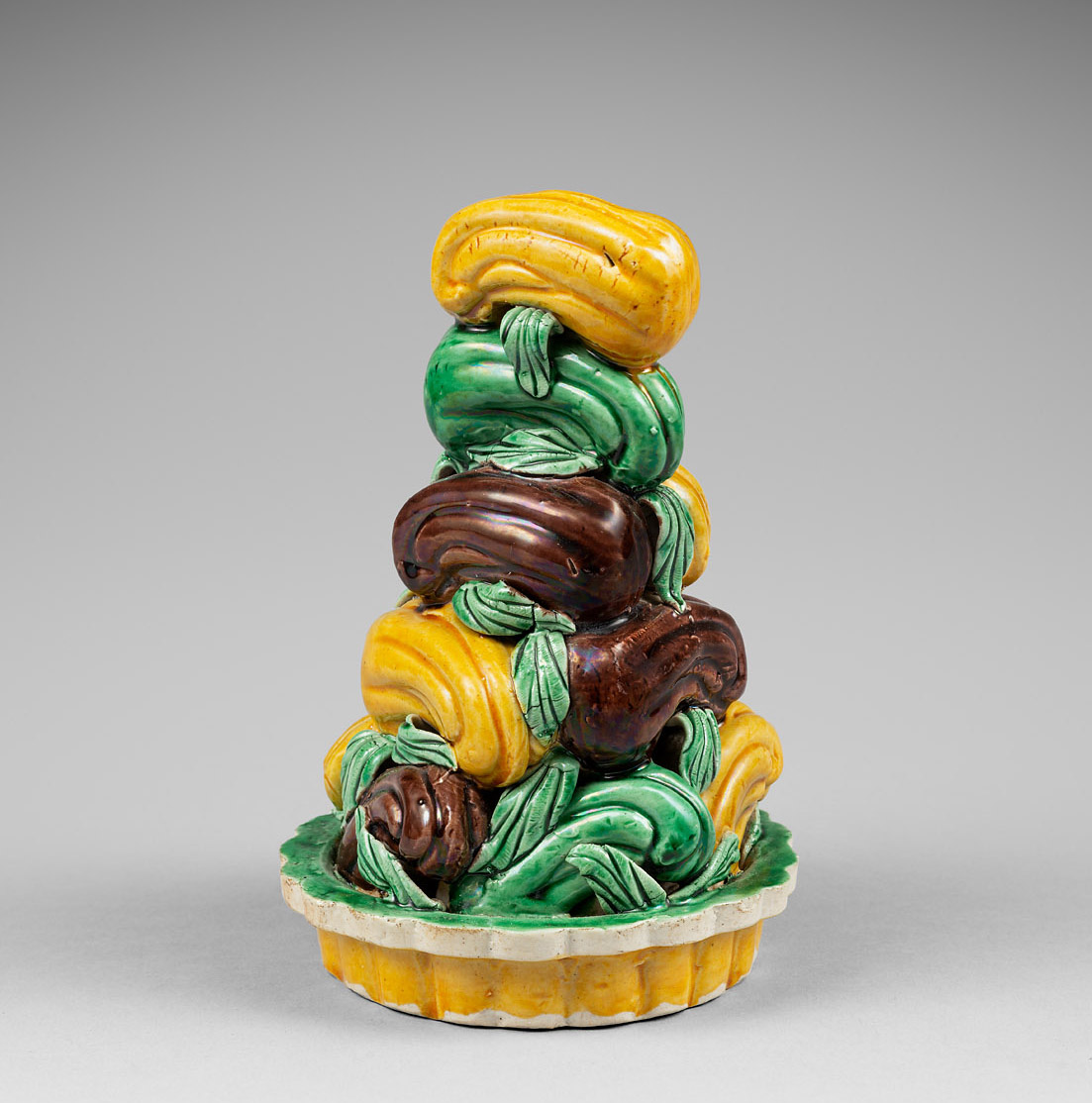
The pyramid with naturalistically miniature finger citrons sits on a fluted dish. The coloured enamelling is in various shades of ochre-yellow, green and aubergine-brown. The fruits are arranged in five layers, with green leaves added in between. To construct this piece, each finger citron would have been individually moulded, then arranged layer by layer and […]