
A Chinese « Madame de Pompadour » dish. Qianlong period.
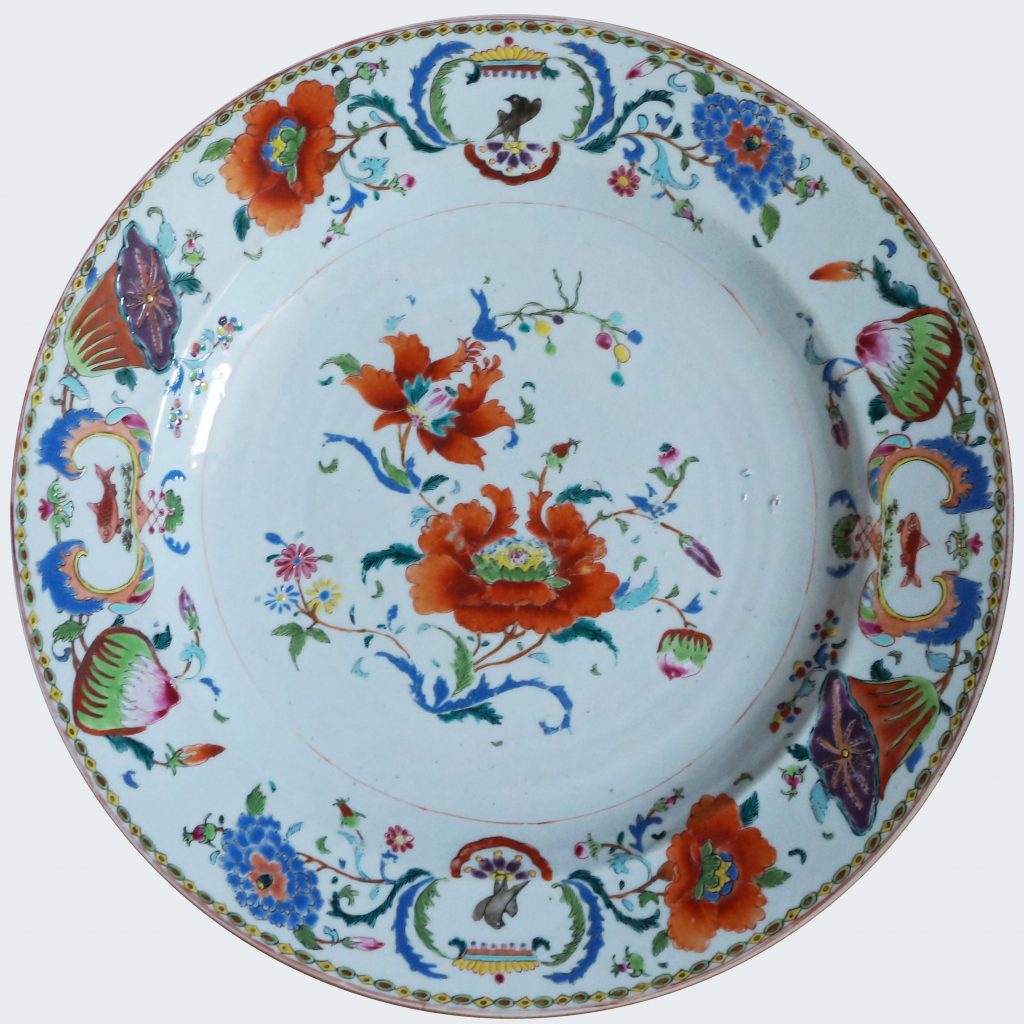
Brightly enamelled to the interior with a peony medallion encircled at the rim by floral sprays and seed pods flanking cartouches alternately enclosing a fish or an eagle.
A Chinese imari four-clawed dragon tea bol. Qianlong period.
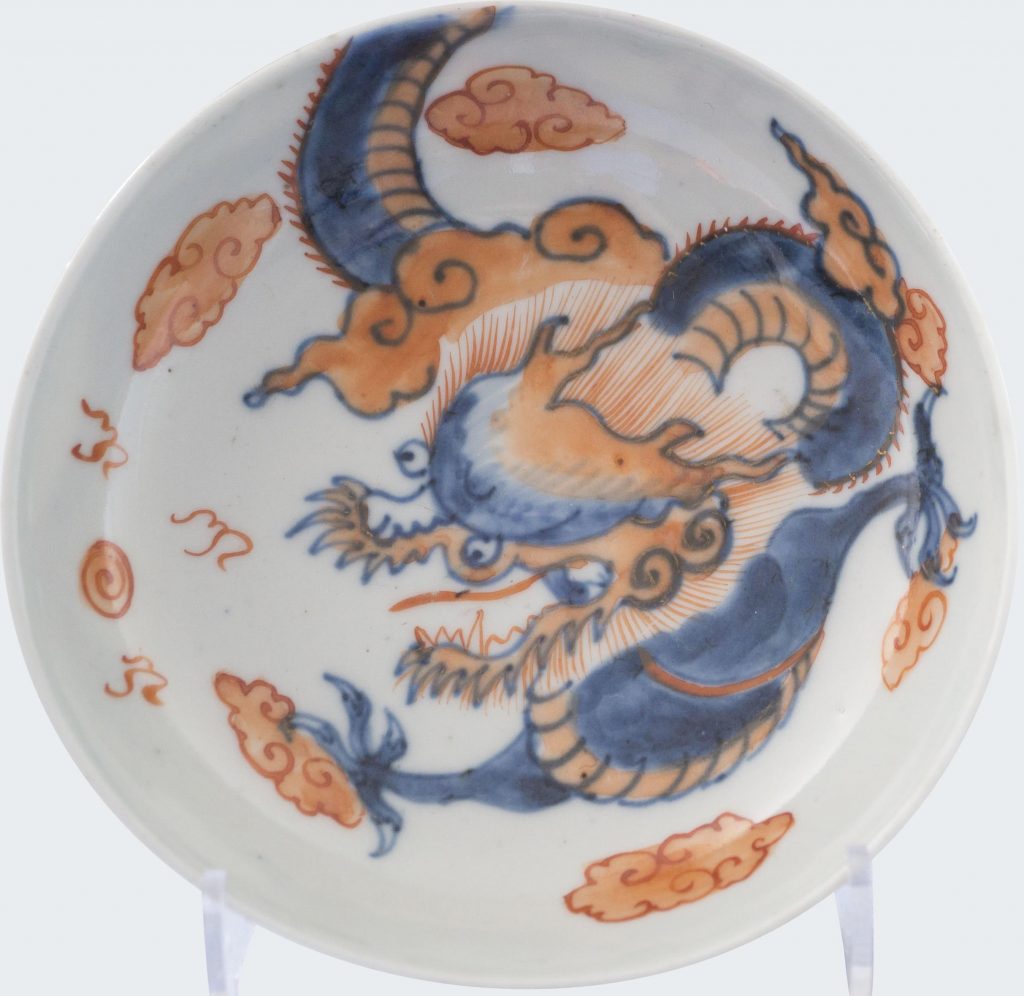
Tea bowl and saucer painted in iron red underglazed blue with the so called four-clawed dragon pattern, depicting a coiled beast pursuing a flaming pearl amongst clouds with its tail curling over the rim. This model was copied by the manufacture of Worcester.
A pair of Chinese export plates with Dutch enamelled decoration. Yongzheng period.
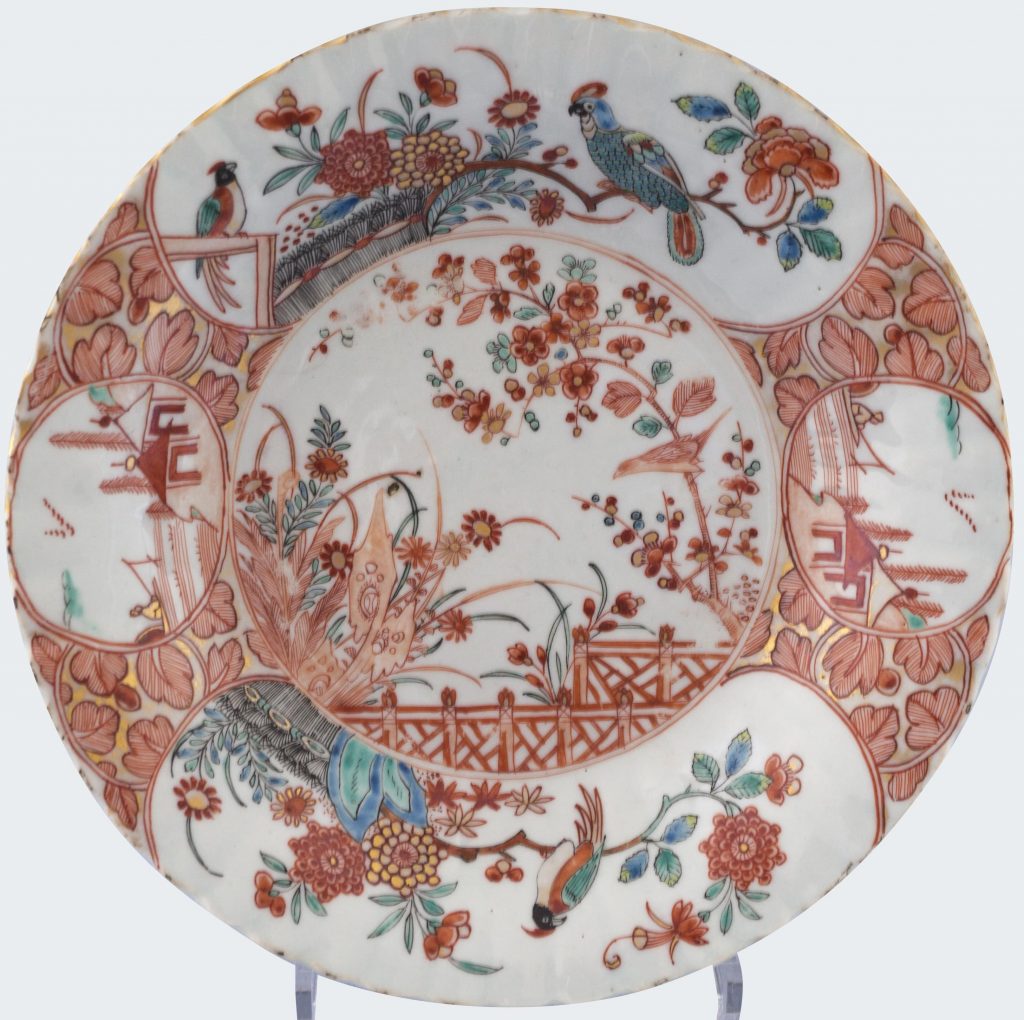
Chinese pair of plates, with a Dutch enamelled decoration, in the Kakiemon style with birds, parrots and oriental themes.
A Chinese export famille rose and silvered armorial dish for the Belgian market (Bistrate of Anvers). Yongzheng period.
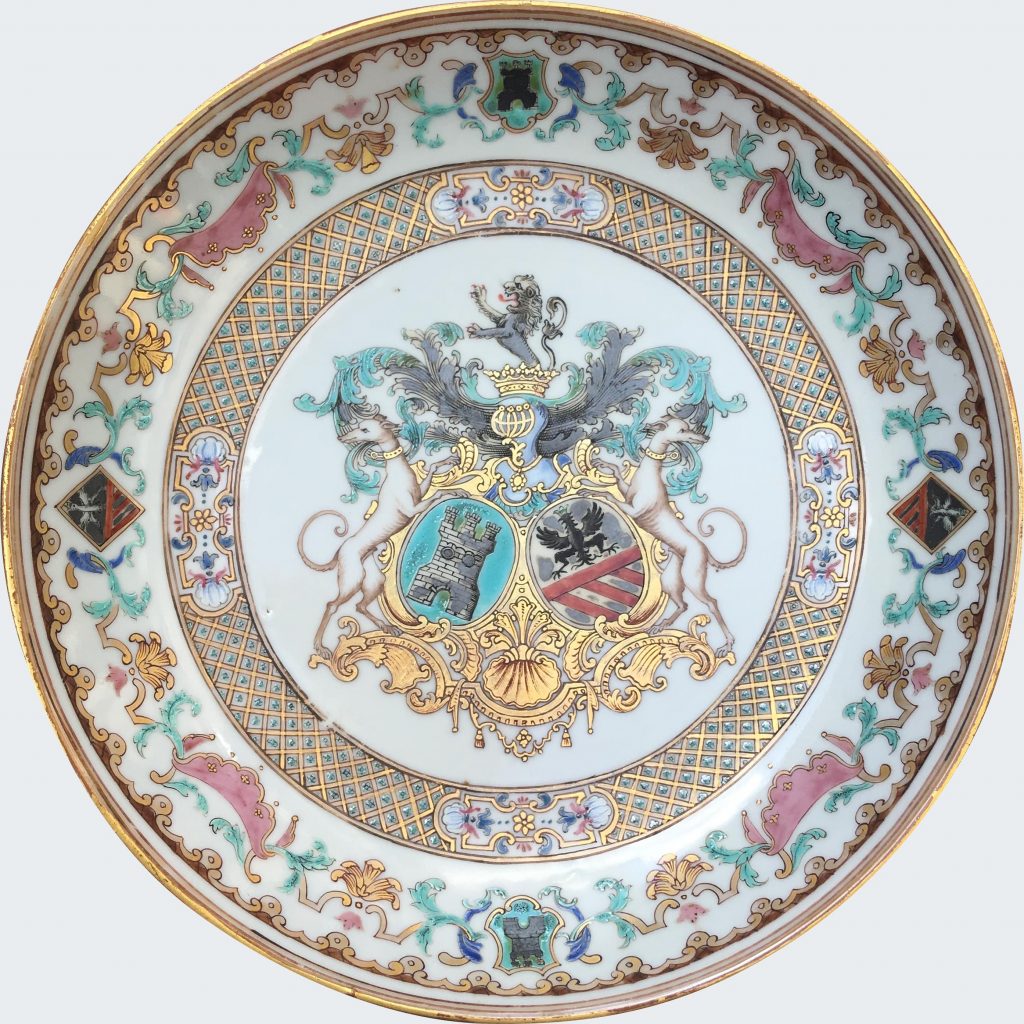
The center enameled and silvered with the arms of la Bistrate accollée with those of Proli between greyhound supporters and below a helmet, coronet and crest, surrounded by a trellis-patters in the well, the arms repeated individually around the everted rim between a du Paquier style design of linked feathers, strapwork, shells and hanging drapery.
A Chinese imari « Governor Duff » plate. Yongzheng period.
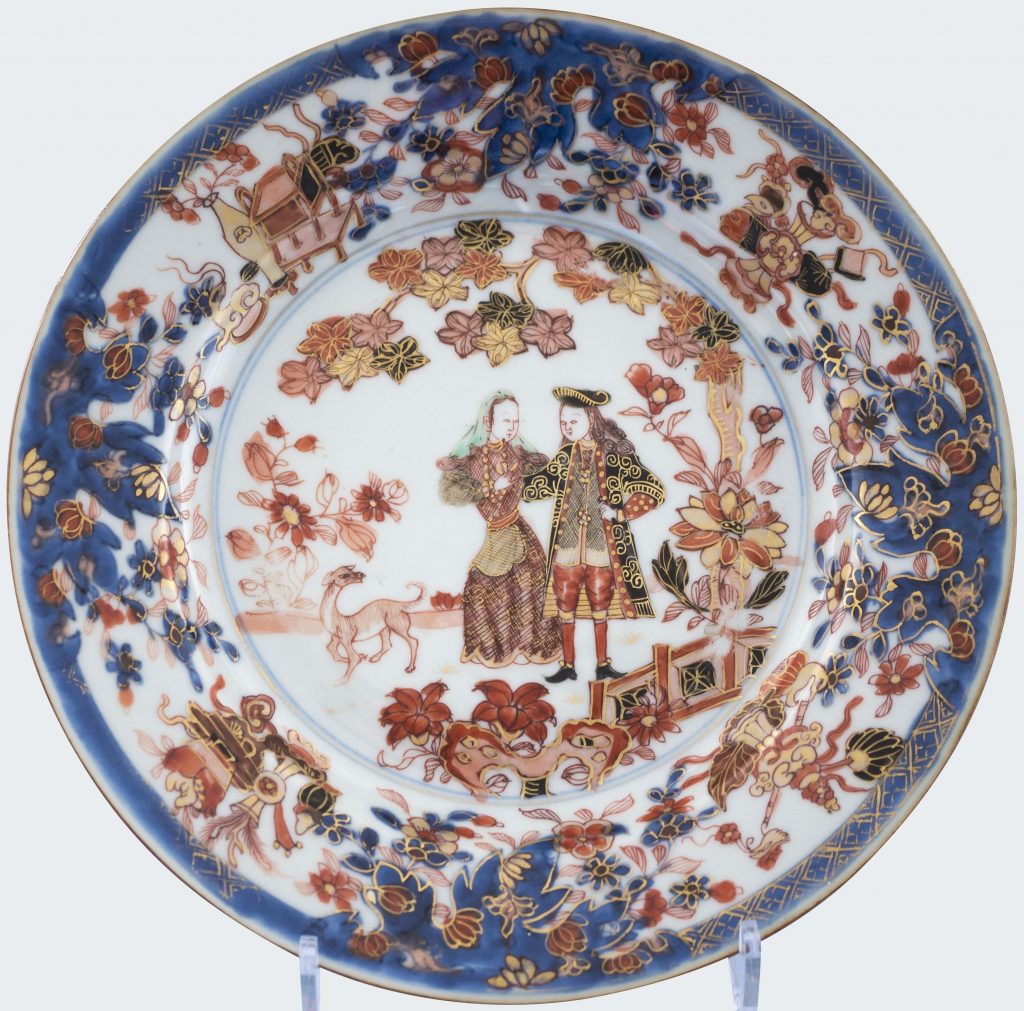
Finely decorated in the traditional imari palette, the centre with a European couple, traditionnaly thought to be Governor Duff and his wife, standing on a garden terrace beside a hound, within an elaborate floral border with four clusters of the Hundred Antiques.
A pair of Chinese plates painted in the famille rouge enamels. Yongzheng period.
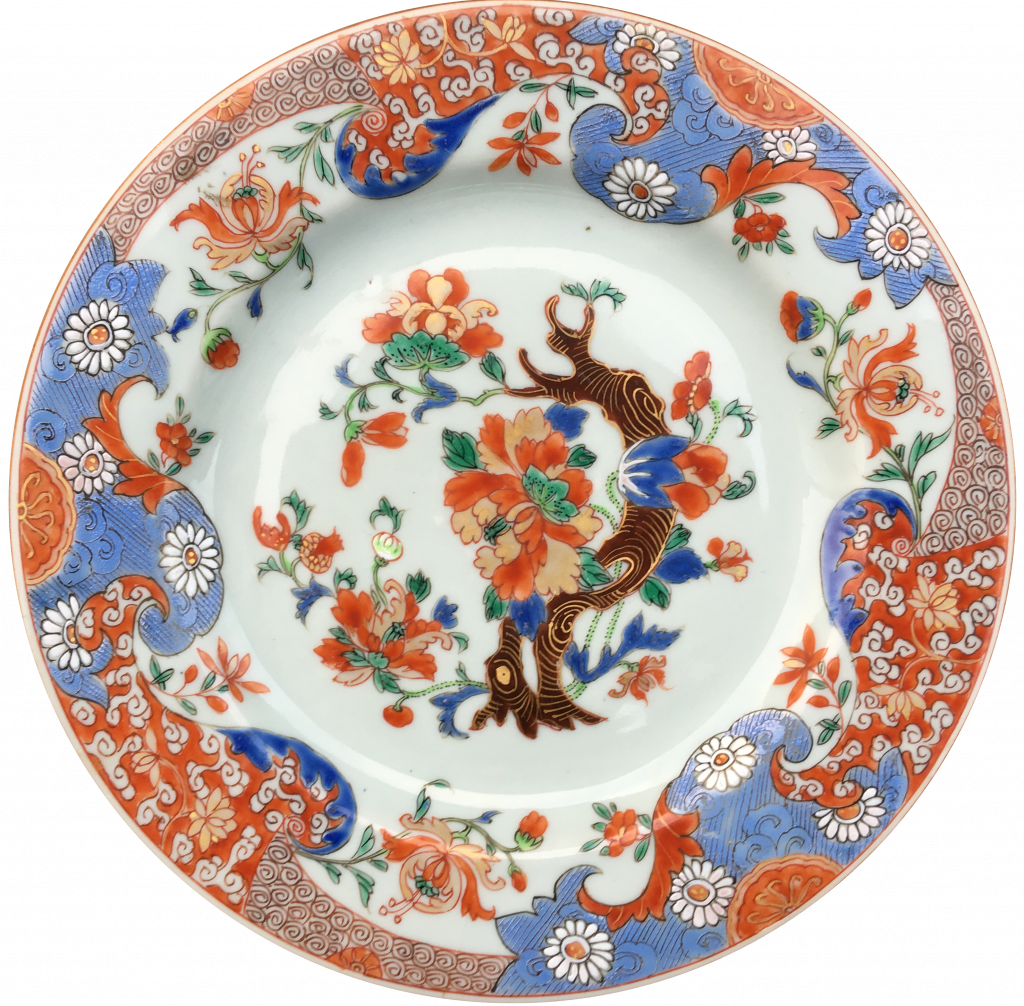
Richly enamelled and decorated in the famille rouge palette, with a tree amongst peonies, pomegranate and citrus.
A Chinese famille rose plate decorated with two pheasants in a garden. Yongzheng period.
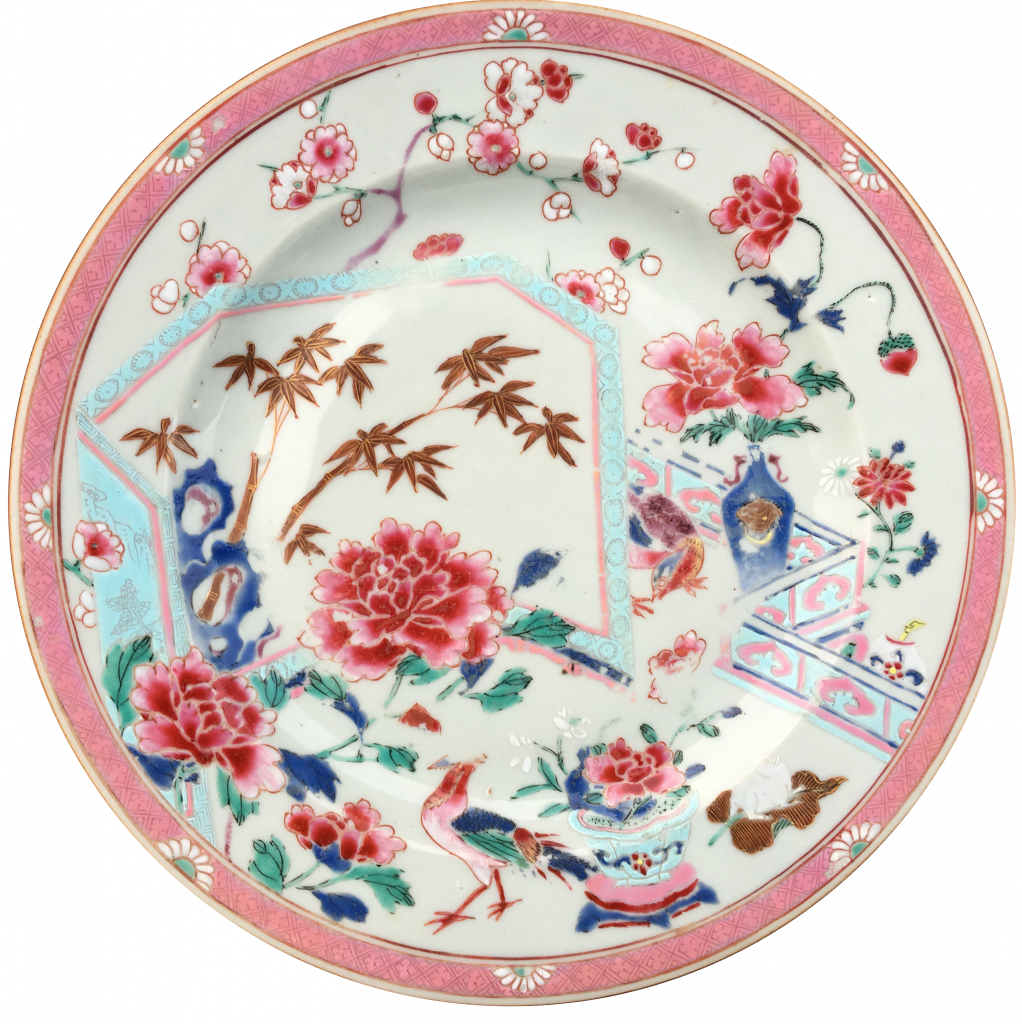
Decorated in famille rose enamels with two pheasants in a garden.
A Chinese famille rose charger painted with an unfurled scroll. Yongzheng period.
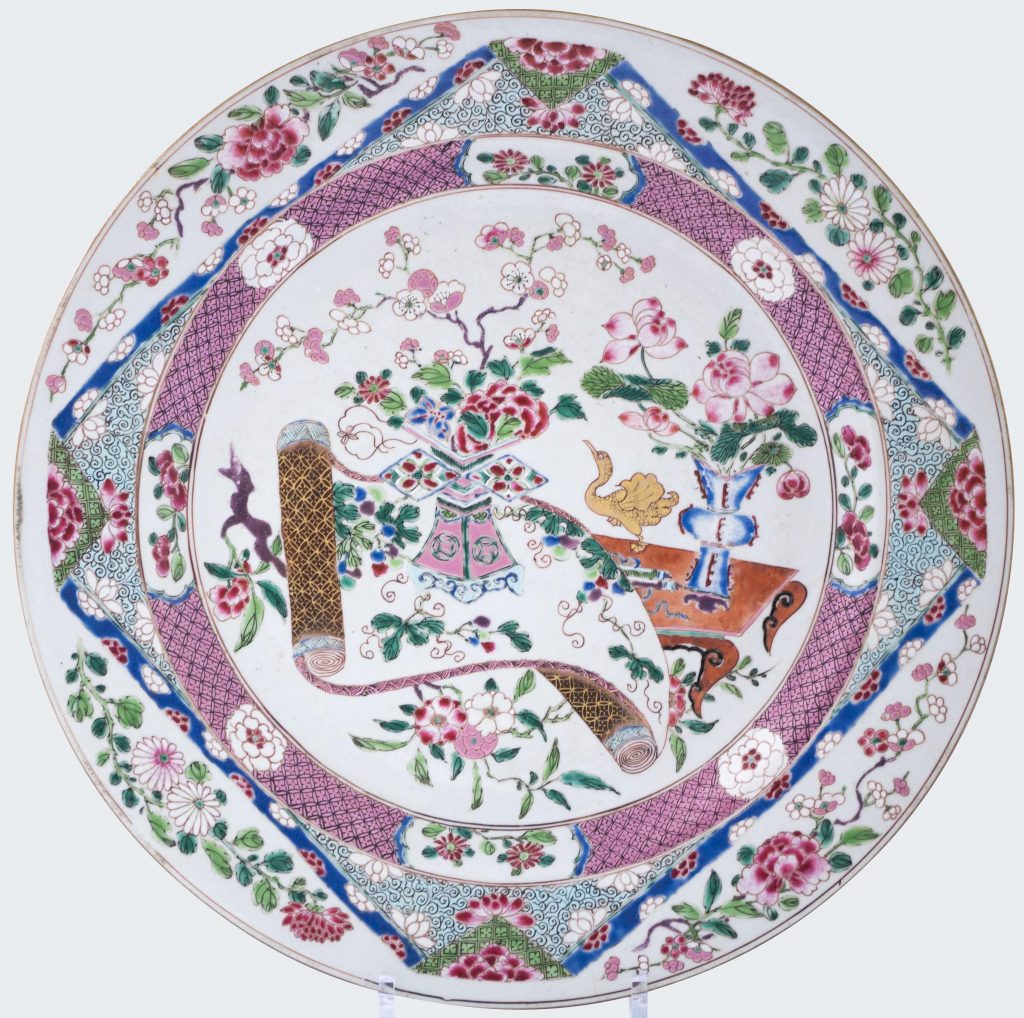
Very large dish, richly enameled in the famille rose palette, with an unfurled scroll, vases with lotus and peonies flowers, and a duck on a table.
A Chinese famille rose dish decorated with Hsi Wang Mu – “Mother of the West”. Yongzheng period.
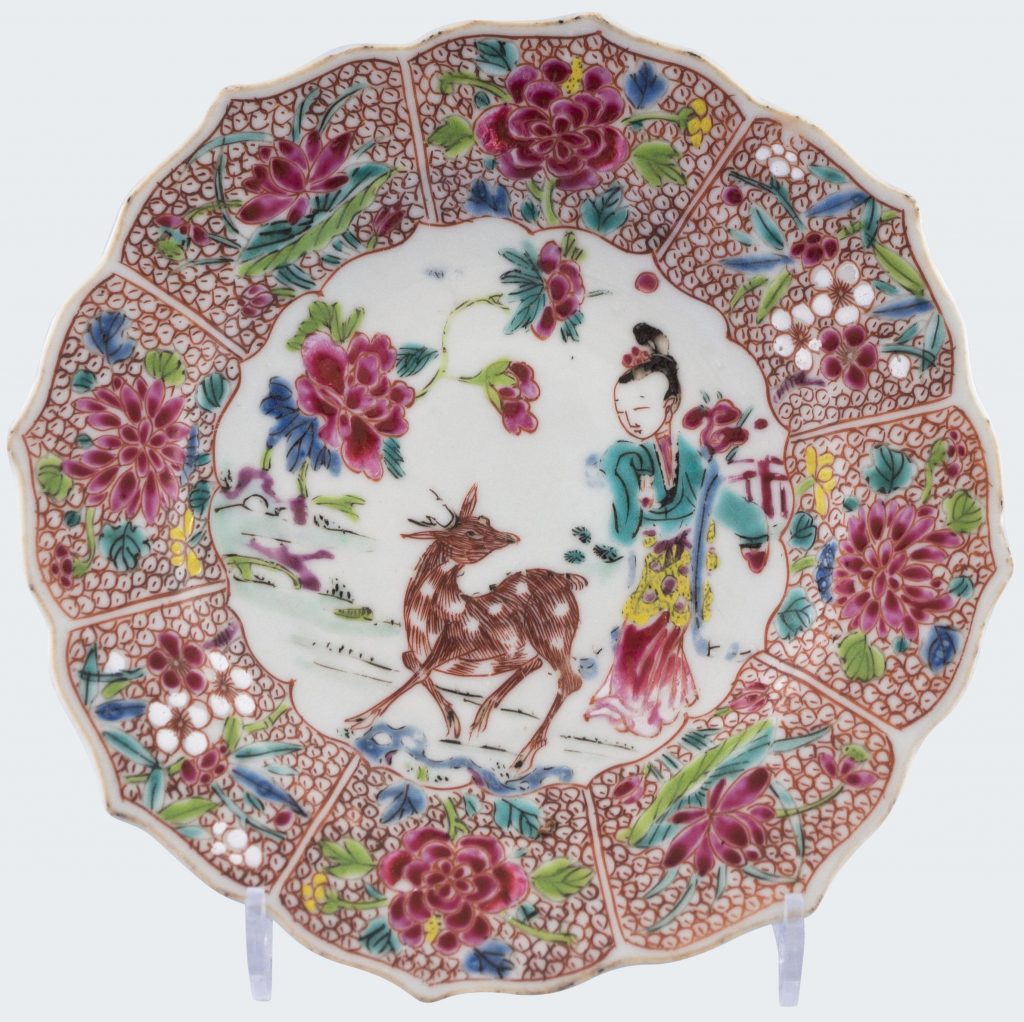
The dish, simulating a lotus flower, with scalopped edge and painted with a central scene depicting, Hsi Wang Mu, Queen Mother of the West, Royal Lady of the West, and a deer amongst peonies. This represents queen, mother of the West. Eight panels are painted on the rim, with lotus, peonies, bamboo, prunus and chrysanthemus […]
A Chinese famille rose plate decorated with an unfurled scroll and the hundred antiquities. Yonghzeng period.
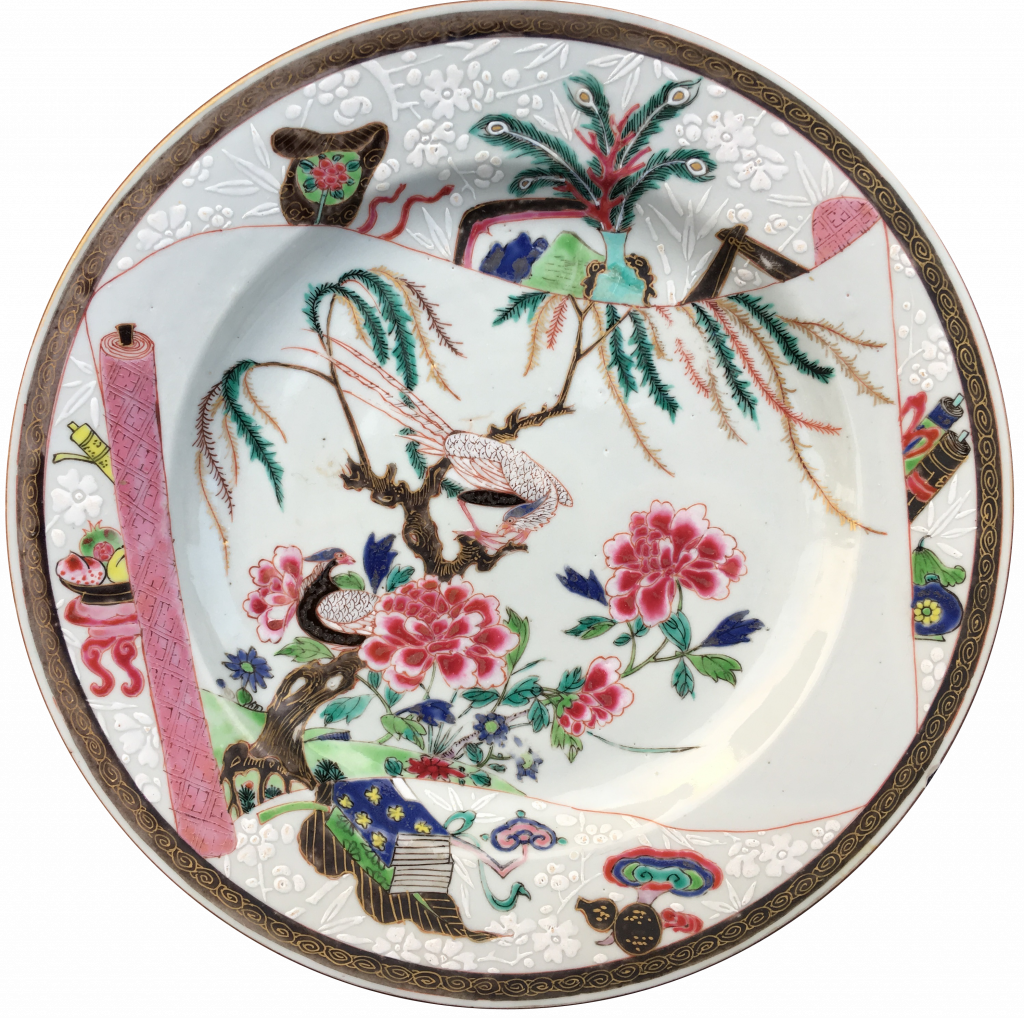
Decorated in famille rose enamels and gold with a central scene within an unfurled scroll of two pheasants perched on a willow tree amongst peonies. The back is decorated with the « Hundred Antiquities », « bai gu », amongst white flowers. A gilt-decorated scroll band on a black ground at the rim.