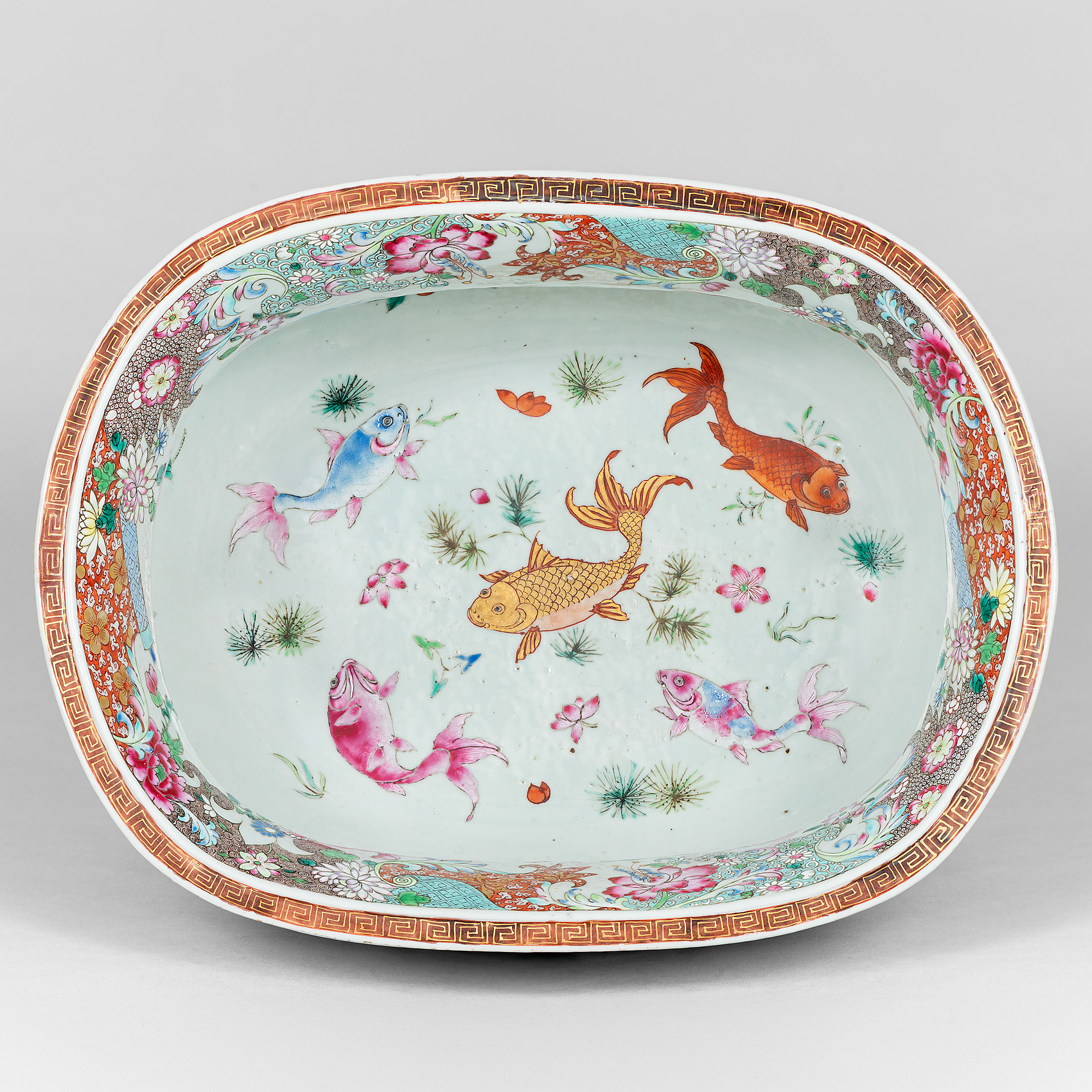
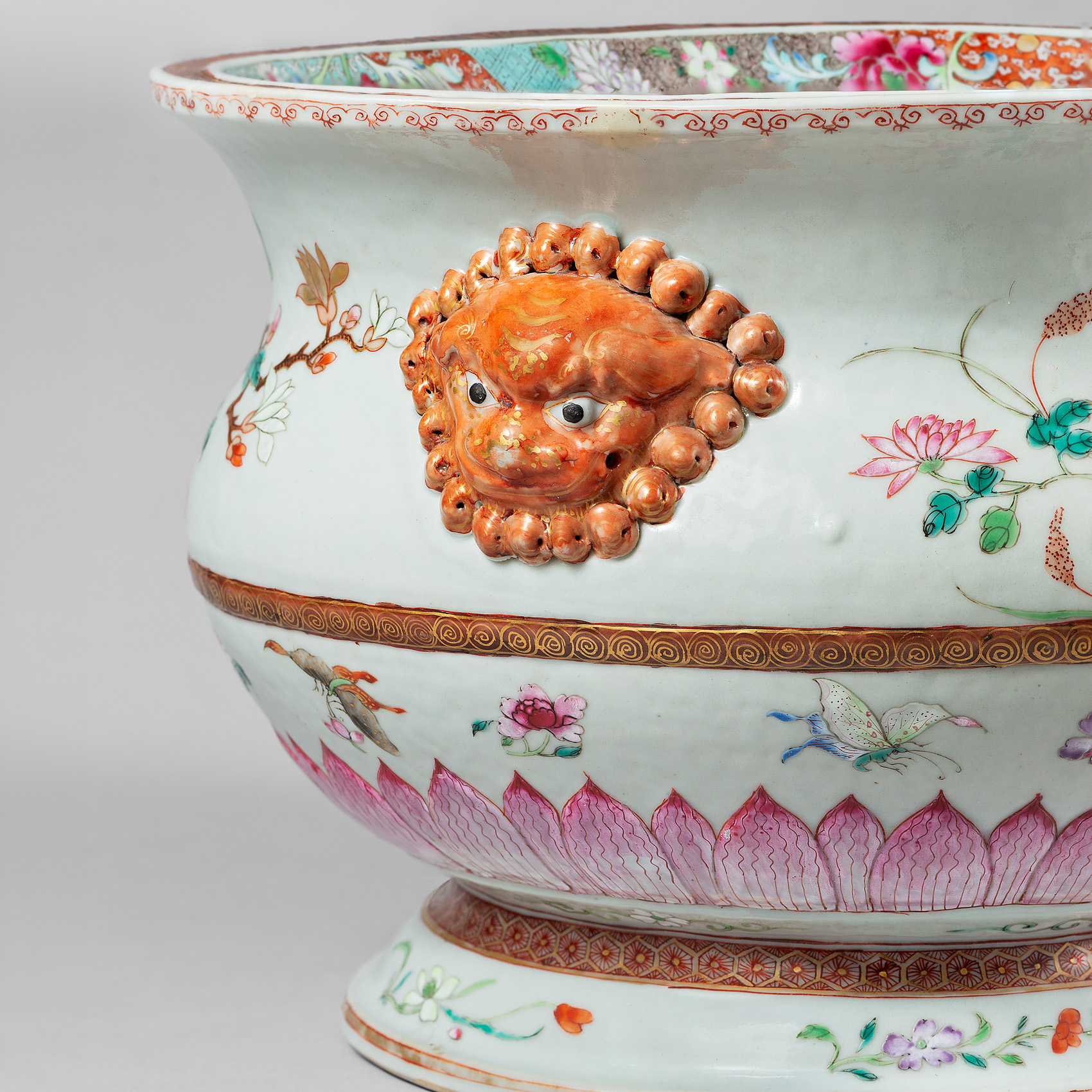
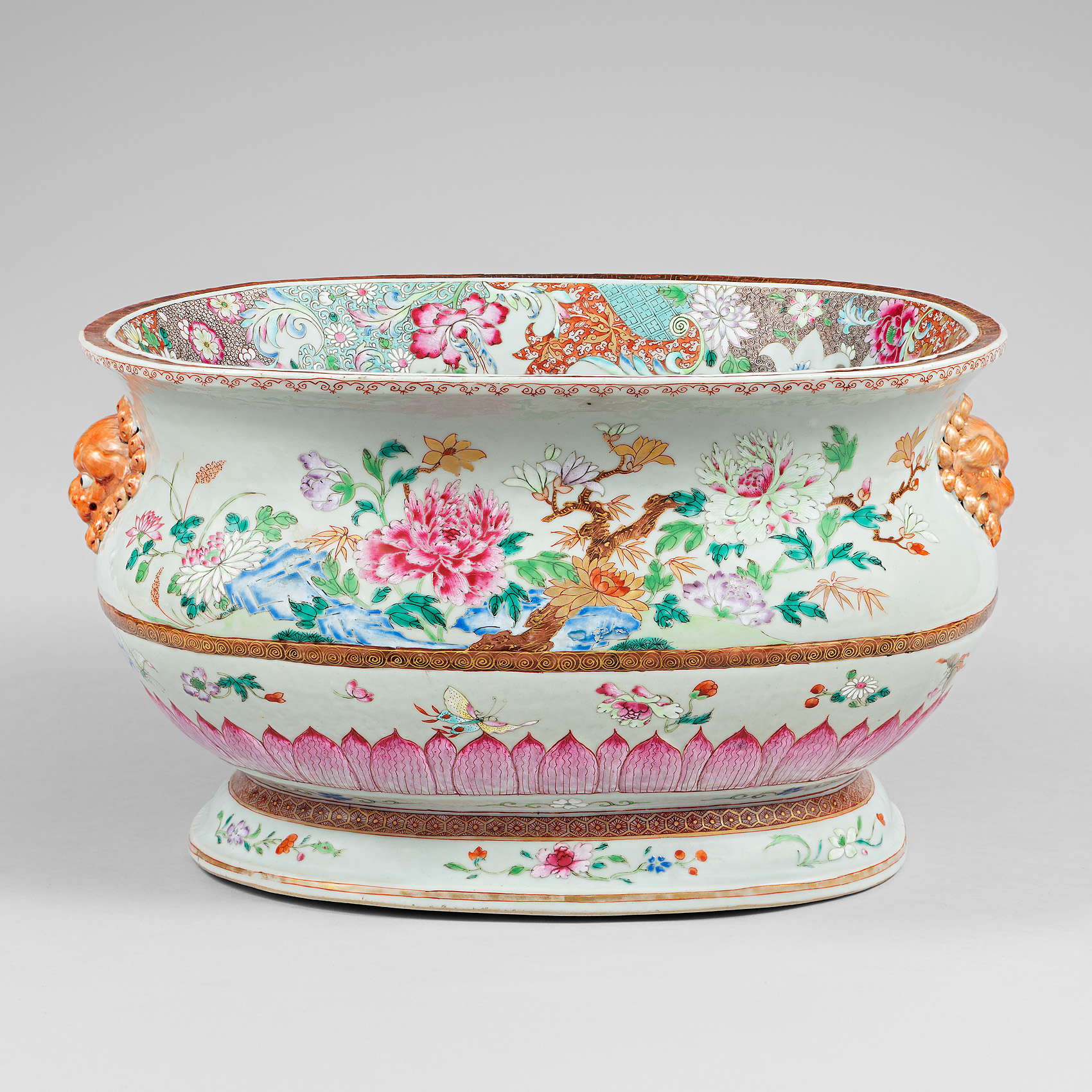
A large Chinese famille rose basin decorated with goldfish. Early Qianlong

This large oval Chinese porcelain basin rests on a moulded pedestal foot and has a broad, flared rim. It is fitted with two handles modelled in relief as Buddhist lion heads, enamelled in iron red and heightened with gold. The exterior is richly decorated in famille rose enamels with flowering peonies, chrysanthemums and other blossoms growing among pierced rocks and leafy branches. The lower part of the body is encircled by a band of pink lotus petals, surmounted by a border of gilt scrollwork against an iron-red ground. The pedestal foot is embellished with scattered floral sprays and geometric patterns. The interior is painted with five goldfish in shades of pink, blue, yellow and orange-red, swimming among aquatic plants and floating blossoms. The upper section of the interior walls is adorned with an elaborate border combining flowers, scrolling foliage and geometric patterns against a variety of brightly coloured grounds. The rim is finished with a band of key-fret motifs in iron red and gold.
COUNTRY : China
TIME: Early Qianlong (1736-1795), circa 1740
MATERIAL : Porcelain
SIZE : 40,5 cm
REFERENCE : F035
PROVENANCE : JW, London and Lisbon
STATUS : disponible
Additional information.

Goldfish have long occupied a prominent place in Chinese art, where they are associated with wealth, abundance and prosperity. Originally bred from wild carp, they were selectively cultivated in China from the Song dynasty onwards, becoming increasingly prized for their brilliant colours and graceful movements. By the Ming and Qing dynasties, ornamental goldfish were widely admired and frequently kept in porcelain bowls and garden ponds. Their symbolic significance derives in part from the Chinese word for fish, yu, which is a homophone of the word for abundance or surplus. Goldfish (jinyu) also evoke the expression jinyu mantang, meaning “may gold and jade fill the hall”, a traditional wish for wealth and prosperity. Their depiction among aquatic plants and floating blossoms further reinforces associations with harmony, vitality and good fortune. On Chinese porcelain of the eighteenth century, goldfish were particularly well suited to the decoration of large basins, where their lively forms and varied colours could evoke the appearance of fish swimming in water. The five goldfish depicted in the present basin thus combine an auspicious subject with a particularly charming decorative effect

This basin draws upon the principal structural features of large circular Chinese fish bowls, traditionally used to keep goldfish. It retains their broad opening, generously proportioned body and the two Buddhist lion-mask handles modelled in relief on either side, features commonly associated with this type of vessel. The interior decoration, depicting five goldfish swimming among aquatic plants, further emphasises this connection by directly recalling the original purpose of such bowls. The painted fish thus appear to swim in the water that might once have filled the vessel, creating a delightful interplay between its decoration and traditional function.

See other items

Question about condition report