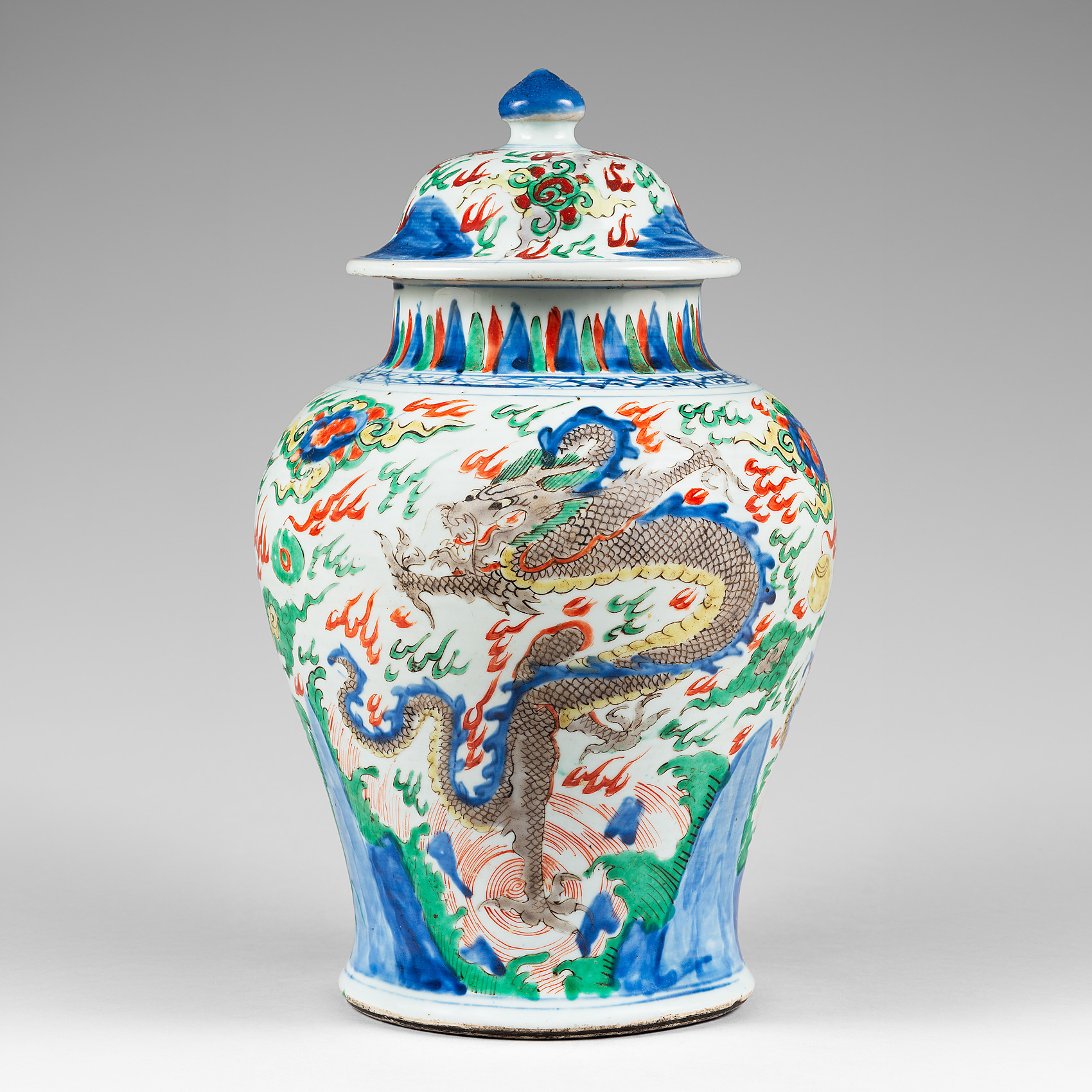
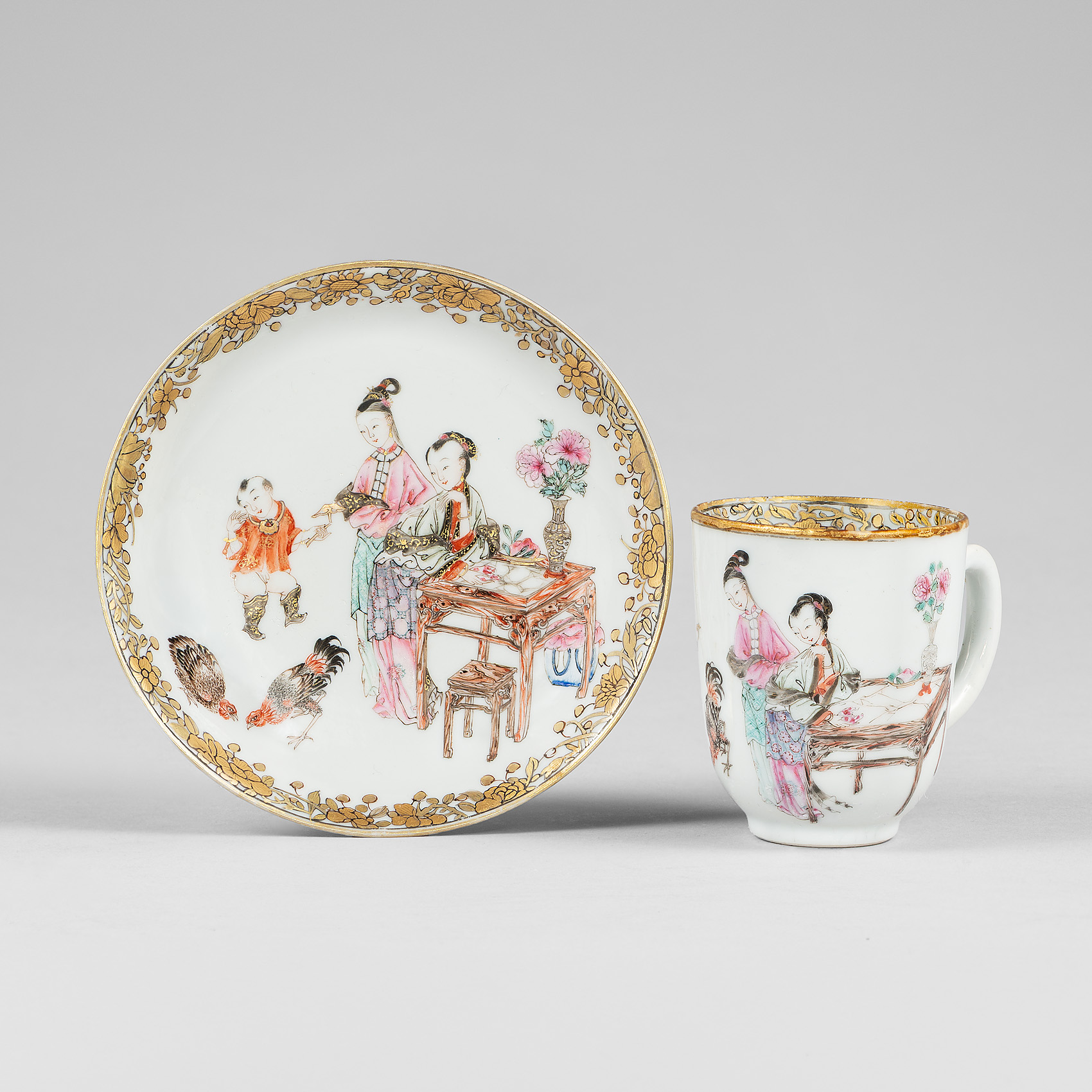
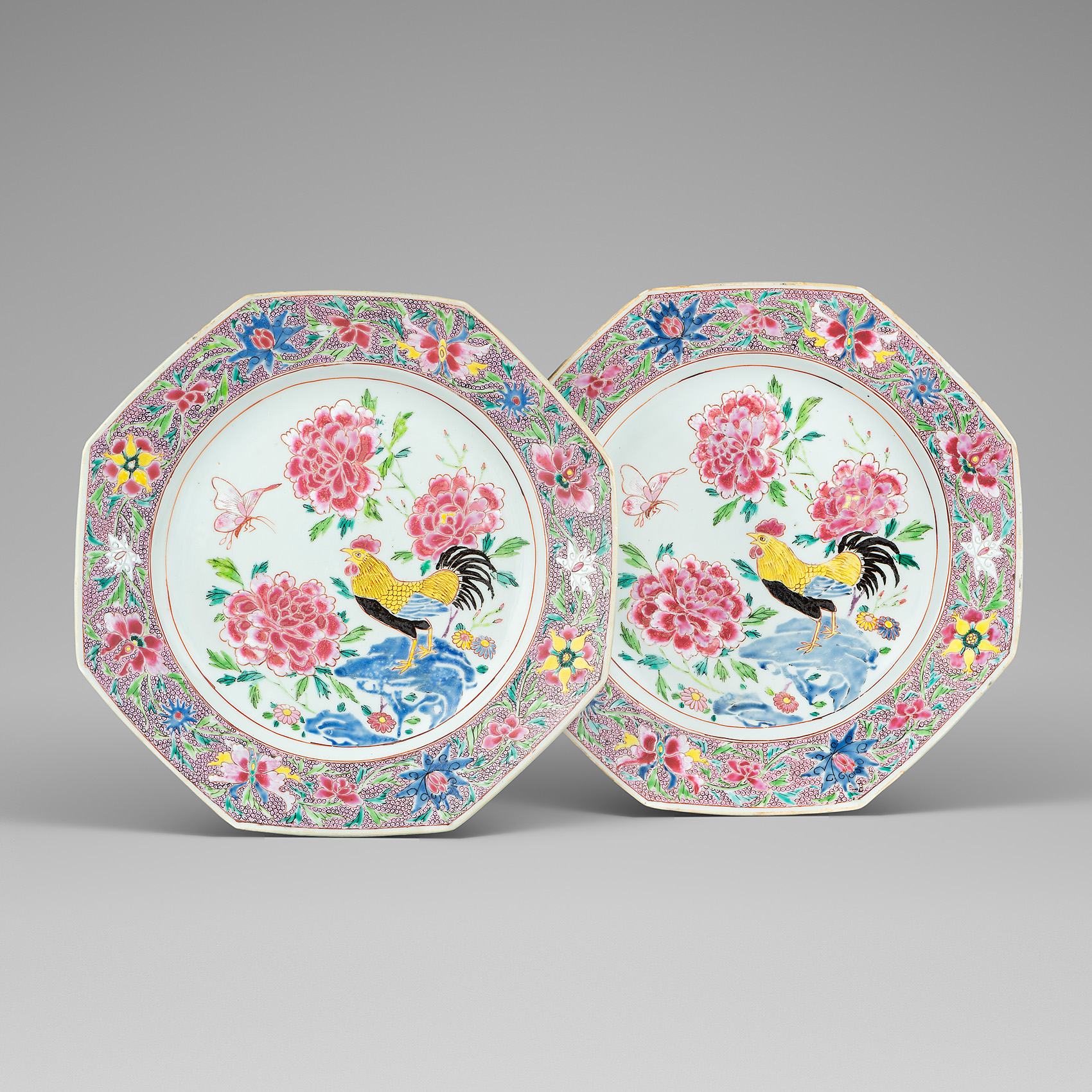
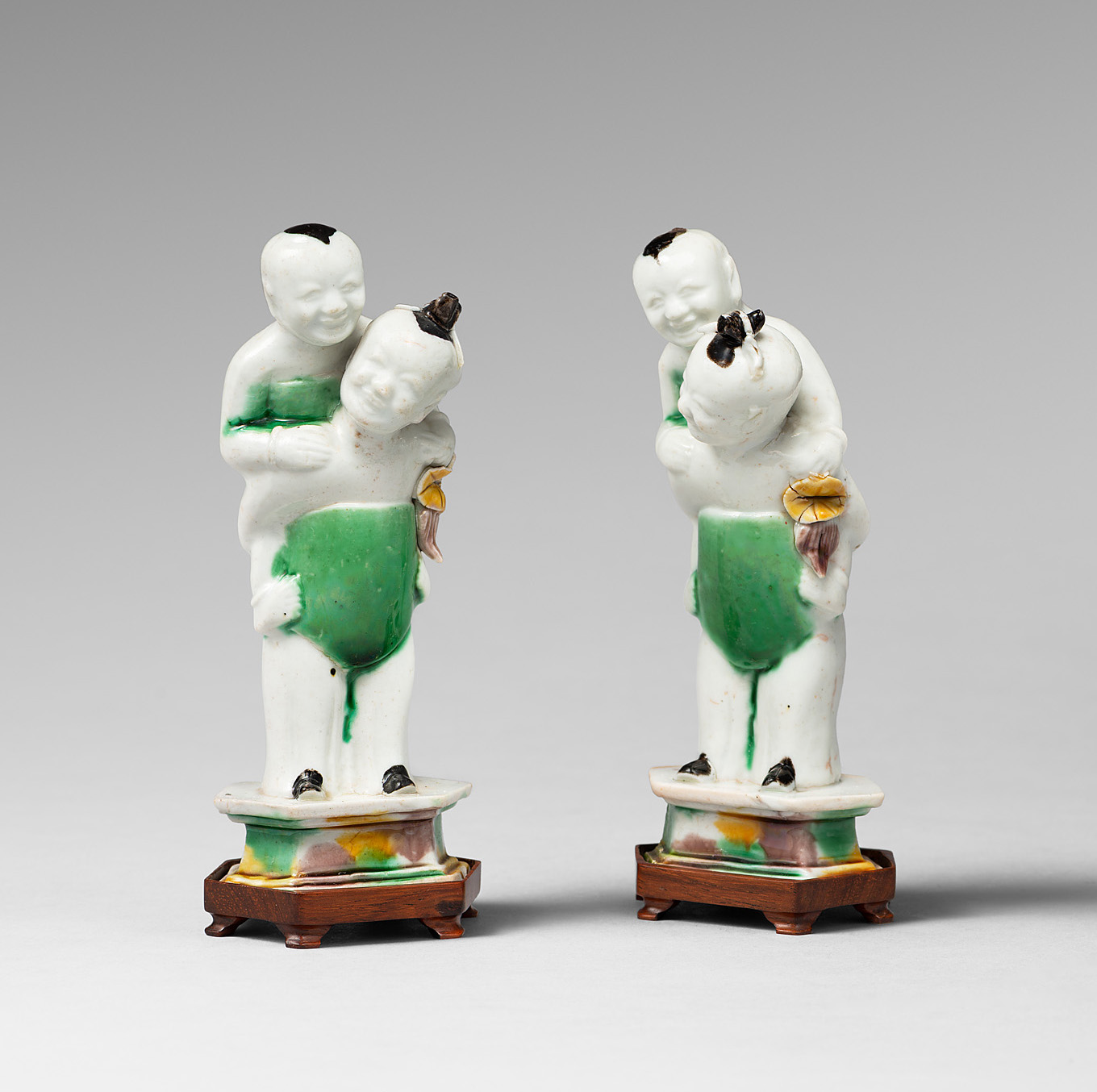
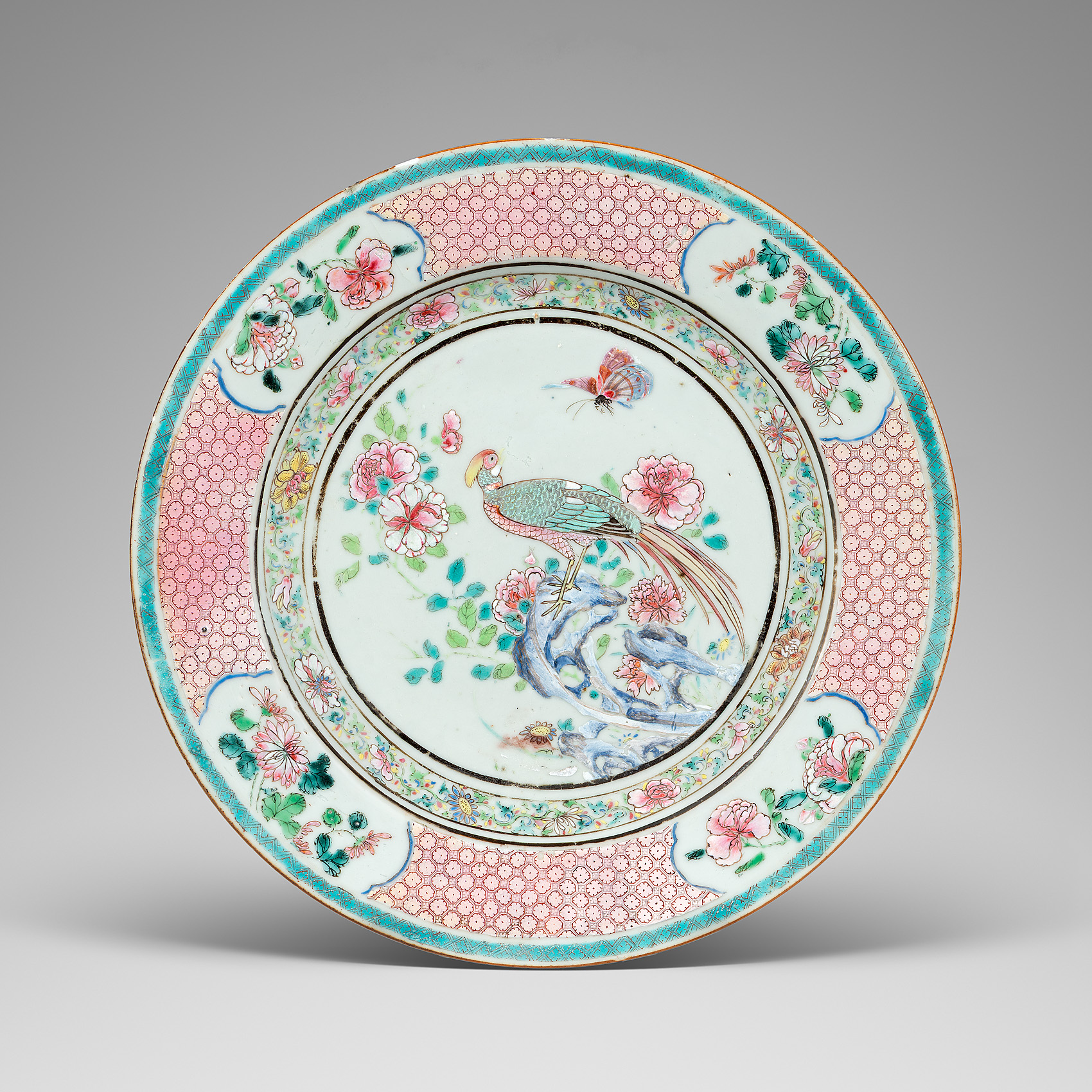
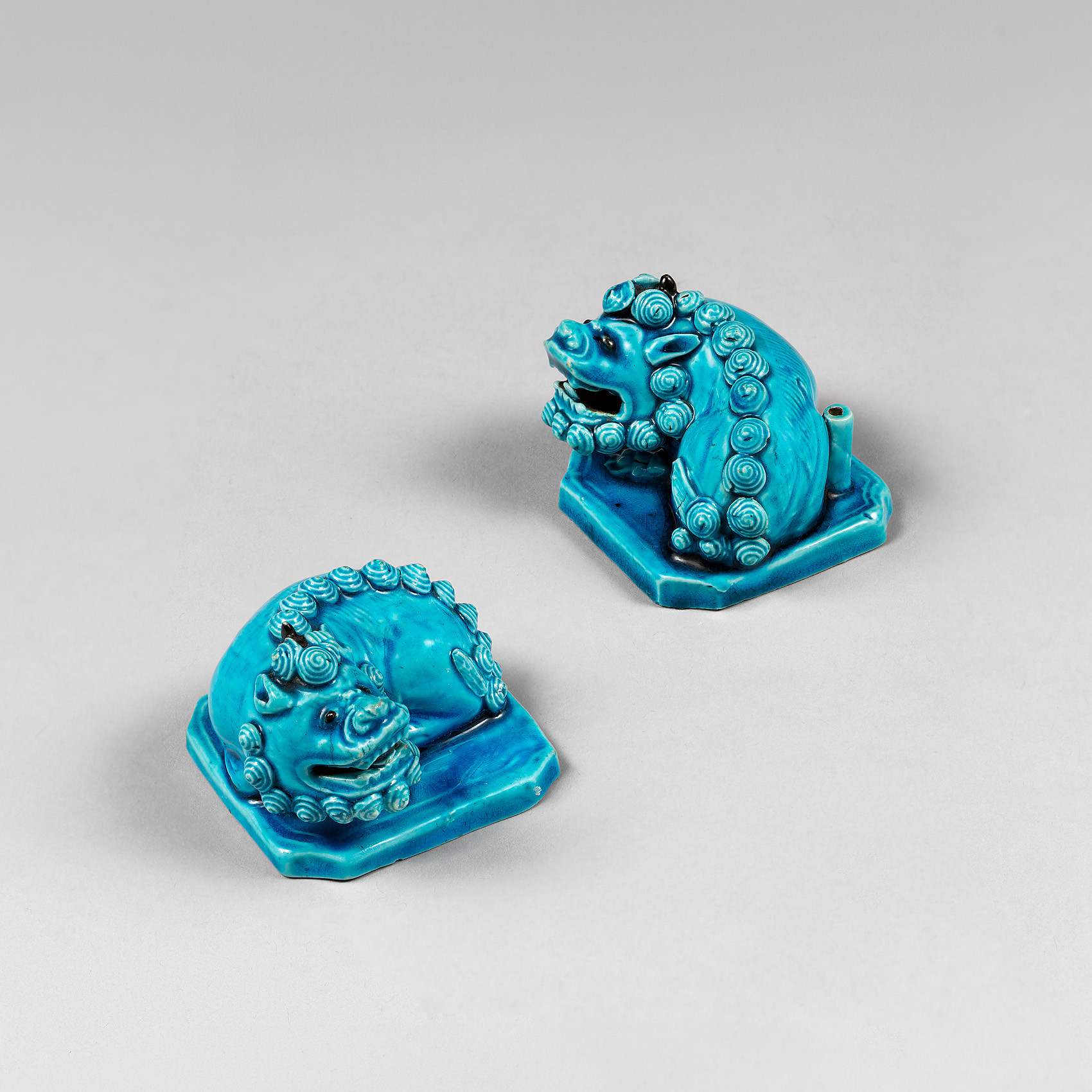
Wucai porcelain (五彩, ‘five colours’) emerged during the Ming dynasty. It evolved from the doucaitechnique of the Chenghua period (1465–1487), though it is distinguished by a freer hand and a broader palette. The technique rose to prominence during the late 16th and early 17th centuries. The enamels typically include iron-red, green, yellow, and aubergine, used alongside underglaze blue. The term ‘five colours’ refers to the polychrome effect rather than a strict count of hues.
Production required a two-stage firing process: a high temperature for the glaze and underglaze blue, followed by a second, lower-temperature firing for the overglaze enamels. Decorative schemes often include narrative scenes, dragons, phoenixes, landscapes, and symbolic motifs. The main production centre was Jingdezhen. During the Wanli reign (1573–1620), compositions grew denser and more animated, with the sharp contrast between cobalt blue and overglaze enamels creating a dynamic visual intensity.
In Chinese religious tradition, the Four Dragon Kings (四海龙王) are the sovereign rulers of the Four Seas, governing rain, rivers, storms, and the aqueous balance. They hold a central position in popular worship and classical literature, appearing as shape-shifting deities who command the forces of nature.
Each Dragon King presides over a cardinal direction and its corresponding sea: Ao Guang rules the East Sea, Ao Qin the South Sea, Ao Run the West Sea, and Ao Shun the North Sea. Although primarily associated with maritime realms, their directional identities gradually intersected with broader cosmological thought.
In Chinese symbolism, the East corresponds to wood and the colour blue-green (青, qing), the South to fire, summer and red, the West to metal and white, and the North to water, winter and black. These associations situate the Dragon Kings within a framework of harmony between the natural world, political authority, and cosmic order. Occasionally, a fifth deity, the Yellow Dragon (黄龙, huanglong), is included at the centre to represent the Yellow Emperor. Although Ao Run (the White Dragon of the West) is one of the four, he is frequently omitted or replaced by the Yellow Dragon in popular depictions, a shift rooted in Chinese cosmology and folklore.
One must distinguish the Dragon Kings from the abstract cosmological system of the Four Symbols (四象 – si xiang), which represents an earlier astronomical and philosophical tradition. While the Dragon Kings are devotional and narrative figures rooted in religious practice, the Four Symbols—comprising the Azure Dragon of the East, the Vermilion Bird of the South, the White Tiger of the West, and the Black Tortoise of the North—function as celestial markers for the seasons and cardinal directions.
When multiple dragons appear in art, particularly within Ming and Qing decorative schemes, their varied colours may suggest an evocation of directional balance or cosmic unity. Such interpretations should remain measured, as artistic conventions do not always adhere strictly to doctrinal systems. Ultimately, the Four Dragon Kings represent more than mastery over water; they embody the ideal of a world governed in harmony, where Heaven, nature, and human rule are aligned.