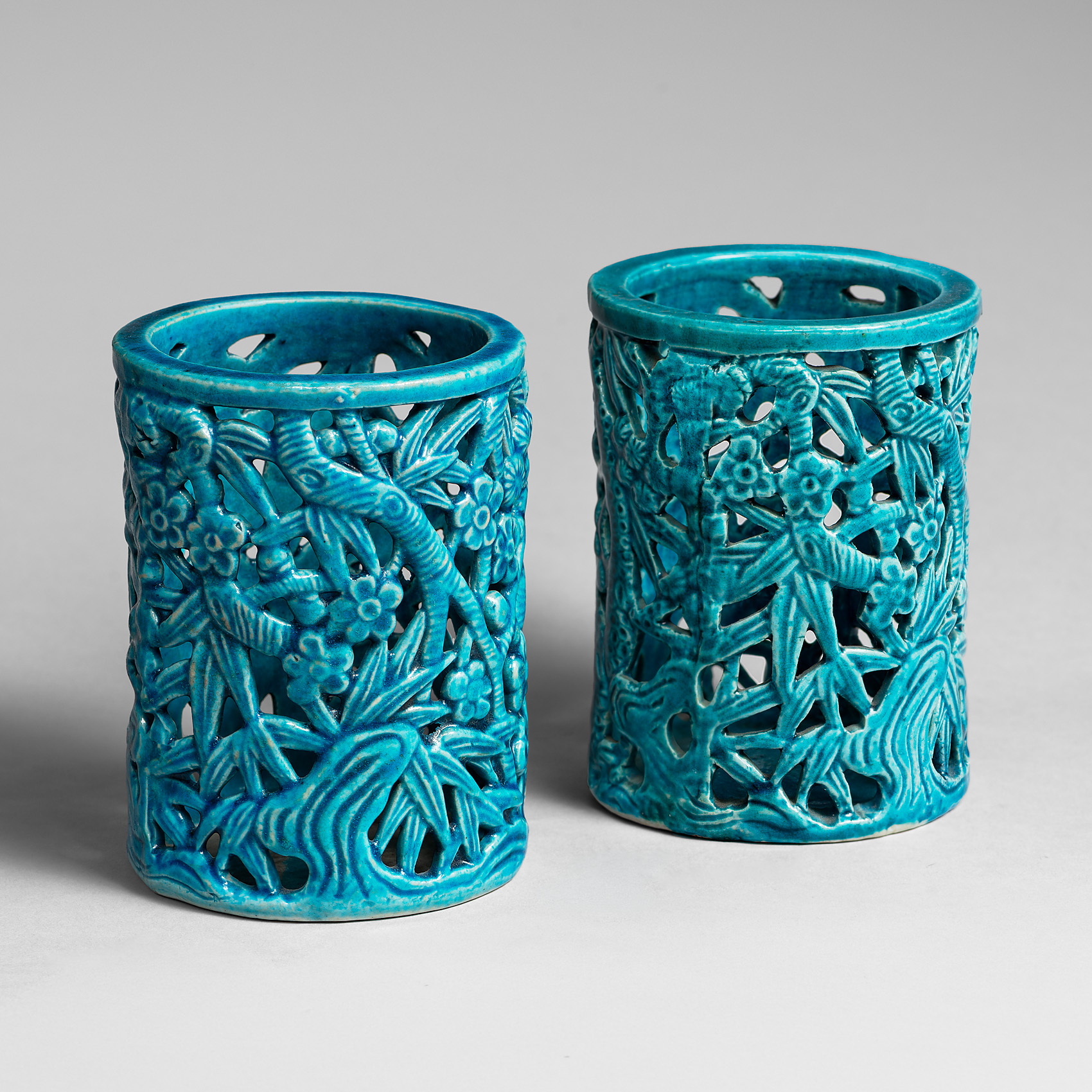
Additional information.The motif of the Three Friends of Winter (Suihan Sanyou, 歲寒三友) is one of the most celebrated themes in Chinese art. It combines the pine tree, bamboo, and flowering plum, three plants renowned for their ability to withstand the harsh conditions of winter. Together, they symbolize perseverance, resilience, and moral integrity in the face of adversity.
The pine tree remains evergreen throughout the year and represents longevity, steadfastness, and endurance. Bamboo, both flexible and difficult to break, embodies uprightness, humility, and inner strength. The flowering plum, whose blossoms emerge before the end of winter, symbolizes renewal, hope, and the triumph over hardship.
From the Song dynasty (960–1279) onward, the Three Friends of Winter became a favourite subject among scholar-painters, who regarded them as reflections of the virtues of the ideal gentleman. The motif subsequently gained immense popularity throughout the decorative arts, appearing on porcelain, lacquerware, textiles, jades, and enamels.
During the Ming and Qing dynasties, it was frequently depicted on porcelains intended for both the domestic market and export trade. Beyond their decorative appeal, the Three Friends of Winter conveyed a powerful message of fidelity, perseverance, and noble character. To this day, they remain among the most enduring and beloved symbols of traditional Chinese culture.