
A massive Chinese blue and white charger decorated with Immortals. Transitional period
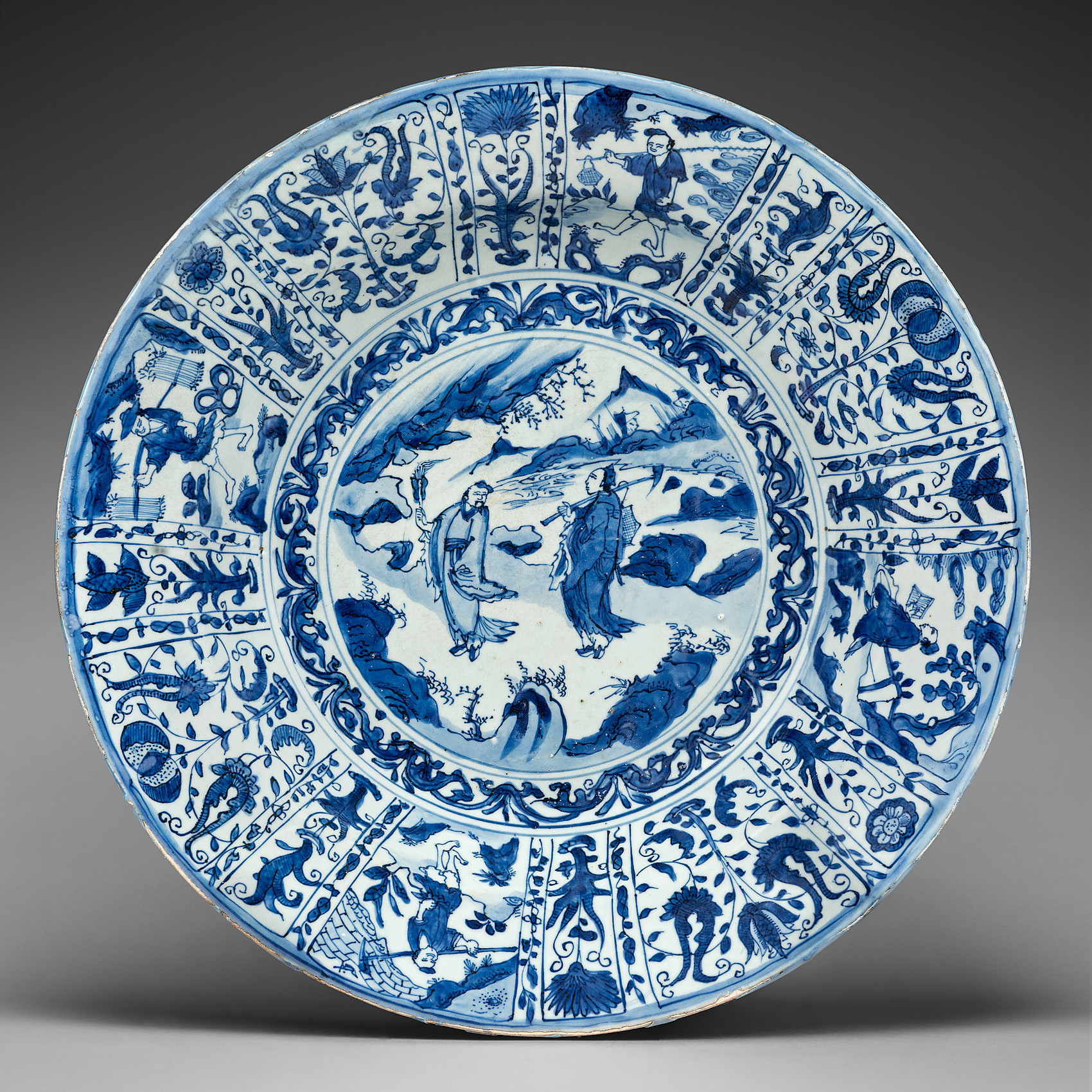
The massive charger is decorated in underglaze blue. At the centre, two immortals, Zhongli Yuan and Lan Caihe, stand in a mountainous landscape crossed by streams and stylised rocks. The border is divided into alternating wide and narrow panels, variously decorated with figures and floral motifs inspired by Iznik ceramics. Zhongli Quan, holding his fan, […]
A Chinese wucai dragon censer. Transitional period
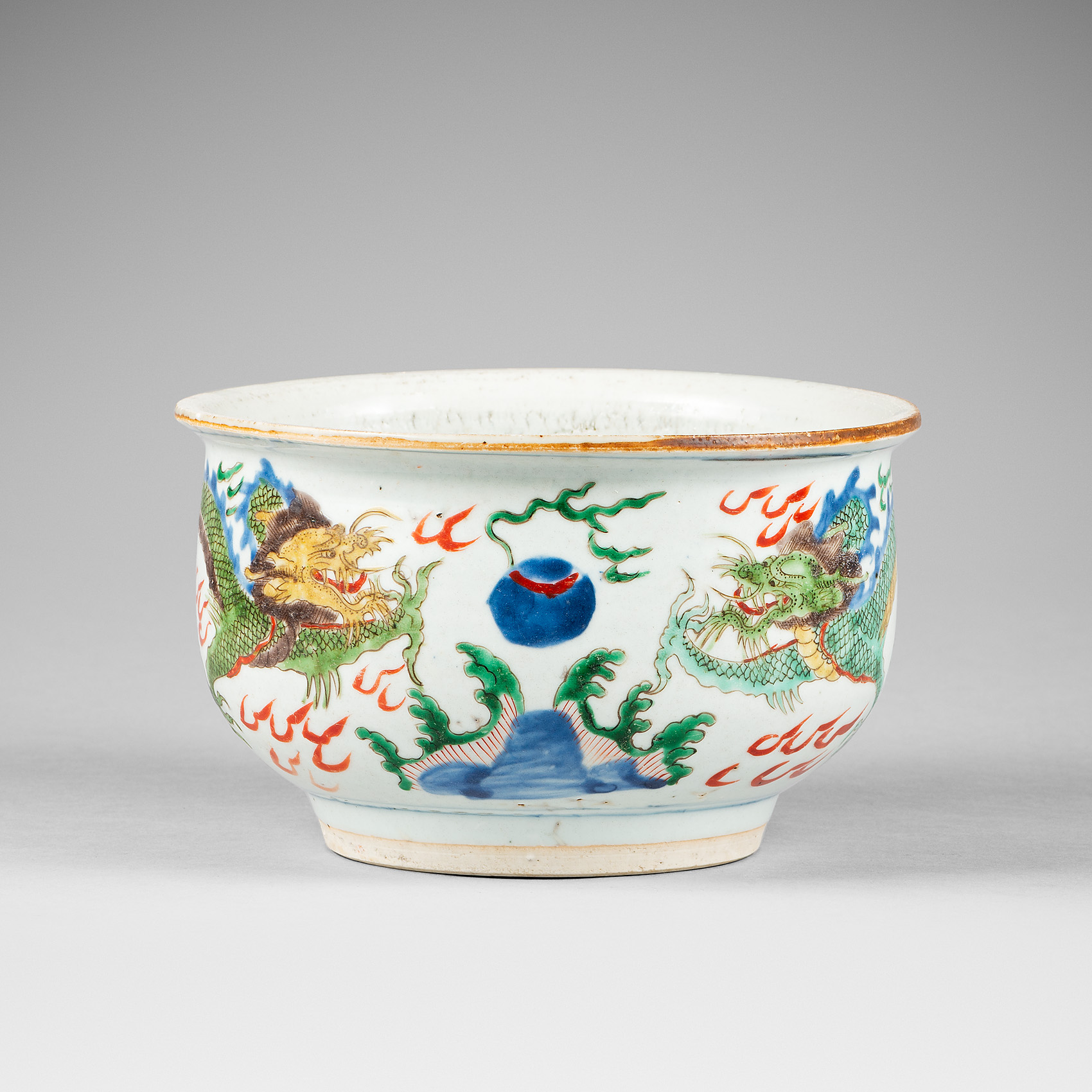
The vessel is of bombe form, with a rounded body, pronounced shoulder, and slightly flared rim — a shape characteristic of the wide-mouthed censers produced at Jingdezhen during the seventeenth century.The decoration is executed in wucai enamels — literally “five colours”: iron red, green, yellow, blue, and aubergine. These pigments were applied over the glaze […]
A Chinese blue and white garlic-neck bottle vase with floral design. Transitional period
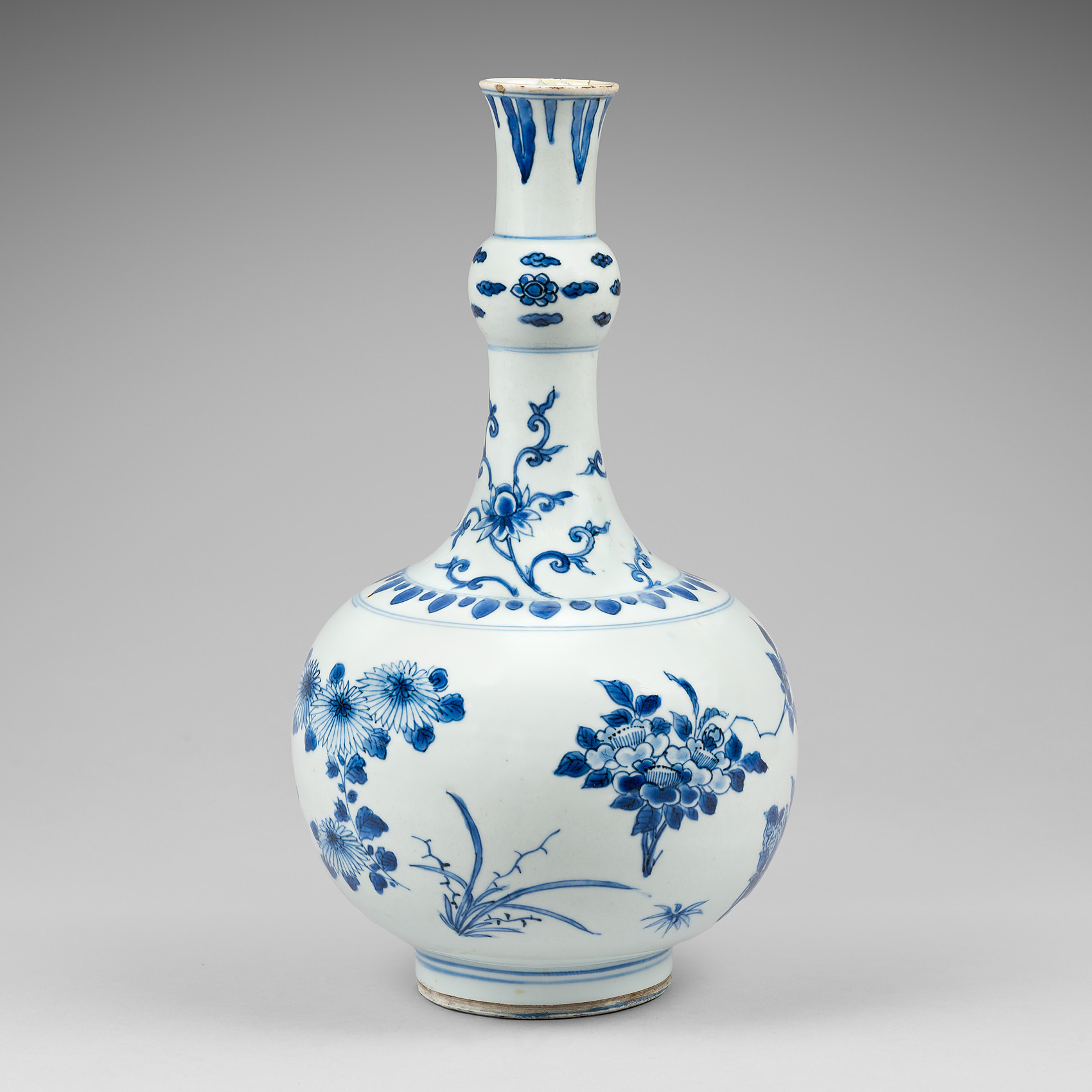
The bottle with globular body and long neck, widening gently below the rim, with a bulbous ring on the upper part, and standing on a low straight foot. Made of very white porcelain, it is decorated in underglaze cobalt blue with “floating flowers”, scattered peony, lotus, and chrysanthemum sprays on the body, a border of […]
A Chinese blue and white charger. Transitional period
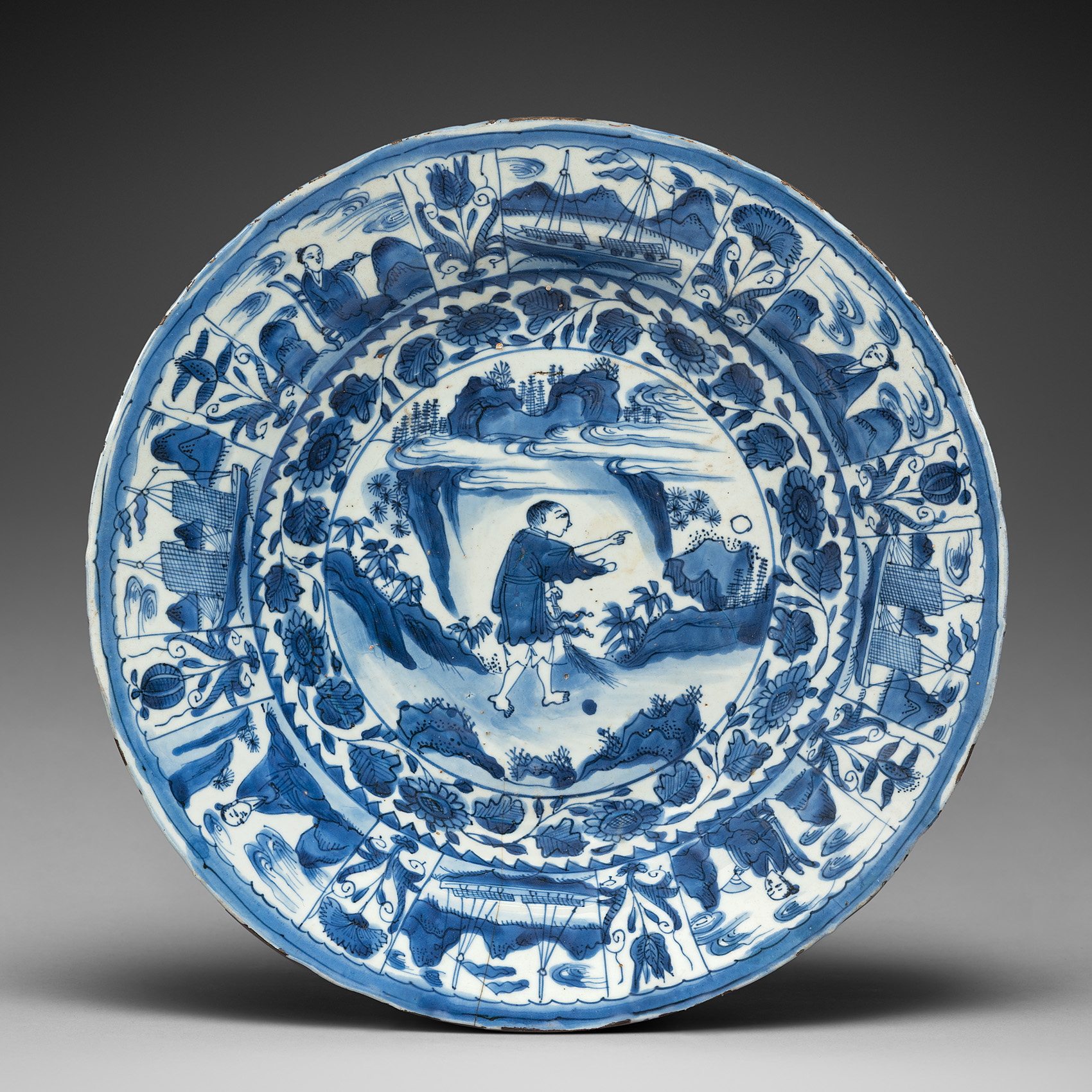
At the center of the medallion stands a barefoot Buddhist monk, holding a straw whisk (fuchen, 拂塵) in his left hand. With his right hand, he gestures toward a white disc in the sky — the moon — while a second, darker disc lies at his feet. This second disc represents the moon’s reflection on […]
A pair of unusual Blanc-de-Chine Dehua buddhist lions joss-stick holders. Ming, ca. 1640
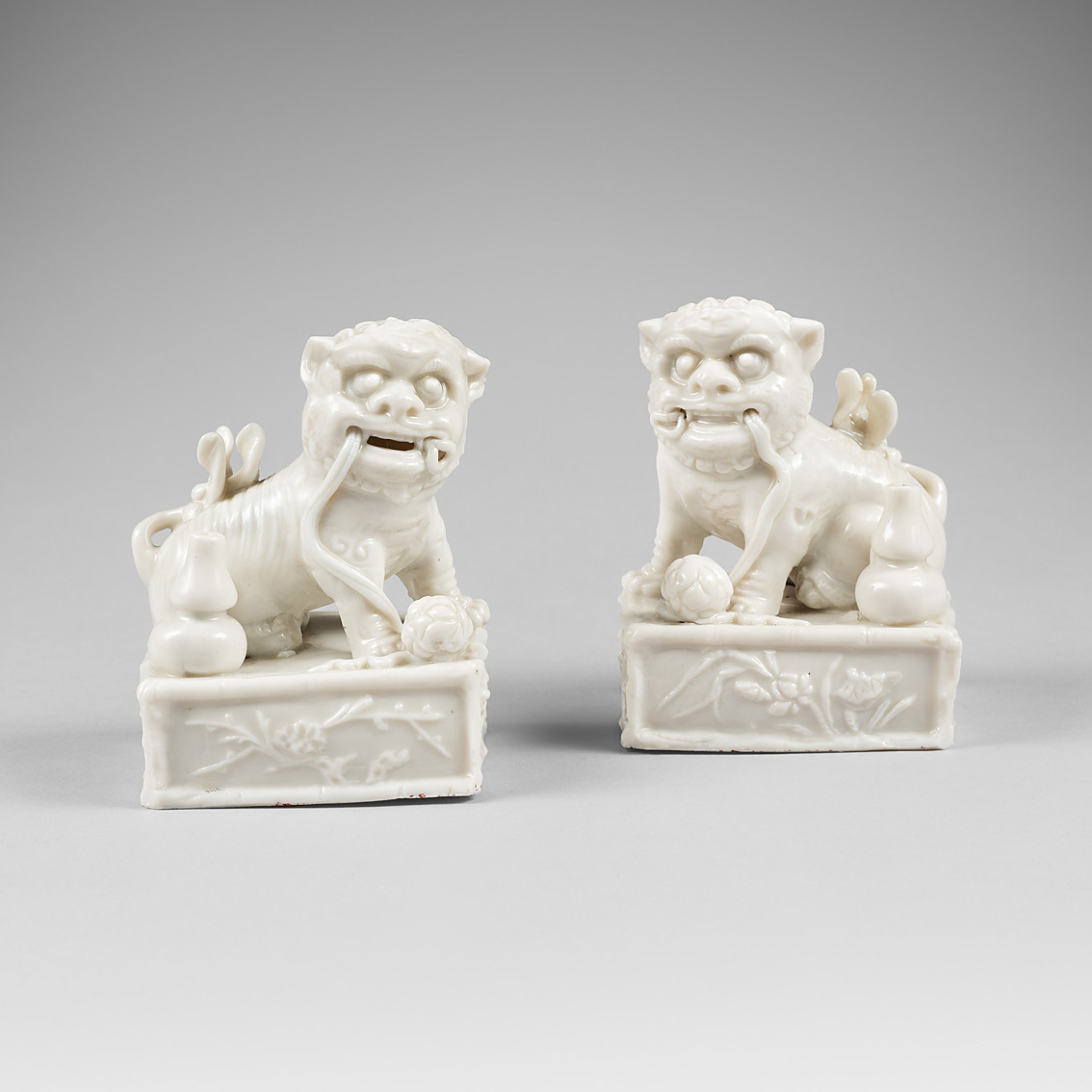
Each stick-holder in the form of a Buddhist lion with a tassel in its mouth attached to a brocade ball at its feet and with a gourd by its side forming the holder, seated on a rectangular hallow bamboo-framed base moulded with lotus, a budding branch, camellia and peach.
A large Chinese figure of Avalokitesvara painted in the green Fahua palette. Ming
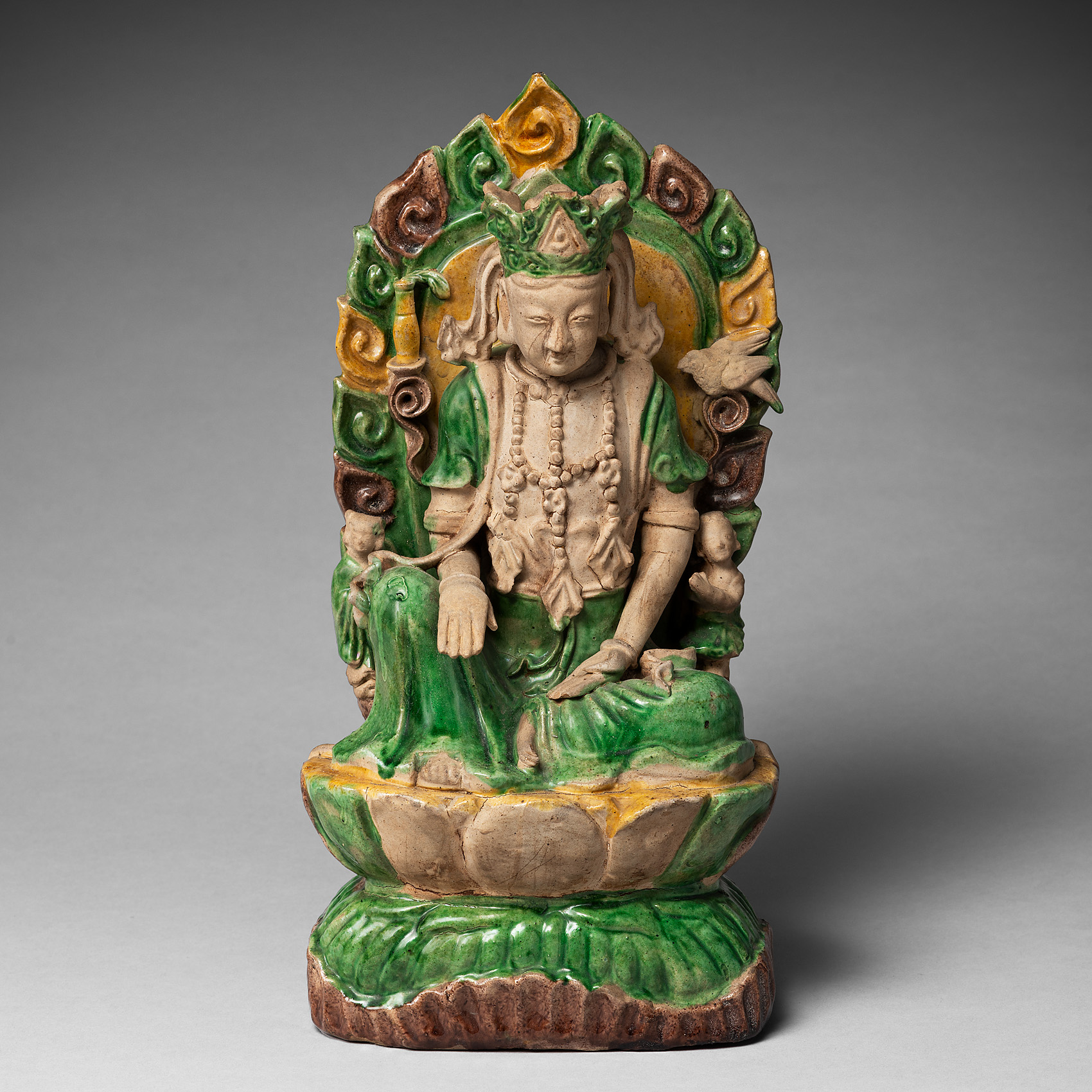
The bodhisattva Avalokitesvara (Guanyin) is seated on a lotus pedestal in the maharaja-lila, the posture of the “royal ease”, with the right knee raised and the left sole turned up, the right hand pointing down in the bhumisparsa-mudra, the “gesture of earth witness”, the left hand resting in the lap with inward-bent thumb in the […]
A pair of famille verte four-sided green Fahua-type vases. Ming
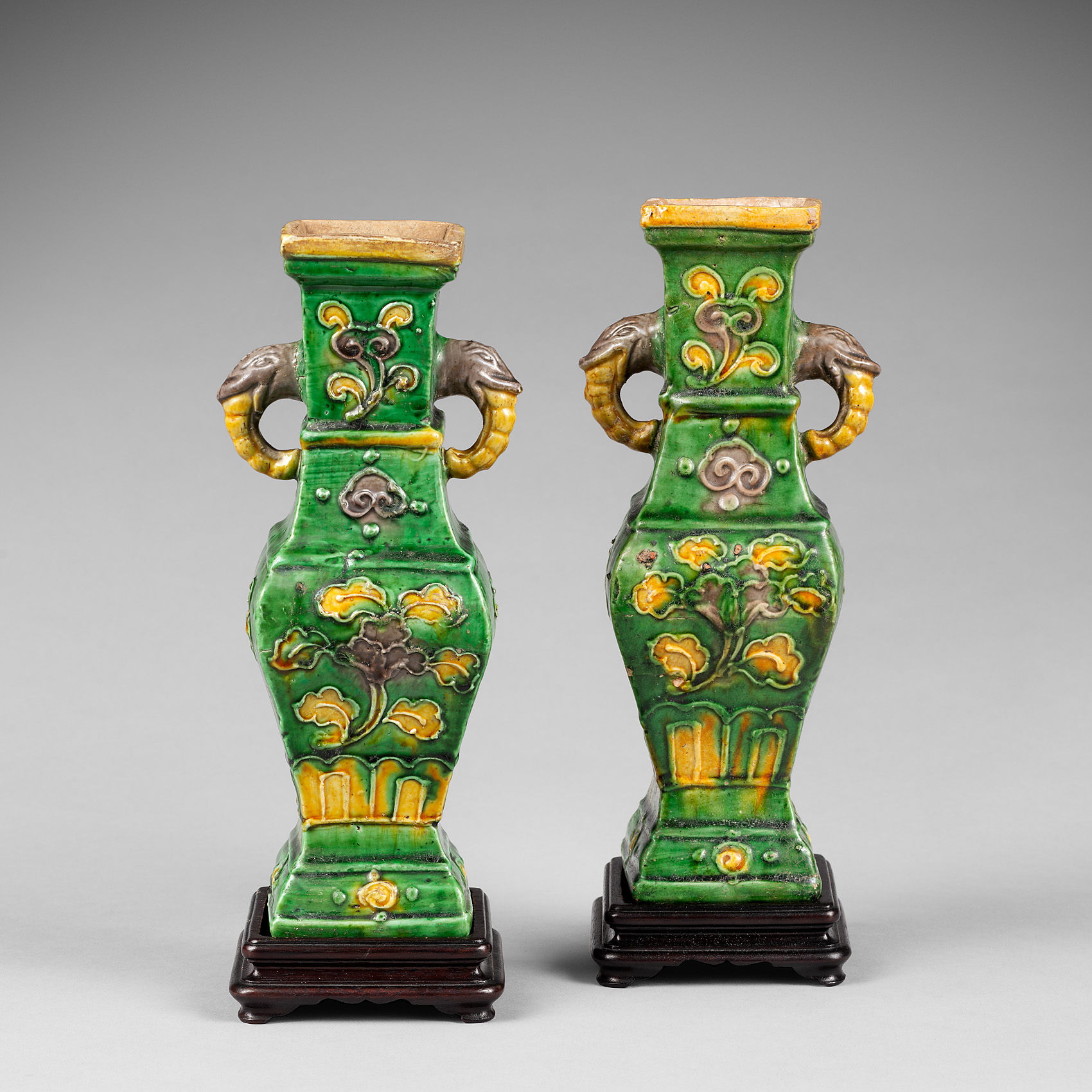
The vases are four-sided with a square mouth and a flat square unglazed base. On the sides of the neck are semi-circular handles emerging from the open jaws of a lion-like head. The decorative motifs are outlined in raised slip and then infilled in with yellow, aubergine, and green enamels and transparent glaze on an emerald […]
An octogonal Blanc de Chine puzzle-cup. Late Ming
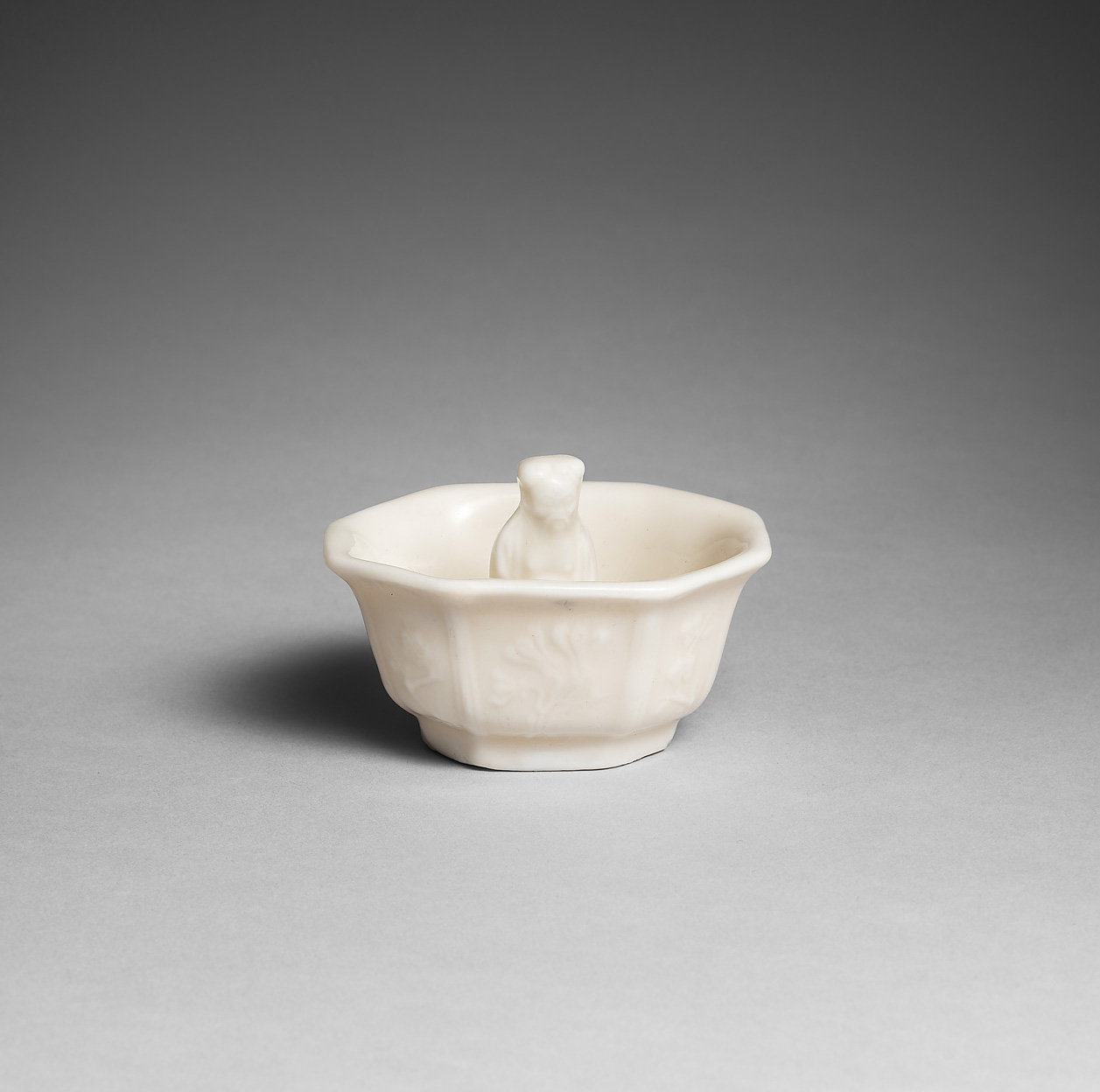
Of octogonal oblong form, moulded on six facets with prunus branches below a band of keyfret with a figure of Lu Hong Lu Jian standing inside concealing a hole in the base.
A Chinese blanc-de-chine figure of Wenchang. Late Ming
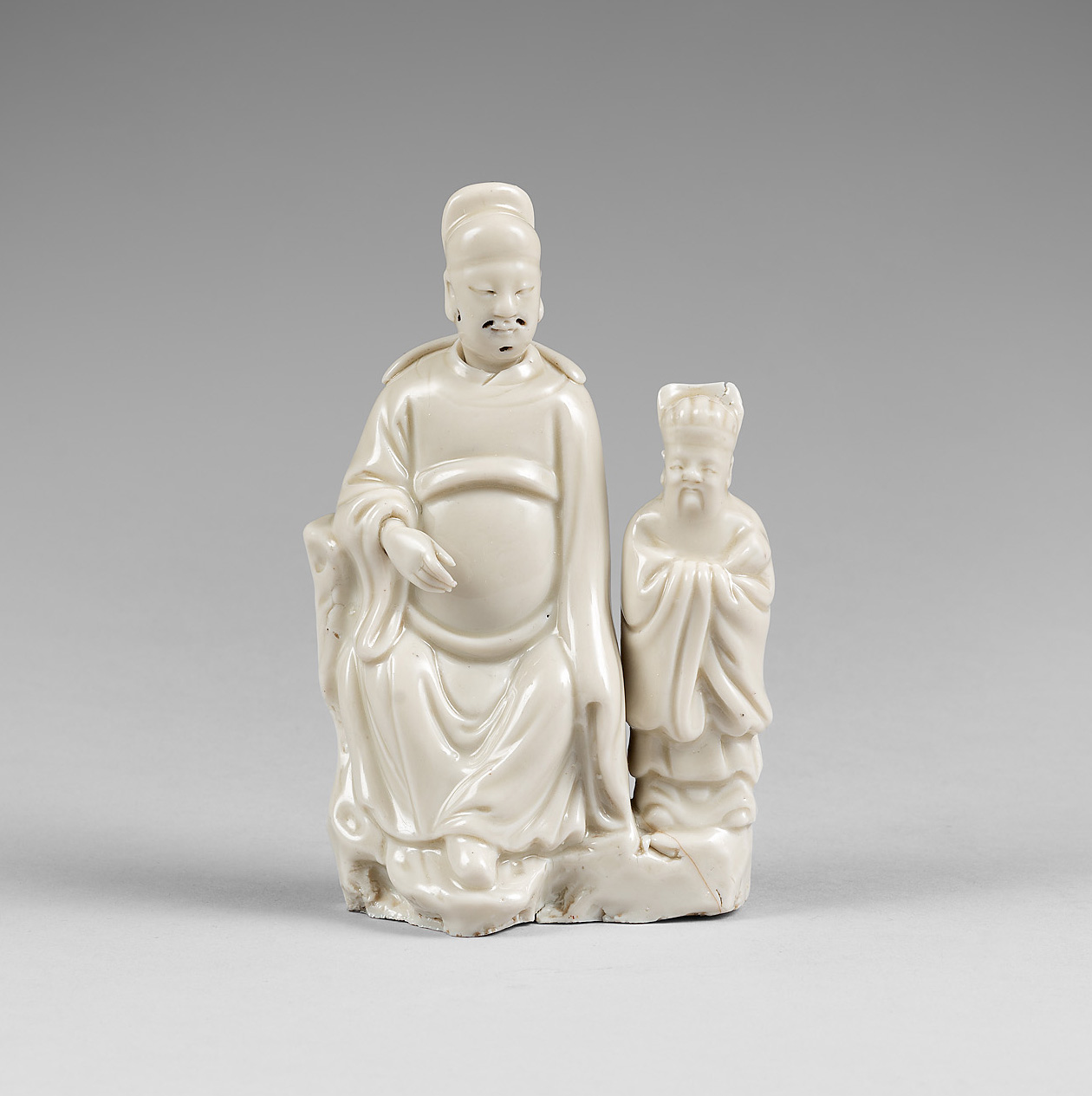
Wenchang seated on rock work, beside his standing attendant the bearded Zhuyi, the distributor of examination results, covered overall in a cream glaze.
A Blanc-de-chine figure of Zhenwu, Supreme Emperor of the Dark Heaven. 17th c.
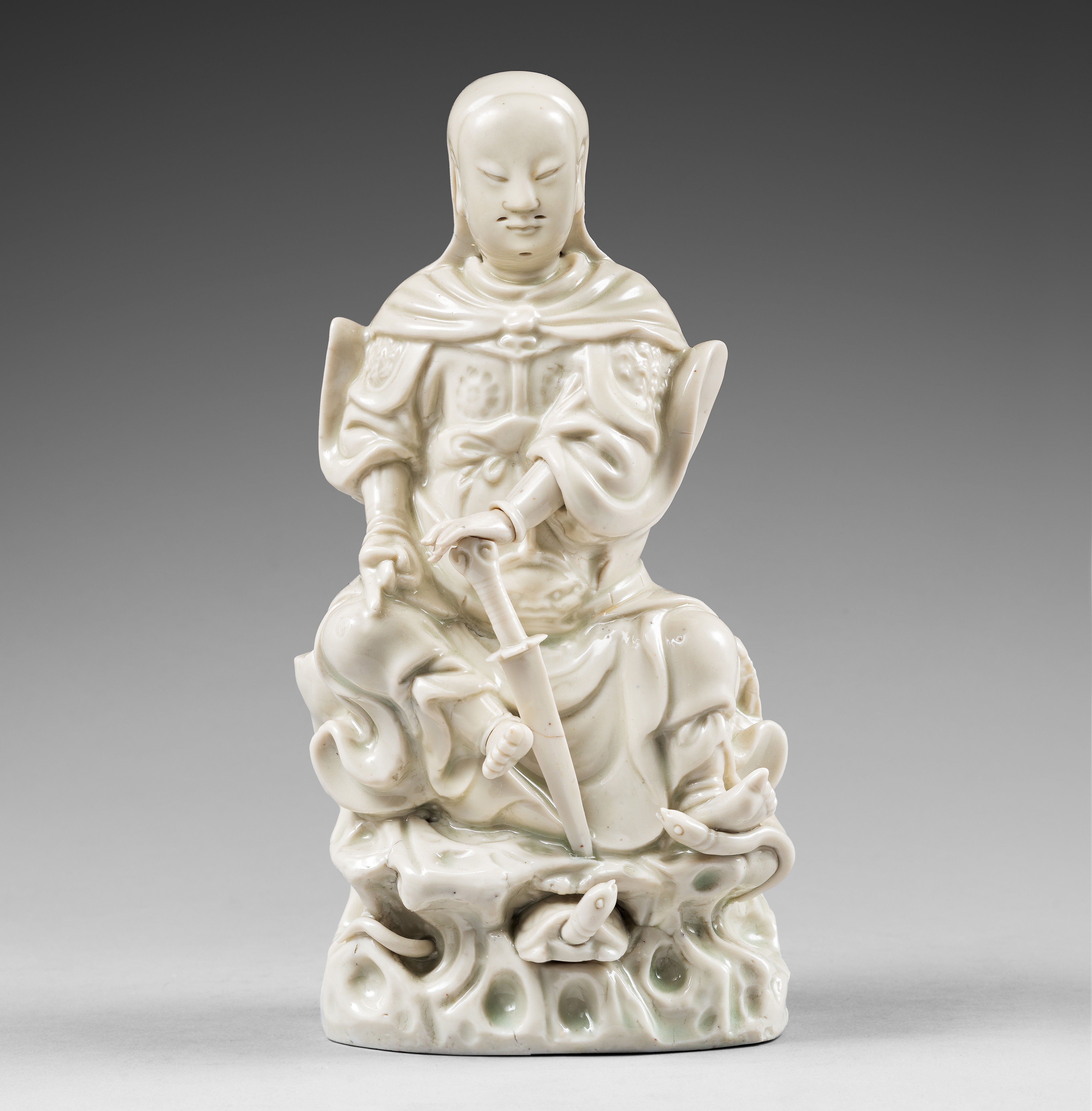
The figure modelled as Zhenwu seated in a domineering posture on jagged rockwork with a tortoise and snake emerging from the crevices, dressed in martial attire with cape over his shoulders, depicted with characteristic long combed-back hair, bare feet and mudra, with seven apertures over the face. He holds a sword in his left hand. The […]