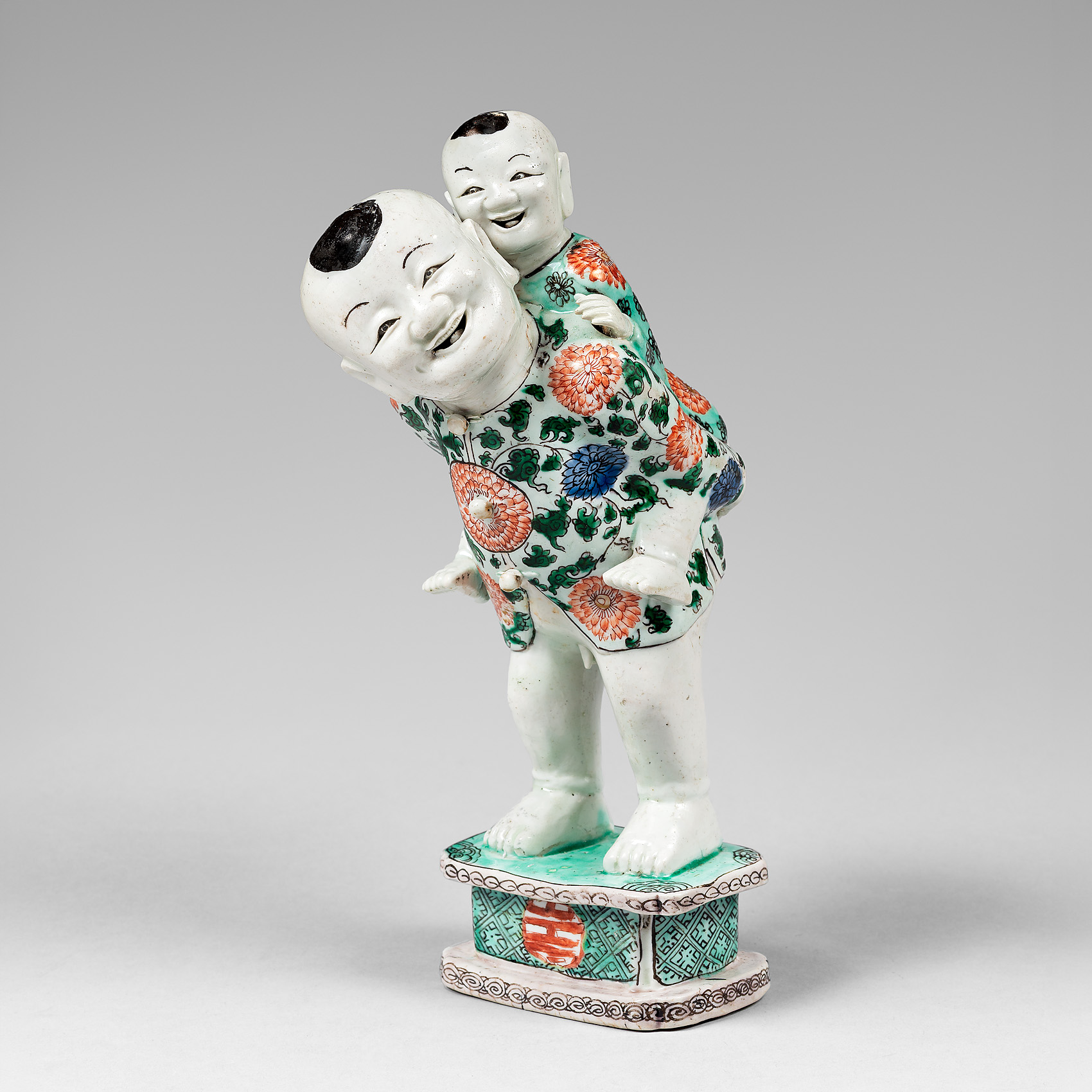
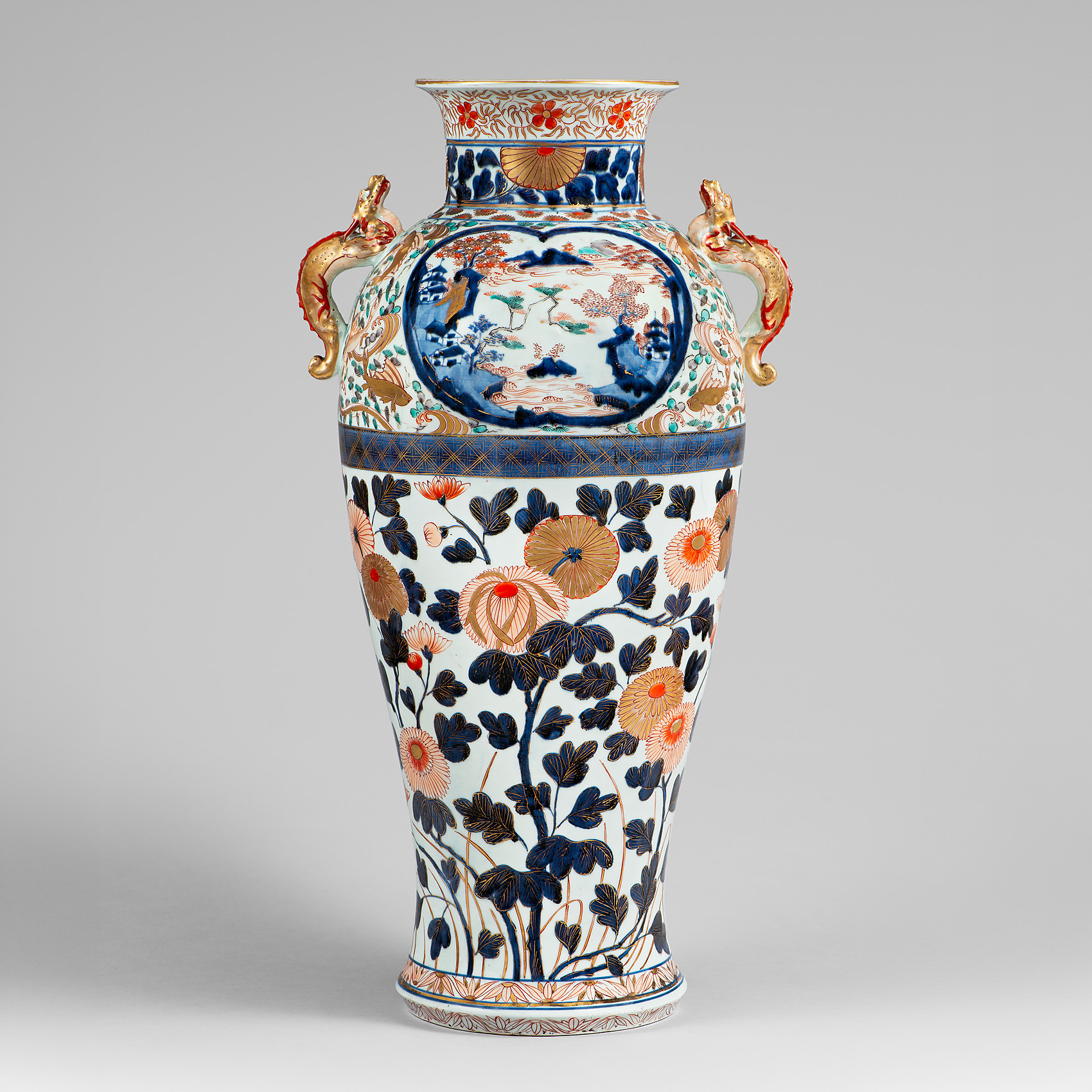
The choice of the chrysanthemum (juhua) as the primary floral motif is deeply symbolic. As a flower that blooms in late autumn and withstands the first frosts, it is one of the “Four Gentlemen” of Chinese art (Sijunzi 四君子), representing integrity and resilience, along with bamboo, orchid and plum blossom. Beyond its symbolic value, the chrysanthemum has long been prized for its soothing medicinal properties. In the Chinese lunar calendar, the flower is the emblem of the Double Ninth Festival (the 9th day of the 9th month), where chrysanthe- mum wine is traditionally consumed to ward off evil and ensure a long life.
In Chinese numerology, the number 9 (jiǔ) is of paramount importance. In Chinese metaphysics, odd numbers are Yang, associated with strength, light, and creative force. As the square of the fundamental Yang number 3, the number 9 represents supreme power and is traditionally associated with the Emperor. Furthermore, the words for “nine” (jiǔ 九), “longevity” (jiǔ 久), and “wine” (jiǔ 酒) are perfect homophones. By depicting two male child- ren – the ultimate symbols of the continuation of the family line – clothed in robes densely covered with chrysanthemums, the sculpture reads as a potent talisman for both longevity and status.
The “piggy-back” pose provides a sophisticated visual pun or rebus. The act of carrying someone on one’s back is called bèi (背), which is homophonous with the character bèi (辈), meaning “generations”. Consequently, this playful scene forms the blessing bèibèi (辈辈), expressing the wish for the family’s success, wealth, and nobility to be preserved and passed down “generation after generation”
The motif of a figure giving another a “piggy-back” ride is noted by William Sargent as an unusual but significant 1 subject in the Chinese ceramic repertoire. This pose is traditionally associated with Fu Xing (福星), the Daoist Star-God of Happiness. Frequently depicted in the robes of a Mandarin carrying a young boy, Fu Xing forms part of the celebrated Sanxing (Three Stars) trio alongside Lu (Rank) and Shou (Longevity). The presence of the child on the back serves to reinforce the central themes of domestic joy and the vital importance of familial continuity
The historical appeal of such groups in 18th century France is evidenced by the estate sale (held in Paris in 1778) of the celebrated painter and Director of the Académie de France in Rome, Charles-Joseph Natoire (1700–1777). Lot 105 was described as “A Chinese merchant figure, carrying a Chinese woman on his back”. Natoire’s interest in Chinese subjects is fur- ther documented by his series of twelve drawings depicting Chinese musicians and figures, now preserved in the Musée du Louvre, Paris (Cabinet des Dessins, inv. 31233 to 31244).
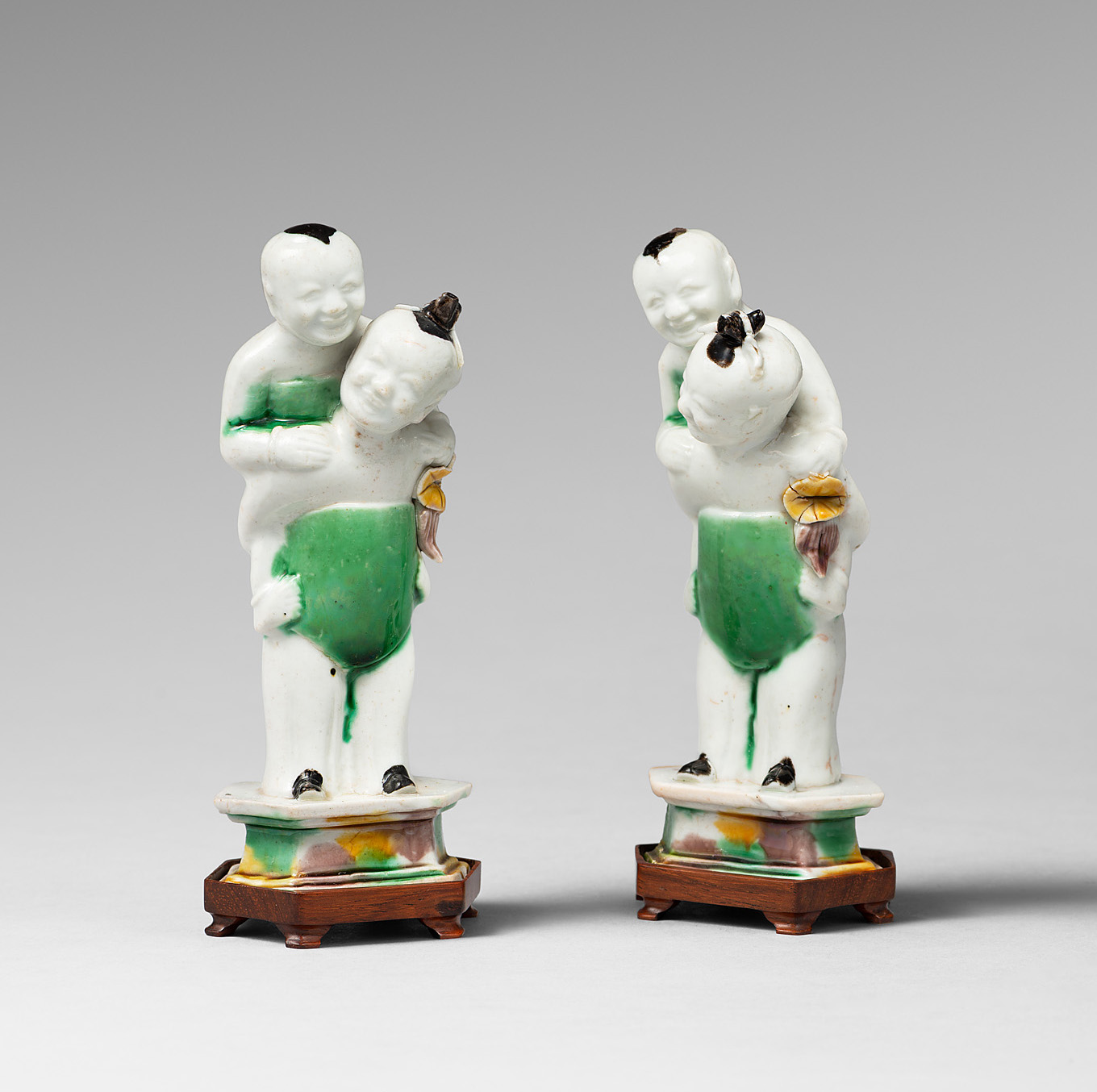
While a figure of a young woman with a child on her back was recovered from the cargo of the Geldermalsen (which sank2 in 1752), most surviving examples of this specific “pig- gy-back” subject are rendered in biscuit porcelain. These typically depict figures in long floral robes adorned with the rank badge of a first-grade civil mandarin. A notable biscuit example from the George Eumorfopoulos Collection, now in the Peabody Essex Museum, is illustrated by Sargent in The Copeland Collection, Chinese and Japanese Ceramic Figures 3.
The present group, executed in fully glazed porcelain, is rarer. Another fully glazed figure, set on a presumed later base and formerly in the Goldschmidt Collection, Berlin, was exhi- bited at the 1929 Berlin Exhibition of Chinese Art 4.
A related, more complex glazed group featuring a third figure crouching on a platform is held in the permanent collection of the Metropolitan Museum of Art, New York 5.